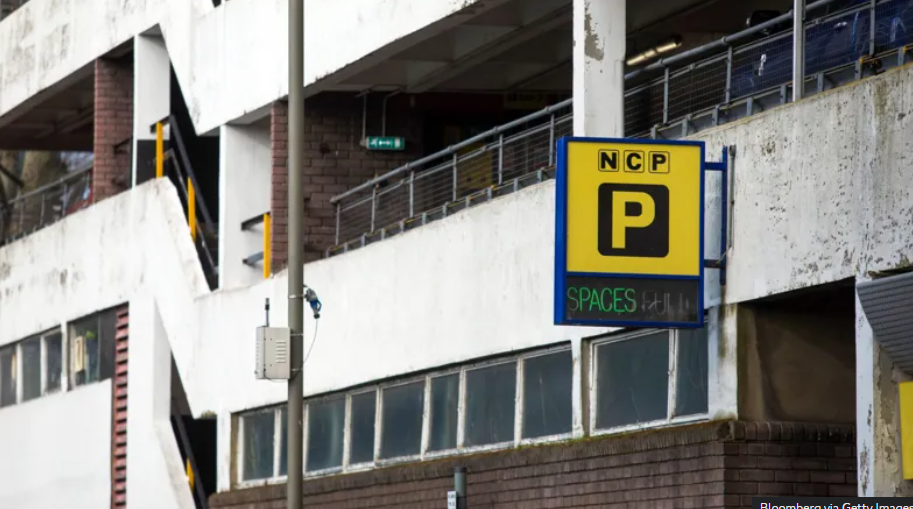

Britain’s biggest car park operator National Car Parks (NCP) has crashed into administration, putting nearly 700 jobs at risk and raising serious concerns about the future of the UK parking industry. The 95-year-old company, which operates around 340 car parks across major cities, airports, hospitals, and transport hubs, has been struggling with mounting losses, heavy debt, and a sharp shift in customer behavior since the pandemic.
The collapse marks a major turning point for a business once considered a stable part of the UK’s infrastructure. With administrators from PwC now in control, the focus has shifted to stabilizing operations while exploring options including a potential sale of all or parts of the company.
What triggered the NCP collapse
The immediate cause of NCP’s administration is its inability to meet financial obligations. According to PwC, the company simply ran out of cash after years of declining performance. Despite efforts to restructure operations and cut costs, NCP was unable to recover from the long-term impact of COVID-19.
The pandemic permanently altered commuting patterns across the UK. Office attendance remains below pre-2020 levels, and hybrid working has significantly reduced daily travel into city centres. This has directly impacted demand for parking, especially in high-density urban areas where NCP generates a large portion of its revenue.
PwC stated that “demand for parking has not recovered to historic levels,” particularly across commuter-heavy and city-centre locations. As a result, occupancy rates have remained consistently below expectations, weakening revenue streams over multiple years.
High fixed costs and inflexible leases
One of the biggest structural problems facing NCP is its cost base. The company operates under a high number of long-term, inflexible leases, which prevented it from reducing costs in line with falling revenues. Even when certain locations became unprofitable, NCP was unable to exit those agreements easily.
This created a dangerous imbalance. While customer demand declined, the company remained locked into expensive property commitments. PwC highlighted that this inability to “exit loss-making sites” played a critical role in pushing the business into sustained losses.
In simple terms, NCP was paying for car parks that were no longer generating enough income — a situation that became unsustainable over time.
£350M debt and rising financial pressure
The company’s financial challenges were made significantly worse by its large debt burden. NCP’s parent company, Japan-listed Park24, revealed that the business had accumulated debts of approximately £352.6 million. At the same time, filings suggested liabilities exceeded assets by more than £300 million.
These figures highlight the scale of financial pressure facing the company. Even in stable conditions, such debt levels require strong and consistent cash flow. In NCP’s case, declining demand meant that servicing this debt became increasingly difficult.
The company’s recent financial performance further illustrates the problem. NCP reported a £28.2 million pre-tax loss for the year ending September 2023, following a £22.5 million loss the previous year. These consecutive losses show that the business had been under stress long before entering administration.
Rising costs added another layer of pressure. Higher energy prices, inflation, and rent increases — many of which were linked to inflation — pushed operating expenses even higher, widening the gap between income and costs.
What happens now under PwC
PwC partners Zelf Hussain, Rachael Wilkinson, and Toby Banfield have been appointed as joint administrators. Their immediate priority is to stabilize the business while conducting a detailed review of its operations.
Importantly, all NCP sites remain open, and employees are continuing in their roles for now. Customers are not expected to see any immediate disruption in services.
However, the future remains uncertain. The administrators are exploring several options, including:
- Sale of the entire business
- Sale of individual assets or locations
- Closure of unprofitable sites
According to PwC, the goal is to achieve the “best possible outcome for creditors,” which may involve significant restructuring.
More details about the administration process can be tracked via PwC and official filings on Companies House.
Jobs at risk and potential closures
The biggest immediate concern is the impact on employees. NCP employs approximately 682 people, and while all staff remain in place for now, job losses are a real possibility depending on the outcome of the administration process.
Additionally, the viability of each car park location will be reviewed. Sites that are consistently loss-making may face closure, particularly in areas where demand has not recovered.
Key NCP locations in London include Bloomsbury Square, Kings Cross, Marylebone Road, and Harley Street — all of which are heavily dependent on commuter and visitor traffic.
A 95-year legacy under threat
NCP has a long history dating back to 1931, when it was founded by Colonel Frederick Lucas. The company expanded rapidly in the post-war period, capitalizing on the rise in car ownership and urban development.
Over the decades, it became one of the most recognizable brands in the UK, with its name often used generically to describe city-centre car parks.
In 2017, the company was acquired by Park24, a Tokyo-listed parking operator, after previously being owned by infrastructure funds and private equity investors. However, heavy debt from previous ownership structures continued to weigh on the business.
Bigger shift in the UK parking industry
NCP’s collapse reflects a broader structural shift in the UK economy. Several long-term trends are reshaping demand for parking:
- Remote and hybrid working reducing commuting
- Growth of online shopping impacting city-centre footfall
- Rising costs linked to inflation and energy prices
- Changing urban mobility patterns
What was once considered a stable, predictable industry is now facing significant uncertainty.
Outlook: survival or breakup?
The future of NCP will depend heavily on whether a buyer can be found and whether the business can be restructured into a more sustainable model. A full sale could preserve much of the network, while a breakup could lead to widespread closures and job losses.
For now, the company continues to operate, but the coming weeks will be critical. The administration process will determine whether NCP can reinvent itself or whether this marks the beginning of a major contraction in one of Britain’s most well-known infrastructure brands.
Bottom line: NCP’s collapse is not just a company failure — it’s a clear signal that changing consumer behavior, high fixed costs, and heavy debt can break even the most established businesses.

Make Swikblog your go-to source on Google for reliable updates, smart insights, and daily trends.