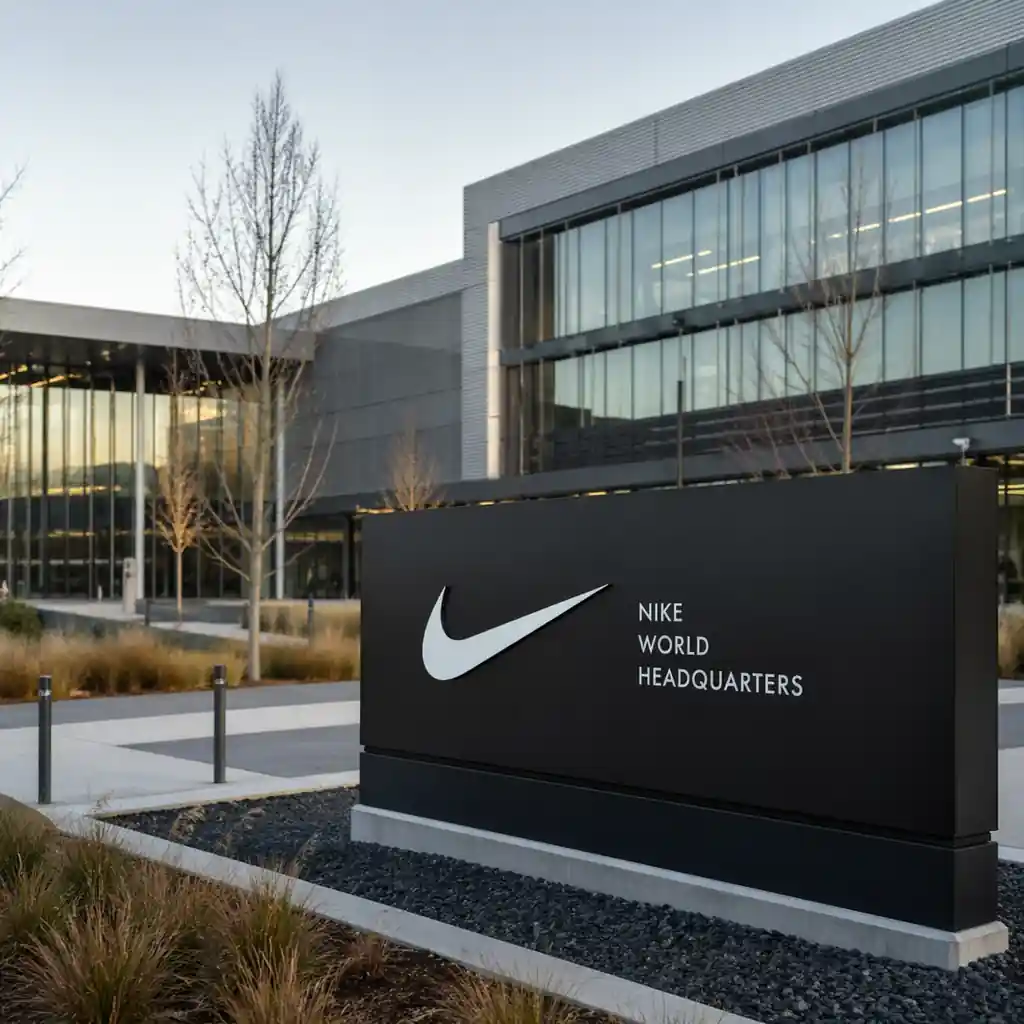

Nike is moving deeper into restructuring mode, cutting roughly 1,400 jobs worldwide as the sportswear giant tries to rebuild a business that has been under pressure from slowing sales, rising competition and a weaker performance in key international markets.
The latest reduction affects Nike’s Global Operations team and is expected to fall most heavily on technology roles. The cuts span North America, Asia and Europe and amount to just under 2% of the company’s global workforce. While the number is significant, Nike is framing the move as part of a longer transformation rather than a sudden reaction to one disappointing quarter.
The decision comes at a sensitive moment for the Oregon-based company. Nike remains one of the most valuable and recognized brands in global sportswear, but its recent performance has not matched its historic dominance. Demand has softened in parts of the business, competitors have gained ground, and investors have been waiting for clearer signs that the company’s turnaround plan can deliver stronger growth.
Chief Operating Officer Venkatesh Alagirisamy told employees that the job cuts are part of the next stage of work already in motion. That message is important because it shows Nike is not simply trimming staff to protect near-term margins. The company is trying to redesign how its operations, technology, manufacturing and supply chain teams work together.
At the center of the restructuring is a push to make Nike less complicated internally. Large global companies often build layers of teams, systems and decision-making structures over time. Those layers can slow product development, weaken accountability and make it harder to respond quickly when consumer demand shifts. Nike’s latest changes appear designed to reduce that friction.
Technology is one of the main areas being reshaped. Nike has invested heavily in digital commerce, consumer data, supply chain systems and internal platforms in recent years. But as the company resets priorities, it is concentrating more work around strategic hubs, including Beaverton, Oregon, and the Nike India Technology Center. The aim is to create a more focused technology structure that supports manufacturing, distribution and faster product execution.
The company is also changing parts of its supply chain and manufacturing setup. Nike plans to bring materials supply chain work closer to its footwear and apparel teams, while some Converse manufacturing and engineering operations will move nearer to factory partners. These steps are meant to improve coordination, reduce delays and make the company more responsive from design to production.
Another major theme is automation. Nike has already announced job reductions tied to automation at distribution centers, including a previous round affecting hundreds of roles. The latest layoffs show that automation is not only a warehouse issue for the company. It is becoming part of a broader operating model in which Nike wants advanced systems to improve speed, accuracy and efficiency across the business.
The pressure behind these changes is clear. Nike has forecast a sales decline of 2% to 4% for the current quarter, while its China business is expected to fall much more sharply. China has long been a major growth engine for Nike, so weakness there adds another layer of concern for investors. A slowdown in that market makes it harder for the company to offset challenges elsewhere.
Nike’s share price has also reflected that anxiety. The stock has lost more than half its value over the past three years, a sharp reversal for a company that once looked almost untouchable in sportswear. Shares moved slightly higher after the latest job-cut announcement, suggesting some investors may see the restructuring as a necessary step, but the broader recovery story remains unfinished.
Chief Executive Elliott Hill, who took over in 2024, has been trying to bring Nike back to its core strengths. His strategy has focused on sport, product innovation and faster execution. Running, soccer and other performance categories are expected to play a larger role as Nike works to rebuild credibility with athletes and consumers.
That focus matters because Nike’s challenges are not only financial. The brand has faced criticism for losing some of its product edge while smaller and faster-growing rivals gained attention. Companies such as On and Hoka have built momentum in running, while Adidas has also remained a strong global competitor. Nike still has enormous scale, marketing power and athlete partnerships, but the market is more crowded than it was a decade ago.
The latest layoffs therefore sit at the intersection of cost control and brand repair. Cutting jobs may help Nike operate more efficiently, but the company’s long-term recovery will depend on whether it can create products that consumers want and deliver them faster. A leaner organization is useful only if it helps the brand become sharper, not simply smaller.
There are risks. Reducing technology and operations roles can disrupt projects, lower morale and create uncertainty inside the company. For employees, this is another painful round of change following earlier cuts. For management, the challenge is to protect the knowledge and talent needed to execute the turnaround while removing work that no longer fits the company’s future structure.
From an investor’s perspective, the coming quarters will be crucial. Markets will be watching whether Nike can improve margins, stabilize sales and show progress in China. They will also look for evidence that new product launches are gaining traction and that the company’s renewed focus on sport is translating into stronger consumer demand.
Nike’s broader strategy can be tracked through its official company updates and leadership announcements on the Nike Newsroom, where the company outlines major business changes and executive priorities.
The 1,400 job cuts are a clear sign that Nike is accelerating its internal reset. The company is trying to simplify how it works, concentrate technology resources, modernize supply chain operations and invest in automation where it believes productivity can improve. Those moves may help create a stronger foundation, but they do not guarantee a quick turnaround.
For now, Nike’s message is that the restructuring is part of a larger plan to become faster and more competitive. The real test will come in sales results, product momentum and consumer response. If the company can turn a leaner structure into better execution, the layoffs may be viewed as a difficult but necessary step. If growth remains weak, they could instead become another sign of how challenging Nike’s comeback has become.

Make Swikblog your go-to source on Google for reliable updates, smart insights, and daily trends.