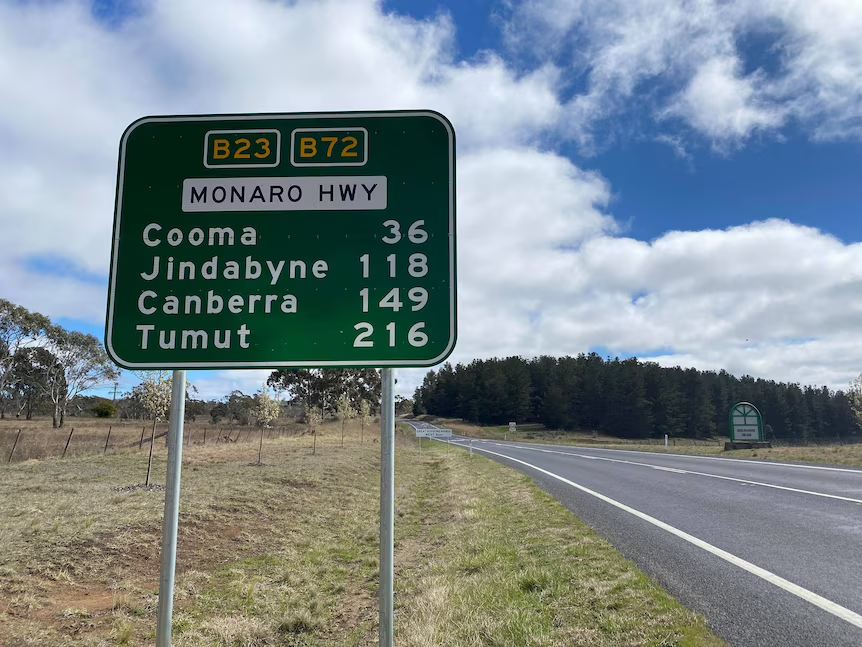

A fatal motorcycle crash on the NSW Monaro Highway has turned one of the state’s key Easter travel corridors into a major choke point, with authorities warning of detours that could add up to five hours to some journeys. The rider, believed to be a man in his 40s, died after crashing on Friday afternoon near Rock Flat, about 20 kilometres south of Cooma, as holiday traffic built across southern New South Wales.
Police said the man was riding with a group of motorcyclists at about 1:20pm when he crashed onto the roadway. Emergency crews were called, but he died before they arrived. Authorities said early indications suggest no other vehicles or roadside objects were involved, and investigators have asked anyone with dash-cam footage from the area to come forward.
The crash shut the Monaro Highway in both directions between Nimmitabel and Tom Groggin Road, forcing drivers onto long diversions at the exact time many families were heading out for the Easter break. For travellers moving between the ACT, Cooma, the NSW far south coast and the Victorian border, the closure quickly became more than a local disruption. It hit a highway that carries holidaymakers, freight operators, regional workers and long-distance motorists through one of the busiest seasonal windows on the road calendar.
Drivers heading through the region were being urged to monitor live conditions through Live Traffic NSW, with official advice warning motorists to avoid the area while the highway remained under police control.
Police established a crime scene and said it was likely to remain in place for a considerable amount of time. That wording underlined the seriousness of the response and the scale of the knock-on effect for long-weekend travel. The recommended diversions through the Kings Highway, Princes Highway and Snowy Mountains Highway were lengthy, and for some motorists the revised route meant a substantial extra stint behind the wheel.
A vital NSW highway under pressure during holiday traffic
The Monaro Highway is not just another regional road. It is one of southern NSW’s most important transport links, connecting Canberra and surrounding districts with Snowy Monaro communities and the coast. During school holidays and long weekends, traffic volumes can surge as people head toward beach towns, alpine areas and cross-border destinations. That makes any serious closure especially disruptive, and on Easter Friday the timing amplified the impact.
The location of the crash also adds to wider concerns around safety on this stretch. The section between Rock Flat and Nimmitabel has already been flagged for improvement work, with barrier installation and shoulder widening among the measures completed in earlier stages. The corridor has drawn attention before because of previous fatal crashes in the broader Monaro region, and the latest death is likely to sharpen focus again on driver behaviour, road design and the challenge of keeping a fast-moving regional highway safe during peak travel periods.
That broader road safety backdrop matters this Easter. NSW is running a high-visibility holiday policing operation, while a double demerits period targeting speeding, seatbelt and helmet offences, and illegal mobile phone use is continuing through 11:59pm on Monday, April 6. Against that backdrop, Friday’s fatal crash became an early and sobering reminder of how quickly holiday movement can turn tragic.
What is known about the Monaro Highway crash
At this stage, authorities believe the rider lost control and crashed while travelling with other motorcyclists. There has been no indication of a multi-vehicle pile-up or roadside collision, which means investigators are likely to focus on the immediate circumstances on the road surface, the movement of the motorcycle and the sequence of events witnessed by others in the group.
The victim has not yet been formally identified in public reporting, though he is believed to have been in his 40s. For local communities around Cooma, Nimmitabel and the wider Snowy Monaro region, the crash is another reminder of the risks that come with a highway used by commuters, tourists, freight vehicles and recreational riders across long, exposed distances.
The closure also landed at a difficult moment for travellers who had planned the usual Easter run south. Routes that look manageable on a map can become punishing when traffic is rerouted in waves, especially across regional highways already carrying holiday demand. That is one reason the five-hour delay warning stood out. It was not simply about a closed lane or temporary slowdown, but about a major interruption on a route with few quick alternatives.
As the investigation continues, the crash is likely to resonate beyond the immediate police response because it sits at the intersection of several familiar issues in regional NSW: long-distance holiday traffic, vulnerable road users, the safety of major connectors and the limits of detour networks when a critical highway is shut. In practical terms, Friday’s tragedy changed travel plans for thousands. In human terms, it left one man dead before help could reach him.

Make Swikblog your go-to source on Google for reliable updates, smart insights, and daily trends.