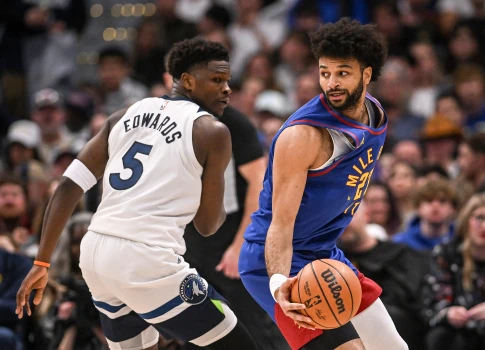

The Denver Nuggets head into their 2026 first-round playoff clash with the Minnesota Timberwolves carrying real momentum, strong betting support, and the kind of star power that can tilt an entire series. Denver enters as the No. 3 seed in the Western Conference, Minnesota arrives as the No. 6 seed, and the matchup already feels bigger than a standard opening-round series because of the recent history between these two teams.
This is the third playoff meeting in four postseasons between Denver and Minnesota, and there is already enough tension, familiarity and star-level shot-making here to give the series real edge. The Timberwolves stunned the basketball world in the 2024 conference semifinals by coming back from a massive hole to eliminate Denver in seven games. That history gives Minnesota belief, but the 2026 version of the Nuggets looks built to answer back.
Nuggets vs Timberwolves 2026 series schedule
Game 1: Saturday, April 18, at Denver, 3:30 p.m. Eastern
Game 2: Monday, April 20, at Denver, 10:30 p.m. Eastern
Game 3: Thursday, April 23, at Minnesota, 9:30 p.m. Eastern
Game 4: Saturday, April 25, at Minnesota, 8:30 p.m. Eastern
Game 5: Monday, April 27, at Denver, TBD if necessary
Game 6: Thursday, April 30, at Minnesota, TBD if necessary
Game 7: Saturday, May 2, at Denver, TBD if necessary
The betting market reflects Denver’s edge. The Nuggets opened this matchup at -350 to win the series, while the Timberwolves sit at +275. That gap says plenty about how this contest is being viewed. Minnesota has enough defensive talent and playoff confidence to make life difficult, but Denver is still the team with the most dependable offensive engine in the series.
That engine remains Nikola Jokic, whose 2025-26 regular season added another historic chapter to one of the greatest peaks the NBA has seen. Jokic averaged a triple-double again and became the first player in league history to lead the NBA in rebounds and assists in the same season. More importantly for this series, Denver’s offense reached elite levels whenever he was on the floor. When Jokic and Jamal Murray were both available, the Nuggets looked like a contender with championship-level shot creation and half-court control.
Murray’s form matters here almost as much as Jokic’s. He put together one of the strongest regular seasons of his career, and his two-man chemistry with Jokic still gives Denver one of the hardest actions in basketball to stop over a seven-game series. Add Aaron Gordon as the connective piece around them, and Denver’s best lineups still carry a punishing mix of size, spacing and decision-making.
The question on the Denver side is not talent. It is health and defensive consistency. Gordon missed a large portion of the season with hamstring issues, and several Denver wings also spent time out. The Nuggets’ defense slipped during the year, but they still closed the regular season on a 12-game winning streak, which changed the tone around the team entering the playoffs. Denver is arriving at the right time.
Minnesota, though, is not short on answers. The Timberwolves still bring a rugged defensive identity built around Rudy Gobert and Jaden McDaniels, and they still have the kind of wing athleticism that can change a game quickly. Anthony Edwards remains the franchise’s emotional center and biggest shot-maker, and his growth as a scorer gives Minnesota a chance in any high-leverage playoff possession.
Edwards had another major offensive leap this season, finishing among the NBA’s leading scorers while improving his efficiency. His late-season knee issue created some concern, but his return before the playoffs gives the Timberwolves a much more dangerous look. If he is explosive off the dribble and confident from deep, Minnesota can pressure Denver’s perimeter defense in a way many teams cannot.
Still, this series may come down to one old problem: who guards Jokic, and for how long can it work. Minnesota has thrown different looks at him before, but without Karl-Anthony Towns in this version of the roster, the physical matchup changes. Julius Randle, Gobert, Naz Reid and switching defenders can all take turns, but Jokic has shown repeatedly that he can solve almost any coverage if he has time and rhythm.
Denver also won the regular-season series 3-1, which matters less than playoff execution but still points to the broader issue. Over those meetings, the Nuggets consistently won Jokic’s minutes and found answers whenever the game got chaotic. Minnesota did take one win in March, and that performance showed the Wolves can create a workable defensive formula on the right night. The challenge is sustaining that over a full series against a healthier and more settled Denver group.
There is also the broader playoff pressure. Minnesota has the memory of knocking Denver out. The Nuggets have the motivation of turning that pain into another deep run. With the Western bracket opening up in front of them, this first-round clash could end up shaping the entire conference.
For readers tracking the series from a betting or prediction angle, the cleanest read is this: Denver has the best player, the more stable half-court offense, home-court advantage, and a stronger late-season trend line. Minnesota has the athleticism and defense to steal games, especially if Edwards catches fire, but over six or seven games Denver still feels better equipped to control the pace and the pressure moments.
Prediction: Nuggets in 6.
That outcome fits both the numbers and the matchup texture. Minnesota should have enough shot creation and defensive size to avoid a short series, but Denver’s offense looks more trustworthy, Jokic remains the most decisive force on the floor, and the Nuggets’ current form gives them the edge in the biggest possessions.
For a broader look at the official playoff bracket and game coverage, readers can follow the NBA playoffs page, which tracks series movement and scheduling throughout the postseason.

Make Swikblog your go-to source on Google for reliable updates, smart insights, and daily trends.