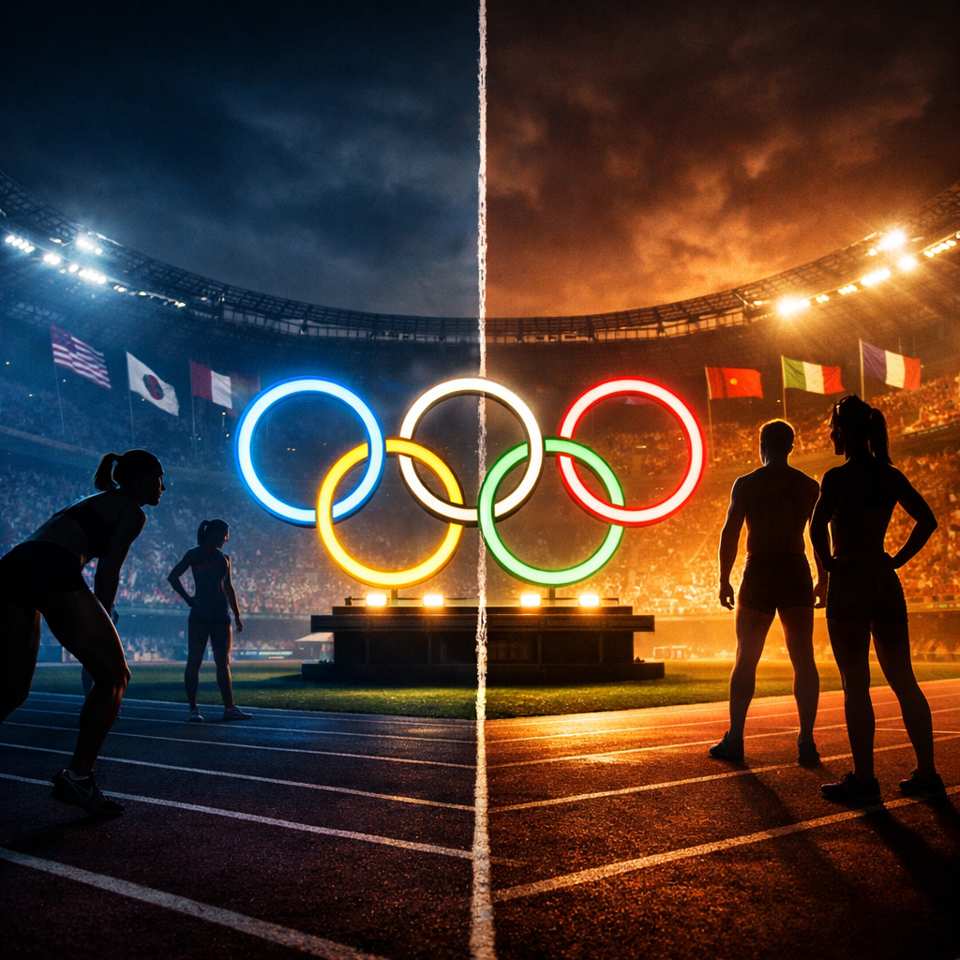

The Olympic Games are heading into one of the most dramatic rule changes in recent history. In a major announcement ahead of the 2028 Los Angeles Olympics, the International Olympic Committee (IOC) has confirmed that transgender athletes will no longer be allowed to compete in women’s events. The decision introduces a strict new eligibility rule based on biological sex, determined through a one-time gene screening test.
This move marks a turning point for global sports and has already triggered intense debate across athletes, federations, and governments worldwide. With the Olympics being the biggest sporting stage, the impact of this rule will extend far beyond just one competition.
What the new IOC rule actually says
Under the newly announced policy, only biological female athletes will be eligible to compete in women’s categories at the Olympic Games. To enforce this, the IOC will introduce a one-time screening test focused on detecting the SRY gene — a gene typically found on the Y chromosome and associated with male biological development.
According to the IOC, the presence of the SRY gene is fixed throughout life and serves as highly accurate evidence that an individual has undergone male sex development. Based on this scientific reasoning, athletes who test positive for the gene will not be allowed to compete in women’s events.
The rule will officially come into effect from the 2028 Los Angeles Olympics and will apply to all future Games. Importantly, the IOC clarified that the policy will not be applied retroactively, meaning past Olympic results and participation will remain unchanged.
Why the IOC made this decision
The IOC says the decision is aimed at protecting fairness and safety in women’s sports. Newly elected IOC President Kirsty Coventry made the organisation’s stance clear, stating that allowing biological males to compete in female categories would not be fair.
“At the Olympic Games, even the smallest margins can be the difference between victory and defeat,” Coventry said. “It is absolutely clear that it would not be fair for biological males to compete in the female category. In addition, in some sports it would simply not be safe.”
For years, the IOC avoided creating a universal rule. In 2021, it asked individual international federations to develop their own guidelines for transgender participation. However, this led to a fragmented system, where different sports applied different rules, often resulting in confusion and controversy.
The new policy is part of the IOC’s broader effort to create a uniform global standard for elite women’s competition at the Olympics.
Transgender athletes at the Olympics so far
Despite the global debate, only a small number of openly transgender athletes have competed in the Olympic Games. One of the most notable examples is New Zealand weightlifter Laurel Hubbard, who became the first openly transgender athlete to compete in a different gender category than assigned at birth during the Tokyo 2021 Olympics.
While participation numbers have been low, the issue has remained highly visible due to its broader implications for fairness, inclusion, and the future of competitive sport.
Global political pressure and timing
The IOC’s decision also comes at a time of increasing political involvement in sports policies. In the United States, President Donald Trump signed an executive order in February 2025 titled “Keeping Men Out of Women’s Sports,” which banned transgender athletes from competing in female categories across school, college, and professional levels.
Trump has also publicly stated that transgender athletes would not be allowed to compete at the Los Angeles 2028 Olympics, adding further pressure on global sporting bodies to clarify their positions ahead of the Games.
With Los Angeles set to host the next Olympics, the issue has become even more prominent, blending sports governance with international politics.
What the rule does NOT affect
The IOC has clarified that the new eligibility rule applies only to elite Olympic competition. It will not impact grassroots, amateur, or recreational sports. This distinction is important, as it allows broader participation at lower levels while maintaining stricter rules at the highest level of competition.
The committee also emphasized that the policy will not revisit past Olympic events or strip medals from previous participants.
Why this decision is controversial
While some athletes and experts support the move as necessary for maintaining fairness, critics argue that the policy raises serious ethical and scientific concerns. Questions have been raised about genetic testing, privacy, and how such rules might affect athletes with differences in sex development.
Others believe the decision could exclude athletes based on criteria that oversimplify biological complexity. Human rights organisations are expected to closely examine how the policy is implemented, particularly regarding consent and medical data handling.
The debate highlights a deeper global divide between competitive fairness and inclusive participation — a balance that sports bodies are still struggling to define.
What happens next
With the rule set to begin in 2028, the focus will now shift to how it is implemented. International federations, athletes, and legal experts will likely engage in further discussions and potential challenges before the Los Angeles Games.
The IOC’s decision may also influence policies across other sports leagues and competitions worldwide, making this more than just an Olympic issue. It could reshape how gender categories are defined across global sports.
Final outlook
The IOC’s new rule represents one of the most significant shifts in Olympic policy in recent years. Supporters see it as a necessary step to protect women’s sports, while critics view it as exclusionary and controversial.
As the countdown to the 2028 Olympics begins, one thing is certain — this decision will remain at the center of global debate. The future of women’s sport, athlete eligibility, and Olympic fairness is now entering a completely new phase.
External sources: IOC official updates and AP News coverage on Olympic policy changes.

Make Swikblog your go-to source on Google for reliable updates, smart insights, and daily trends.