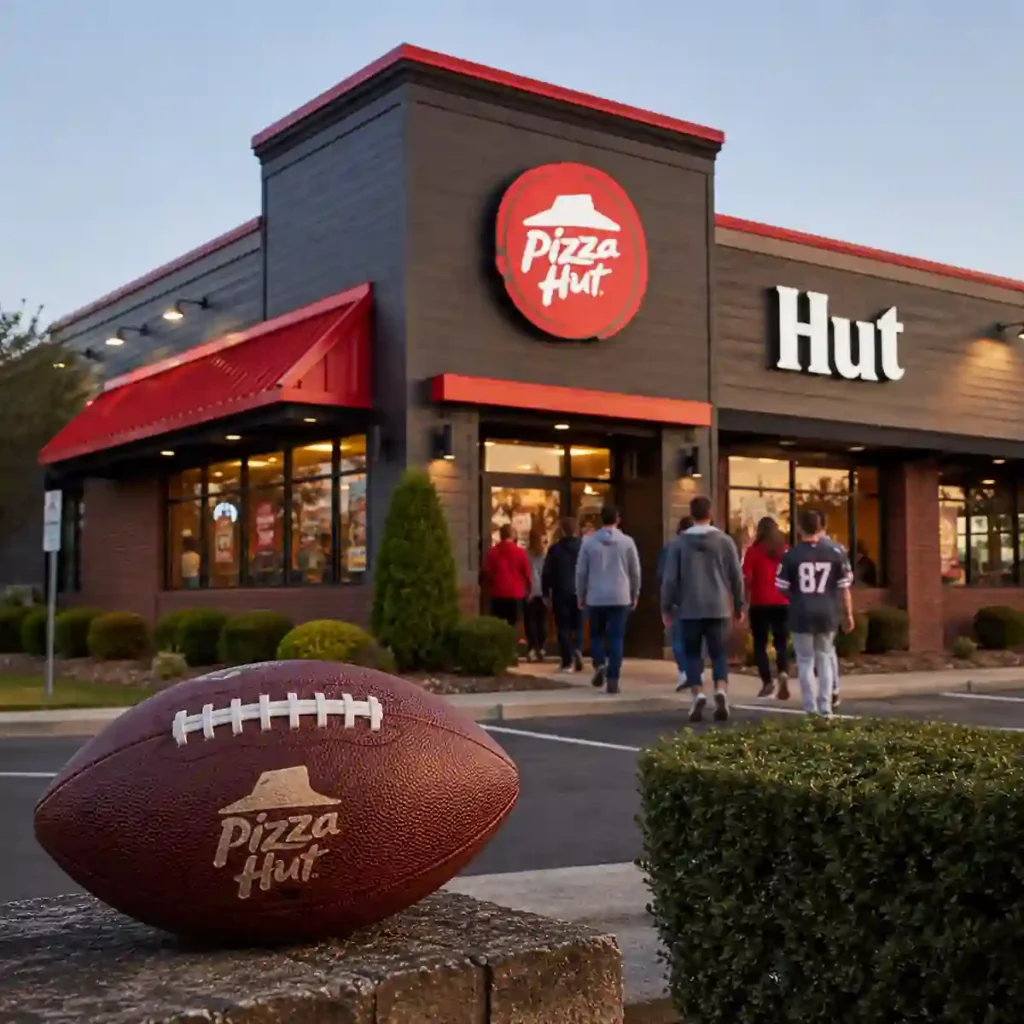

Pizza Hut is temporarily dropping the “Pizza” from its famous name at select locations, turning signs into a football-themed “Hut Hut” as part of a promotion tied to the 2026 football season.
The change is not permanent. It is a limited marketing campaign built around “hut,” a word associated with football quarterback cadence. The promotion arrives during a major period of change for Pizza Hut, including a $2.7 billion ownership restructuring and plans to close about 250 underperforming U.S. restaurants.
Why did Pizza Hut change its name to ‘Hut’?
At select restaurants, Pizza Hut has covered the “Pizza” portion of exterior signs with red football imagery, leaving “Hut” visible. Two signs together can create the “Hut Hut” effect, a playful reference to language commonly associated with the start of a football play.
Pizza Hut has told customers they can call the company “HUT” for the next 25 weeks. The company describes the idea as a limited activation celebrating its longtime connection with football traditions rather than a company-wide rebrand.
How long will the Pizza Hut name change last?
The broader “HUT” campaign is tied to 25 weeks of football. The 2026 NFL regular season begins Sept. 9 and runs into January 2027.
However, customers should not expect every Pizza Hut restaurant to replace its signage. The physical changes are being deployed at select locations, while the shortened branding can also appear in advertising and on social media.
Is Pizza Hut permanently changing its name?
No. Pizza Hut remains the restaurant’s established brand. There is no announced permanent switch to “Hut,” and customers do not need a different website, app or ordering service.
The distinction is important because photographs of the modified signs can make the promotion look like a permanent corporate name change. For customers, normal Pizza Hut operations continue.
The campaign comes amid a $2.7 billion ownership shake-up
The football promotion arrives months after Yum! Brands announced agreements to sell the Pizza Hut businesses through two transactions valued at approximately $2.7 billion combined.
Private equity firm LongRange Capital agreed to acquire Pizza Hut outside mainland China for approximately $1.5 billion. Yum China Holdings agreed to buy Pizza Hut’s mainland China business for approximately $1.2 billion.
Yum! began reviewing strategic options for Pizza Hut in November 2025. According to the official Yum! Brands announcement, the company determined that the transactions would provide Pizza Hut with ownership structures better suited to its markets and long-term priorities.
Yum! could also receive an additional $75 million earn-out from the LongRange deal by 2030. It estimated approximately $2.3 billion in net proceeds from the two transactions after taxes, fees and adjustments, excluding that potential payment.
The $1.2 billion Pizza Hut China transaction closed on Aug. 7. At that point, Yum! said the LongRange transaction remained on track to close during August, subject to customary closing conditions and regulatory approvals.
The ownership changes come during wider upheaval in the restaurant industry, where brands are using promotions and restructuring to compete for consumer spending. Chipotle recently used a similar event-driven approach with its limited-time BOGO promotion.
Hannah Montana Starbucks Drink Goes Viral — But There’s a Raspberry Problem
Paul McCartney Opposes EU Veggie Burger Ban: What’s Behind the Debate
Pizza Hut plans to close about 250 U.S. restaurants
Pizza Hut is also reducing its U.S. footprint. Yum! Brands CEO Chris Turner said in February that roughly 250 U.S. Pizza Hut restaurants were expected to close during 2026.
The closures focus on underperforming locations and represented about 3% of the chain’s U.S. footprint when announced. They are separate from the “HUT” campaign and do not mean Pizza Hut is leaving the U.S. market.
Pizza Hut is bringing back its retro restaurant experience
While ownership changes behind the scenes, Pizza Hut has also been leaning into nostalgia. Some franchise restaurants are reviving elements associated with the chain’s 1980s and 1990s dining rooms.
Tim Sparks, president of franchisee Daland Corporation, said 38 locations had been converted to the nostalgic format as of May, with more being evaluated. Features can include red plastic cups, checkerboard tablecloths, Tiffany-style lamps, red booths, salad bars and, at some restaurants, Pac-Man arcade games.
Pizza Hut has also highlighted BOOK IT!, its reading rewards program dating to the 1980s, which became known for rewarding children who met reading goals with Personal Pan Pizza.
The nostalgia strategy comes as other major consumer brands experiment with new ways to attract shoppers. Walmart, for example, recently made a significant checkout change by adding Apple Pay and Google Pay support.
What does ‘Hut Hut’ mean for Pizza Hut customers?
For customers, the practical impact is small. Menus, restaurants and normal ordering channels continue operating under Pizza Hut.
The “Hut Hut” signage is primarily a football-season marketing device. The more important long-term story is happening behind it: Pizza Hut is moving through an ownership transition, closing weaker U.S. locations and experimenting with both nostalgia and seasonal marketing to keep the decades-old brand relevant.

Make Swikblog your go-to source on Google for reliable updates, smart insights, and daily trends.