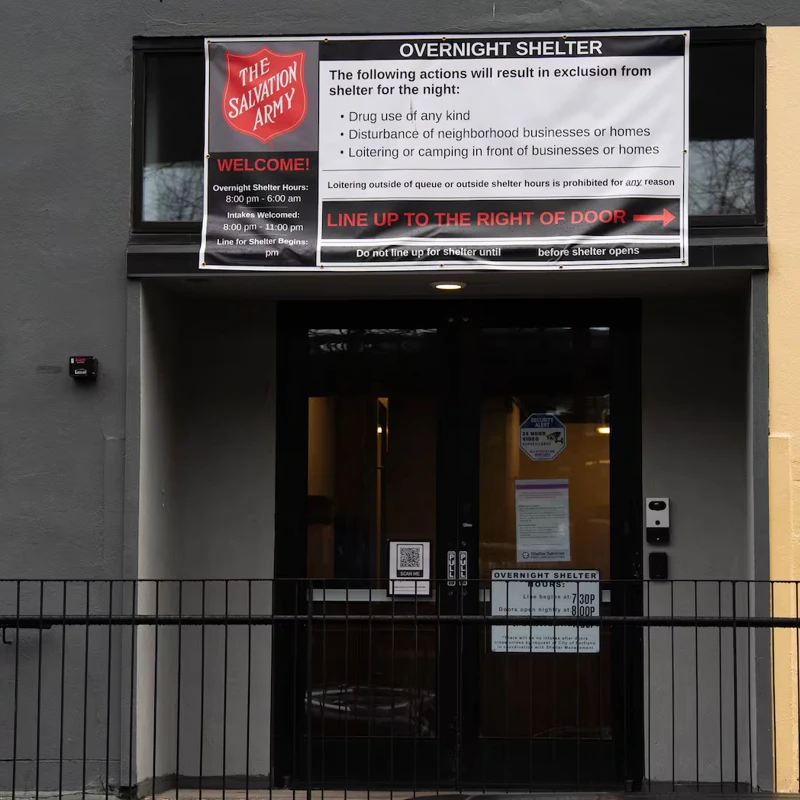

Portland’s decision to close the 200-bed Northrup Shelter in the Pearl District says as much about the city’s finances as it does about its homelessness strategy. On the surface, this is a budget story: City Hall is trying to close a $172 million gap before the next fiscal year begins in July, and officials are cutting some of the most expensive parts of the system. But underneath that is a harder truth. Portland is being forced to decide what kind of homelessness response it can still afford, what kind of public backlash it is willing to absorb, and what happens to the people who depend on a shelter when the math no longer works.
The shelter, located at Northwest 15th Avenue and Northwest Northrup Street, was one of the bigger pieces of Mayor Keith Wilson’s push to rapidly expand overnight-only shelter space. Operated by the Salvation Army, the site offered room for up to 200 people each night and became part of a broader plan to create enough new capacity for as many as 1,500 people across Portland. The message behind that strategy was direct: get more people indoors quickly, reduce the number sleeping outside, and build visible momentum around a city problem that has frustrated residents for years.
Now one of the mayor’s highest-profile shelters is heading toward closure. Portland plans to terminate the lease for the building, though the city has not publicly pinned down an exact shutdown date. What officials have made clear is the reason. According to the mayor, Northrup is the city’s highest-cost shelter facility, and in a year defined by cuts, that made it vulnerable from the start.
That explanation matters because it shows the closure is not being framed as a failure of purpose. City leaders are not saying the shelter was unnecessary. They are saying it is too expensive to preserve in the current budget climate. That distinction may sound technical, but it shapes the political argument ahead. If a shelter closes because it is underused, unsafe or ineffective, the city can present that as a performance decision. If it closes mainly because it costs too much, then the debate shifts to priorities.
There were, however, warning signs that made the shelter an easier target. The most recent city data showed Northrup filled 62% of its beds in February, which means it was rarely at capacity. For officials under pressure to trim spending, that occupancy rate weakens the case for protecting one of the most expensive facilities in the network. A shelter can still be valuable without being full every night, especially if people see it as cleaner or safer than alternatives, but elected leaders facing a fiscal crisis often look first at cost per bed and cost per person served.
Why this closure matters beyond one building
Northrup is not just another program line in a spreadsheet. It has become a symbol of the competing forces shaping homelessness policy in Portland. Several people experiencing homelessness told local media they preferred staying there compared with some other shelters, describing it as cleaner and more manageable. That kind of feedback matters because shelter quality often determines whether people will actually use the beds a city works so hard to fund.
At the same time, the site was controversial almost from the moment it was proposed. Some Pearl District and Northwest Portland residents fought the plan before it opened, saying a large overnight shelter in the area would make the neighborhood feel less safe and less clean. That criticism did not fade after opening. It hardened. Last month, the owner of a nearby apartment building sued the city and the Salvation Army, alleging the shelter hurt the property’s market value. Neighborhood leaders who opposed the project now see its closure as overdue recognition that the city placed too much burden on a residential area without enough supporting services.
That is what makes this decision politically potent. Different groups can look at the same closure and claim it proves their argument. Shelter advocates can say Portland is retreating from emergency capacity just when homeless residents need stability. Neighborhood critics can say the city finally admitted a badly handled model was not working on the ground. Budget hawks can argue that a city staring down a massive deficit cannot keep paying premium prices for a site that is not even full. All three arguments now exist at once.
The closure also arrives in the middle of broader retrenchment. Last month, Portland announced that 100 shelter beds would close this summer because of funding constraints and low use, including an overnight shelter in the Centennial neighborhood. Northrup is the second of Wilson’s newer overnight shelters set to close this year, and there is little reason to assume it will be the last. The mayor’s budget proposal includes a 30% reduction in the city’s shelter budget, a signal that the system is entering a far leaner phase.
Anyone trying to understand the stakes should look at the wider trend in homelessness policy. Emergency shelter can provide immediate relief, but it is costly to run at scale, especially when sites require security, staffing, sanitation and neighborhood mitigation. Public agencies across the country have been wrestling with the same trade-off: how much to spend on short-term beds versus long-term housing and prevention. The U.S. Department of Housing and Urban Development has repeatedly stressed the importance of pairing emergency responses with durable housing pathways, but local governments often find themselves caught between urgent street conditions and limited revenue.
What Portland may be choosing next
The debate in Portland is already moving toward what comes after overnight shelters. Some local officials argue money should be redirected to upstream solutions such as day shelters, storage, sanitation support and services aimed at keeping people from falling deeper into homelessness. That approach may make sense on paper, especially in a budget year, because it can spread funds across a broader range of interventions. But it also creates a more immediate question: where do people sleep tonight when a 200-bed shelter disappears?
The Salvation Army has signaled concern about exactly that problem. So have advocates who worry that a shrinking shelter system will push more people back onto the street even as leaders talk about longer-term fixes. Multnomah County is facing its own pressure as well, with a proposal to close 600 county-run shelter beds in the next fiscal year. Taken together, city and county reductions could leave the region with substantially fewer places for unhoused residents to go.
That is why the Northrup decision feels larger than one lease termination. It marks the point where Portland’s homelessness strategy is being reshaped by financial constraint, neighborhood politics and unresolved questions about what kind of system actually works. The city may save money by closing its most expensive shelter. It may also reduce one of the cleaner overnight options available to people who need a bed. Both things can be true at the same time. And that tension, more than any press conference line or budget table, is the real story Portland now has to answer.
You may also like: Japan Arms Export Policy Expands to 17 Countries as China Tensions Rise

Make Swikblog your go-to source on Google for reliable updates, smart insights, and daily trends.