
South African airline passengers are facing stricter scrutiny over a common travel essential, as power banks emerge as one of the most frequently flagged items at domestic airports. Carriers are reinforcing rules that could see devices confiscated or passengers delayed at check-in if they fail to comply with lithium-ion battery regulations.
The renewed warning follows growing safety concerns and recent enforcement by airlines such as FlySafair, which has reiterated that power banks must be carried in hand luggage only. The policy aligns with global aviation standards but continues to catch travellers off guard, particularly those unaware that placing a power bank in checked baggage is strictly prohibited.
“Power banks are spare lithium-ion batteries,” the airline said, emphasising that these devices fall under international safety rules designed to reduce fire risks onboard aircraft. Checked bags are routinely scanned, and any power bank detected in the cargo hold may be removed, potentially delaying baggage processing or boarding.
The restrictions are based on capacity. Power banks rated under 100 watt-hours are permitted in carry-on luggage without approval, covering most everyday devices used for smartphones, tablets and laptops. However, units between 100Wh and 160Wh require airline permission and are limited to two per passenger. Anything exceeding 160Wh is banned entirely from passenger flights, regardless of where it is packed.
This places many high-capacity chargers — often marketed for heavy-duty use or laptops, ranging from roughly 20,000mAh to 48,000mAh — under tighter control. For frequent travellers who rely on larger battery packs, that threshold can mean the difference between a smooth journey and a last-minute issue at the airport.
The issue has gained urgency after South Africa’s National Consumer Commission issued a recall for a specific 10,000mAh wireless power bank model over overheating concerns. Authorities warned that faulty lithium-ion batteries can pose a fire hazard, reinforcing why aviation regulators treat spare batteries with caution.
Why airlines insist on cabin-only rules
The distinction between carry-on and checked baggage is critical. In the event of overheating or a short circuit, a power bank stored in the cabin can be quickly identified and handled by crew. In contrast, incidents in the cargo hold are far harder to detect and control, increasing the risk of escalation before intervention is possible.
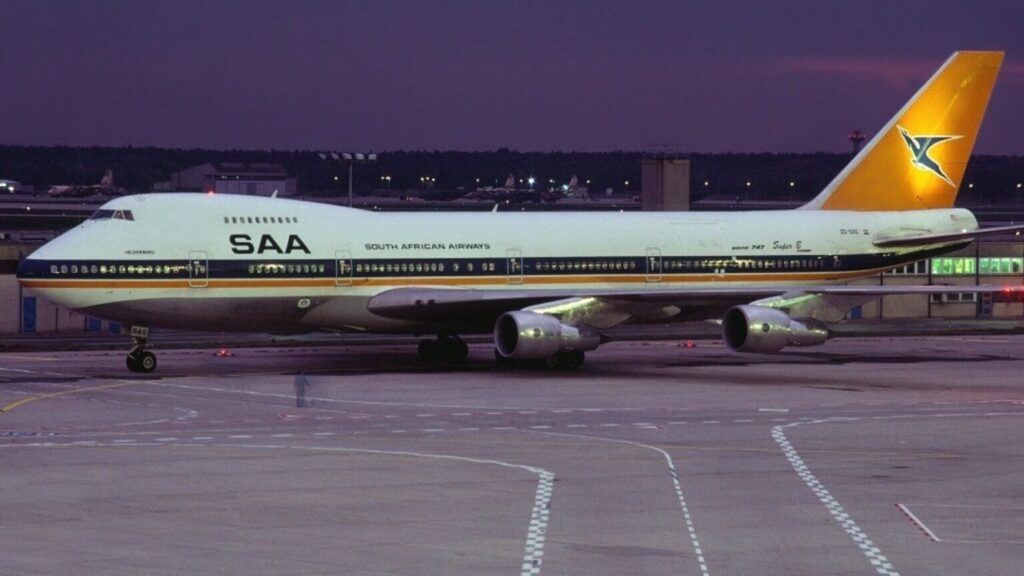
This risk is not hypothetical. South Africa’s aviation history includes the 1987 crash of South African Airways Flight 295, where a fire in the cargo hold led to the loss of all 159 people onboard. While the exact cause remains unresolved, the disaster continues to shape how airlines approach fire risks below deck.
Modern aviation policy reflects those lessons. Lithium-ion batteries, particularly spare ones, are now tightly regulated worldwide, with organisations such as the International Air Transport Association setting clear guidelines adopted by airlines across regions.
Growing global scrutiny on power banks
South Africa is not alone in tightening oversight. In 2025, China introduced a blanket restriction on power banks lacking a specific “3C” safety certification for flights to and from the country, highlighting how regulators are increasingly focused on battery standards and traceability.
The broader trend reflects a shift in how airlines treat everyday electronics. Power banks, once seen as harmless accessories, are now recognised as high-density energy devices that require clear limits and supervision. As passenger reliance on portable charging grows, so too does the need for awareness of aviation rules.
For travellers, the implications are immediate. A misplaced power bank can trigger delays, additional screening, or confiscation at the airport. With domestic carriers enforcing these rules more consistently, passengers are being urged to check capacity ratings, ensure devices are properly labelled, and keep them within easy reach in cabin bags.
As airlines balance convenience with safety, the message is becoming harder to ignore: the small device keeping phones charged on the move is also one of the most tightly controlled items in modern air travel.
You may also like: South Africa Daily Lotto Results for 11 April 2026.

Make Swikblog your go-to source on Google for reliable updates, smart insights, and daily trends.