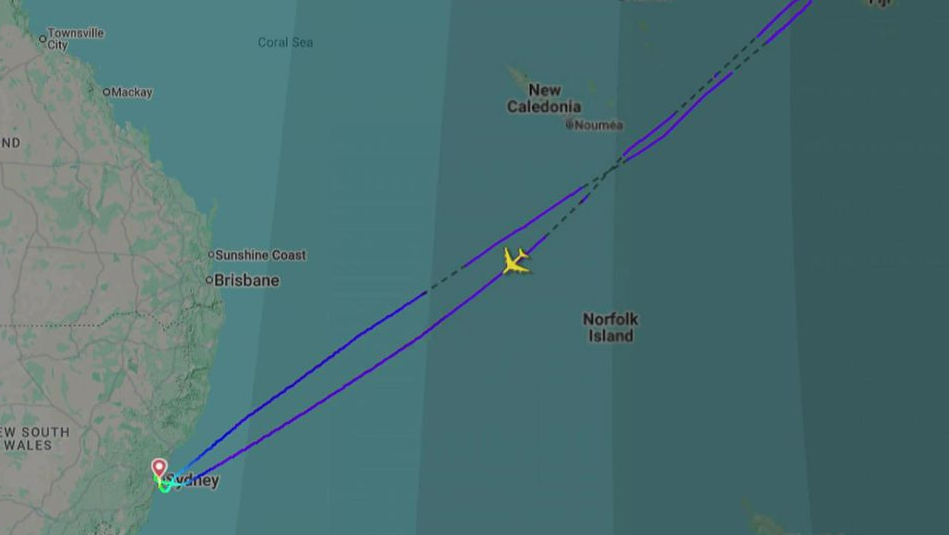

A Qantas flight bound for the United States was forced to make a dramatic mid-air turnaround after a passenger suffered a medical emergency, prompting the aircraft to dump fuel over the Pacific before returning to Sydney. The incident, which unfolded about four hours into the Sydney–Dallas journey, quickly drew attention due to the scale of disruption and the unusual sight of fuel being released mid-flight.
Flight QF7 departed Sydney on April 5 and was en route to Dallas when the emergency occurred near the North Fiji Basin. With the aircraft already deep into its long-haul journey and carrying a full fuel load, the crew made the decision to abandon the trip and head back to Australia rather than divert to a closer airport.
The jet circled at high altitude to release fuel — a standard aviation safety procedure — before beginning its return leg to Sydney, where emergency services were on standby. The aircraft remained airborne for several more hours before landing safely, allowing the affected passenger to receive immediate medical treatment.
Mid-air decision shaped by safety and logistics
While diversions are common in aviation, the decision to return to Sydney instead of landing in Fiji reflects the complexity of long-haul operations. Aircraft on routes such as Sydney to Dallas take off with large fuel reserves, often exceeding their safe landing weight in the early stages of flight.
In such cases, pilots must either burn fuel over time or dump it to reduce weight before landing. Returning to Sydney also ensured access to Qantas’ full medical and operational support network, rather than relying on more limited facilities at a remote diversion point.
Passengers on board described the moment the flight turned back, with Australian Olympic diver Sam Fricker sharing footage of fuel being released over the ocean. He later said the incident underscored how “the cost of human life is priceless,” reflecting the broader sentiment on board.
Rising costs add pressure to disruptions
The incident comes at a time when airlines are already facing elevated fuel costs and operational pressures. Global oil supply disruptions linked to tensions in the Middle East have pushed aviation fuel prices higher, making unplanned events like fuel dumping and long-haul returns particularly costly.
Still, industry standards leave little room for compromise in emergencies. Safety protocols dictate that passenger wellbeing takes priority over fuel costs or scheduling concerns, even on routes where disruptions can cascade across global networks. Guidance from bodies such as the International Air Transport Association reinforces strict procedures around emergency handling, aircraft weight limits and diversion planning.
After landing in Sydney, passengers experienced a delay of around two hours before the service was rescheduled. A replacement crew later operated the flight, which departed again at approximately 9:25pm, allowing the journey to Dallas to continue.
For travellers, the episode highlights the unpredictability of ultra-long-haul flying, where decisions must be made far from land and often under pressure. For airlines, it serves as another reminder that even the most carefully planned journeys can change course within minutes — with safety overriding every other consideration.
You may like: Dow Futures Drop 100 Points Near 46,600 as Oil Shock Rattles Monday Open

Make Swikblog your go-to source on Google for reliable updates, smart insights, and daily trends.