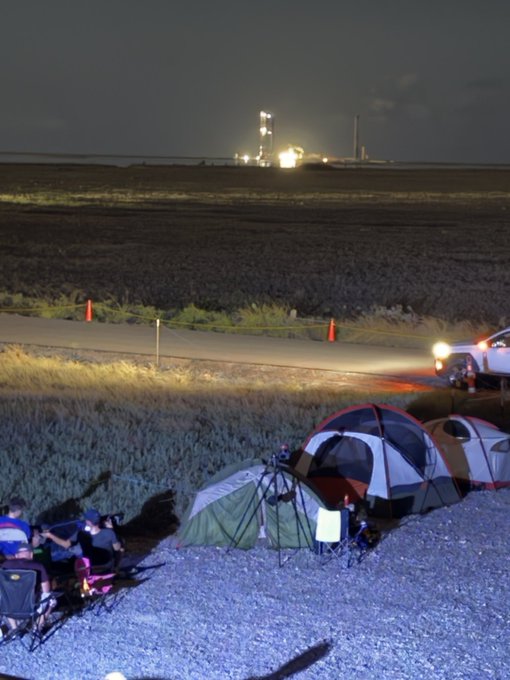

SpaceX sent Starship into Earth orbit for the first time on Monday, September 28, 2026, marking a major breakthrough for the giant reusable rocket after years of suborbital flight testing.
Starship Flight 14 launches in ~30 minshttps://t.co/aJL2lNl2Xt
— Elon Musk (@elonmusk) September 28, 2026
Starship Flight 14 lifted off from Starbase in South Texas shortly before 9 a.m. ET, carrying 26 next-generation Starlink V3 satellites. SpaceX planned a mission lasting nearly 10 hours, with the spacecraft expected to circle Earth about six times before leaving orbit and targeting a Pacific Ocean splashdown west of Chile.
The achievement moves Starship beyond the trajectories used on its first 13 integrated flights and into the sustained orbital operations SpaceX needs for larger Starlink deployments, future reusable missions and NASA’s Artemis lunar program.
Flight 14 takes Starship into Earth orbit
Starship and its Super Heavy booster together stand about 407 feet, or 124 meters, tall. The system was designed around SpaceX’s goal of eventually recovering and rapidly reusing both stages.
Earlier Starship vehicles had already reached space, so Flight 14 should not be described as Starship’s first trip to space. The milestone is more specific: it is the first Starship flight to reach Earth orbit.
For Flight 14, Starship was targeting an altitude of roughly 170 miles, or 275 kilometers. Instead of following the shorter suborbital profiles used on earlier tests, the spacecraft was scheduled to complete approximately six orbits.
Readers following the program’s development can also see our coverage of Starship Flight 13 and SpaceX’s preparations for Starlink V3 deployment, which helped set the stage for the more ambitious objectives of Flight 14.
26 Starlink V3 satellites raise the stakes
Flight 14 is more than an orbital demonstration. Starship is carrying 26 Starlink V3 satellites, giving SpaceX an opportunity to demonstrate the giant spacecraft as a working satellite launcher.
SpaceX says each V3 satellite is designed to add approximately 1 terabit per second of downlink capacity to the constellation. That number represents overall satellite capacity and should not be confused with the internet speed available to an individual Starlink customer.
Starship’s larger payload capability could eventually allow SpaceX to deploy considerably more Starlink capacity per mission than Falcon 9 can carry.
Three satellites aboard Flight 14 are also expected to carry imaging equipment intended to observe Starship’s heat-shield tiles while the spacecraft is in orbit. The imagery could help engineers assess the thermal-protection system before the vehicle encounters the extreme heating of atmospheric reentry.
Super Heavy returns to the Gulf
The Super Heavy first stage was not scheduled for a launch-tower catch on Flight 14. After separating from Starship, the booster was instead directed toward a controlled splashdown in the Gulf.
SpaceX modified the booster after ice-related clogging interfered with a splashdown attempt on the previous test flight. The company has already demonstrated catching Super Heavy with the giant mechanical arms on its Starbase tower, but Flight 14 places greater emphasis on proving Starship’s orbital capabilities.
NVIDIA Launches Open Agent Safety Platform With 100+ Partners
Grok 4.7 Release Date: September 12 Launch Details and Latest Updates
The hardest tests come after reaching orbit
Reaching orbit is a major milestone, but it does not by itself mean the entire Flight 14 mission is complete.
After deploying its satellites and completing its planned time in orbit, Starship must perform a deorbit burn, reenter Earth’s atmosphere at orbital velocity and survive intense heating before descending toward its targeted Pacific splashdown west of Chile.
The return is particularly important for SpaceX’s reuse plans. Starship’s heat shield must eventually survive repeated orbital reentries without requiring extensive refurbishment between missions.
No recovery of Starship from the Pacific is planned for Flight 14. SpaceX wants to gather flight data before progressing toward the more difficult objective of returning Starship directly to its launch site and catching the spacecraft with the tower.
Readers can follow technical details and official mission updates through SpaceX’s Starship Flight 14 mission page.
NASA has a stake in Starship’s progress
Starship’s orbital milestone matters beyond SpaceX’s satellite business. NASA selected a modified Starship as part of its Human Landing System program for Artemis lunar missions.
The spacecraft will require capabilities far beyond those demonstrated on Flight 14 before supporting astronauts around the Moon, including extended operations, docking and other complex maneuvers. Successful orbital operations nevertheless provide SpaceX with data needed for that broader development effort.
SpaceX is preparing for more Starship launches
SpaceX ultimately wants Starship to launch large payloads frequently while reusing both the spacecraft and Super Heavy booster. Starlink deployment is one of the most immediate commercial applications, while lunar missions and Elon Musk’s longer-term Mars ambitions require considerably more development.
The company is also expanding infrastructure needed to support a higher Starship launch cadence. That broader buildout includes projects covered in our report on SpaceX’s planned Starship expansion in Louisiana.
Flight 14 arrives on a notable SpaceX anniversary
The orbital flight comes exactly 18 years after another pivotal moment in SpaceX history. On September 28, 2008, Falcon 1 successfully reached orbit, becoming the first privately developed liquid-fueled rocket to do so.
Eighteen years later, SpaceX is reaching the orbital milestone with a vastly larger launch system designed around full reuse.
Attention now shifts to the rest of Flight 14. Deployment of the 26 Starlink V3 satellites, prolonged orbital operations, the deorbit maneuver, atmospheric reentry and Pacific splashdown will provide the next indications of how close Starship is to becoming a routinely usable orbital launch system.

Make Swikblog your go-to source on Google for reliable updates, smart insights, and daily trends.