Wall Street lost ground again as a sudden oil spike put inflation back at the center of the market story. Investors were already uneasy after the Federal Reserve signaled a cautious path on interest rates, but the latest jump in crude added a fresh layer of pressure. By Thursday’s session, the Dow Jones Industrial Average (^DJI), the S&P 500 (^GSPC), and the Nasdaq Composite (^IXIC) were all under pressure as traders repriced the risks of higher energy costs, stickier inflation, and fewer chances of near-term rate relief.
The Dow Jones Industrial Average (^DJI) was recently quoted at 46,136.37, down 88.78 points, or about 0.19% intraday. Even so, the broader session tone was weaker, with the Dow down roughly 0.8% at one point, a decline of more than 300 points. The S&P 500 (^GSPC) shed around 0.7%, while the Nasdaq Composite (^IXIC) also dropped about 0.8%. That broad move showed the selling was not limited to one sector. Blue chips, growth names, and rate-sensitive technology stocks all felt the pressure as investors moved to reduce risk.
Oil prices became the market’s main inflation trigger
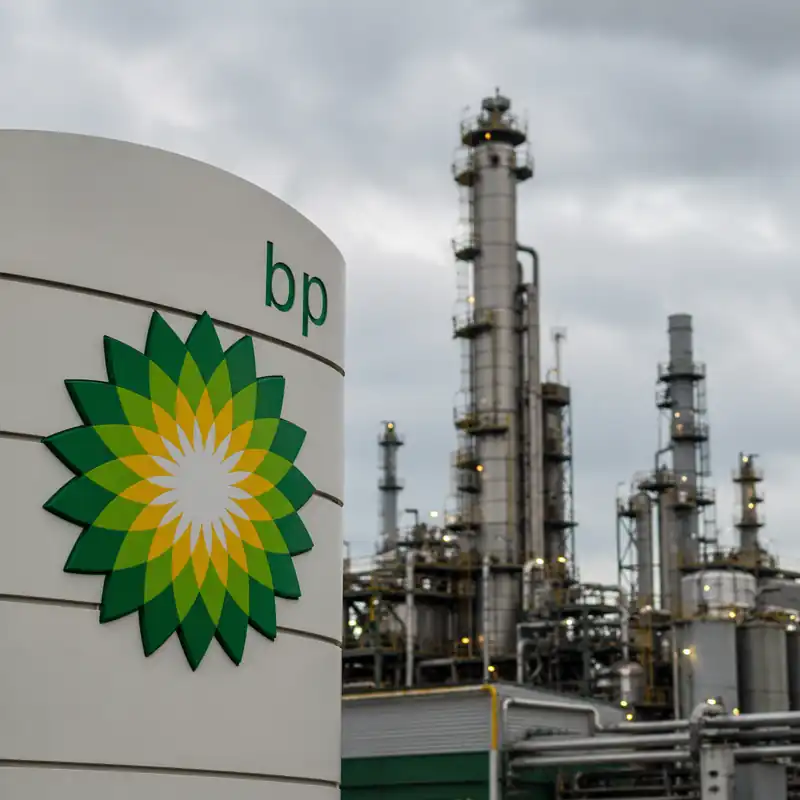
The sharpest move came in energy. Brent crude (BZ=F) surged as much as 10% to hit $119 per barrel before easing back toward $112. West Texas Intermediate crude (CL=F), the main US benchmark, traded around $96 per barrel. That widening gap between Brent and WTI became another sign that global supply fears were rising fast.
The jump followed attacks involving Iran and Israel on key oil and gas sites, a development that raised fears of deeper disruption across global energy markets. For stock investors, this matters because oil is not just another commodity. A sustained increase in crude tends to ripple through transport, freight, aviation, logistics, manufacturing, chemicals, and household fuel bills. Higher energy costs can lift the price of moving goods, producing goods, and ultimately selling them to consumers.
That is exactly why inflation fears returned so quickly. If oil remains elevated, companies may face shrinking margins unless they pass those costs on. If they do pass them on, consumers face higher prices. That combination can keep inflation hotter than policymakers want, and it can delay hopes for easier monetary policy.
Inflation details suddenly matter more again
The inflation concern is not abstract. The Federal Reserve aims for 2% inflation over the longer run, measured by the Personal Consumption Expenditures (PCE) price index. Oil itself is volatile, but when energy spikes are large enough, they can spill over into transportation, services, food distribution, and business operating costs. That can keep headline inflation elevated and, if the shock lasts long enough, influence broader price expectations too.
Markets were already digesting a more cautious message from the Fed. Policymakers kept rates steady, and while one rate cut this year has not been ruled out, expectations have turned much less confident. Investors are increasingly worried that if energy-driven inflation pushes price pressures higher again, the central bank may stay on hold longer than the market had hoped. In a higher-for-longer rate environment, borrowing stays expensive, consumer demand can soften, and richly valued stocks often come under extra pressure.
This is why Thursday’s pullback felt bigger than a simple headline reaction. Traders were not only reacting to oil. They were also reacting to what higher oil could mean for inflation forecasts, bond yields, corporate margins, and the Fed’s policy path over the rest of the year.
Dow, S&P 500 and Nasdaq all faced different kinds of pressure
The Dow (^DJI) tends to feel the weight of higher input costs across industrial and cyclical names. The S&P 500 (^GSPC) reflects the broader market, so its decline showed how widespread the caution had become. The Nasdaq (^IXIC), with its heavy concentration of technology and growth stocks, remained especially vulnerable because higher interest rates generally make future earnings less valuable in present terms.
Company-specific stories added to the negative tone. Micron Technology (MU) fell even after solid earnings, as investor attention shifted toward the scale of its AI spending plans. Alibaba (BABA) slid after reporting a steep 67% drop in quarterly profit, reinforcing concerns about how quickly heavy AI investments will translate into returns. Tesla (TSLA) also moved lower, with shares near $383.32, down roughly 2.41%, after regulators escalated an investigation into its supervised Full Self-Driving system.
Those individual declines mattered because they showed investors were not willing to overlook fresh risks. In a nervous tape, strong earnings, innovation spending, or long-term narratives are not always enough to hold stocks up if the macro picture is getting more difficult.
The market is now watching oil, inflation and the Fed together
The next move for stocks may depend on whether crude cools down or remains elevated. If BZ=F stays far above recent ranges and CL=F keeps trading near the mid-$90s, investors may continue to price in more inflation pressure and fewer rate-cut hopes. That would keep the focus firmly on the relationship between energy, inflation, and Federal Reserve policy.
For now, Thursday’s message was direct: higher oil prices revived inflation fears, and that pushed the Dow, S&P 500, and Nasdaq lower together. Until energy markets stabilize, Wall Street may remain highly sensitive to every geopolitical headline and every inflation signal that follows.
For background on the Fed’s preferred inflation measure and its 2% goal, see the Federal Reserve’s PCE inflation overview.
You May Also Like

Make Swikblog your go-to source on Google for reliable updates, smart insights, and daily trends.