
By Swikriti Dandotia
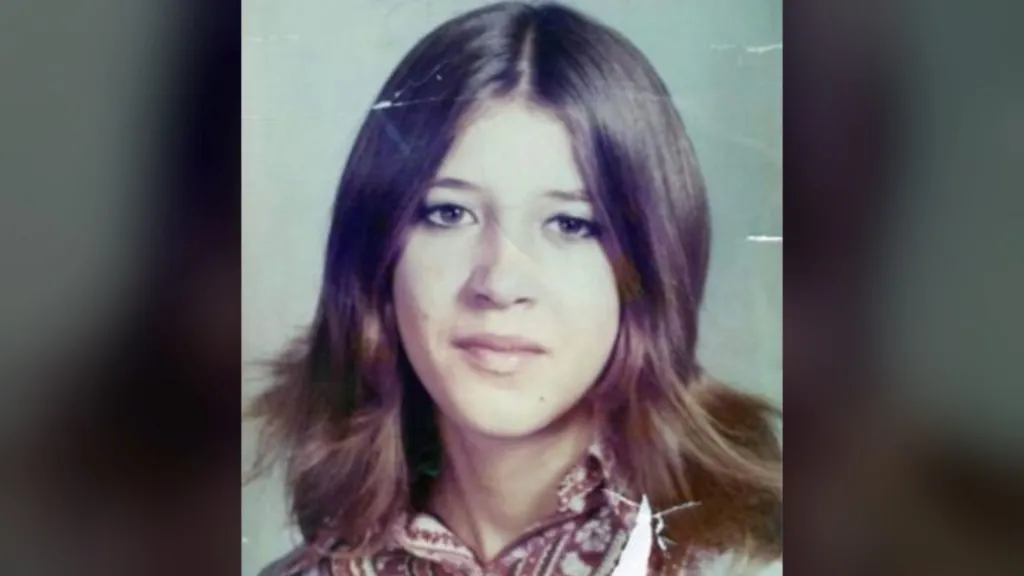
A 51-year-old murder mystery that haunted Utah for decades has finally been solved, bringing long-awaited answers in one of the many cases tied to serial killer Ted Bundy. Authorities have now confirmed through advanced DNA testing that Bundy was responsible for the 1974 killing of 17-year-old Laura Ann Aime — a case that remained open for more than five decades despite earlier suspicions and even a partial confession.
Laura Ann Aime disappeared on Halloween night in 1974 after leaving a party alone. According to investigators, she had stepped out to go to a nearby convenience store but never returned. Weeks later, hikers discovered her body in American Fork Canyon, a remote area in Utah. The condition of her body made it clear that the crime was brutal, and from the very beginning, authorities believed it could be linked to Bundy, who was living in Salt Lake City at the time and studying law at the University of Utah.
Even before his execution in 1989, Bundy had reportedly admitted involvement in Laura’s killing. However, he refused to provide details about the crime, leaving investigators without enough evidence to formally close the case. For years, the Utah County Sheriff’s Office kept the investigation open, waiting for the kind of proof that could stand beyond doubt.
DNA breakthrough that ended a 51-year mystery
That proof finally came decades later, thanks to advances in forensic science. Officials revealed that newly available DNA technology — introduced in recent years — allowed crime labs to extract usable genetic material from evidence that had long been considered too degraded or too small for testing. The preserved evidence from Laura’s case was carefully re-examined, and scientists were able to isolate a single male DNA profile.
That profile was then submitted to a national law enforcement database, where it matched Ted Bundy’s DNA. Authorities described the result as “irrefutable,” finally confirming what investigators had suspected for years. With this confirmation, the case has now been officially closed.
Officials said that if Bundy were still alive today, prosecutors would have pursued the death penalty based on this evidence. The confirmation also means that Laura’s case can now be definitively included among Bundy’s known victims, adding to the list of at least 30 women and girls he is believed to have murdered across the United States.
A victim remembered beyond the headlines
While the name Ted Bundy often dominates headlines, authorities made it clear that the focus of this case is Laura Ann Aime. Described as an outgoing and free-spirited teenager, Laura loved outdoor activities, cared deeply for her family, and had a passion for horses. Her family remembered her as someone who brought joy into their lives — a detail that stood in stark contrast to the violence of her death.
At a recent news conference, officials and family members spoke about the emotional weight of finally getting confirmation after 51 years. For decades, her loved ones lived with uncertainty — knowing what likely happened, but never having it officially proven. This development, while painful, brings a level of closure that had been missing for generations.
Investigators also revealed that evidence suggested Laura may have been kept alive for several days after her abduction, highlighting the disturbing nature of the crime. This detail adds to the already chilling pattern associated with Bundy, who was known for manipulating victims, gaining their trust, and then attacking them in isolated locations.
How Bundy operated across multiple states
By the mid-1970s, Bundy had already begun a killing spree that spread across several states, including Washington, Utah, Colorado, and Florida. His crimes often followed a similar pattern — approaching women in public places, sometimes pretending to be injured, and then luring them away before committing the murders.
He was first arrested in 1975 after police found suspicious items in his car, including rope, handcuffs, and a ski mask. Despite being sentenced to prison, Bundy managed to escape custody twice in 1977. After his second escape, he traveled to Florida, where he committed some of his most notorious crimes, including attacks at a sorority house and the murder of a 12-year-old girl.
His case captured national attention not only because of the brutality of his crimes but also because of his ability to appear charming and trustworthy — a factor that allowed him to approach victims without raising immediate suspicion. More details about Bundy’s criminal history and investigations can be found in the FBI’s official case archive.
Why cases like this are being solved now
This case is part of a growing trend in which decades-old crimes are being solved using modern forensic advancements. Today’s DNA technology can analyze evidence that was previously unusable, including samples that are mixed, damaged, or extremely small. Combined with national databases, investigators can now match suspects even many years after a crime was committed.
The Utah case highlights the importance of preserving evidence. Investigators noted that careful storage of materials from the 1974 crime made it possible to revisit the case decades later. Without that preservation, this confirmation may never have been possible.
According to an Associated Press report, new crime lab technology introduced in recent years played a key role in extracting the DNA that led to the match. This suggests that other cold cases — especially those linked to known serial offenders — may also see breakthroughs in the near future.
For law enforcement, this is not just about closing old files. It is about delivering answers to families who have waited years, sometimes generations, for clarity. For Laura Ann Aime’s family, that moment has finally arrived.
After more than five decades, the uncertainty is gone. The case that once relied on suspicion and partial confession now rests on definitive scientific proof. And while nothing can undo what happened in 1974, the truth — confirmed at last — ensures that Laura’s story is no longer unfinished.

Make Swikblog your go-to source on Google for reliable updates, smart insights, and daily trends.