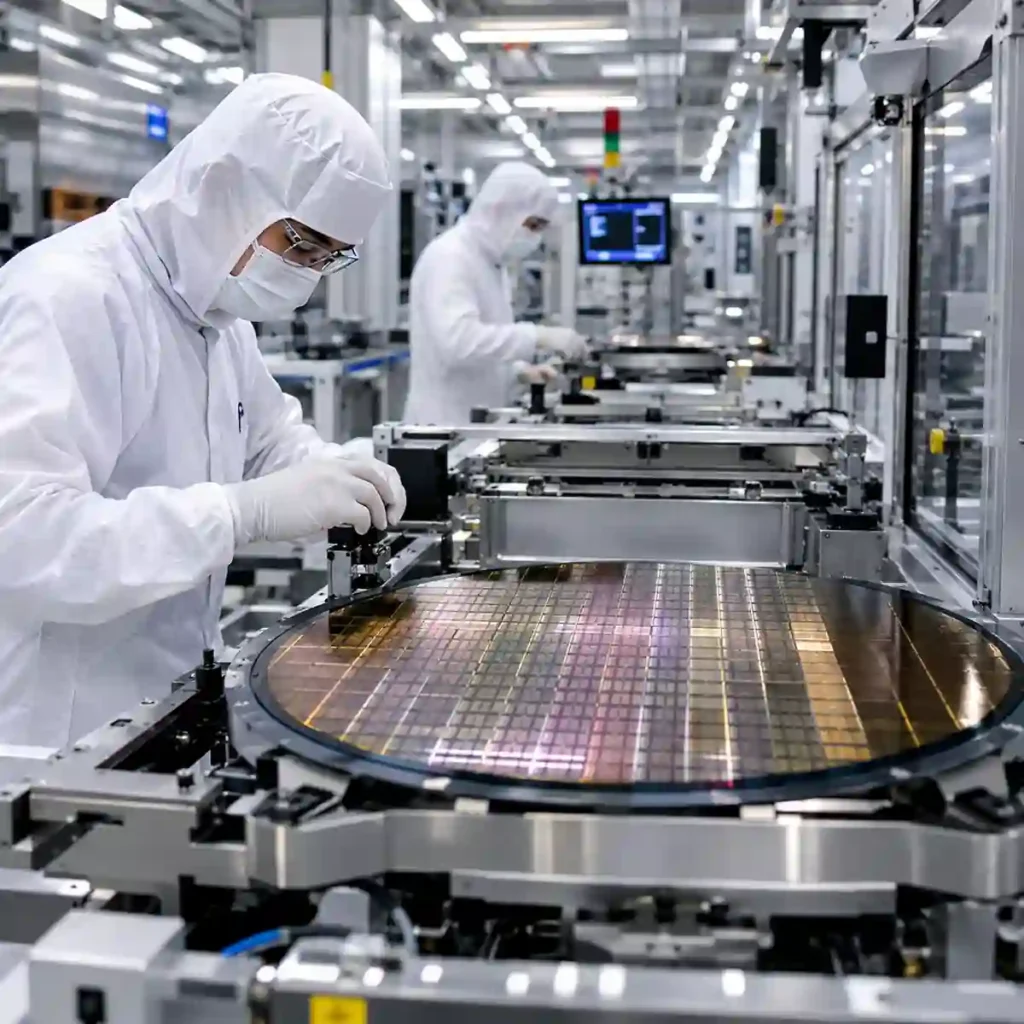

TSMC says its estimated need for chipmaking equipment has climbed to nearly twice the level it expected at the end of 2025, as the artificial-intelligence boom pushes advanced semiconductor demand beyond available capacity. The world’s largest contract chipmaker is now advancing close to 20 fabs at the same time — several times its historical pace — but says it is still struggling to fully satisfy customer demand.
The sharp revision offers one of the clearest signs yet of how quickly AI infrastructure spending is reaching the semiconductor manufacturing supply chain. For Nvidia, AMD and other chip designers, the issue is crucial: more AI orders ultimately require more advanced wafers, packaging and manufacturing capacity from TSMC.
TSMC equipment needs jump from 1.0× to 1.9×
Speaking at SEMICON Taiwan 2026 on September 2, TSMC Senior Vice President and Deputy Co-Chief Operating Officer Cliff Hou described a dramatic change in the company’s equipment requirements.
Using TSMC’s December 2025 estimate as a baseline of 1.0, Hou said the requirement had increased to about 1.5 times that level after the first quarter. By July, it had climbed again to approximately 1.9 times the original estimate.
That does not mean TSMC has already spent 90% more on equipment. The figure represents how much its estimated equipment purchasing requirement has increased compared with its earlier planning assumption — an important distinction for investors following semiconductor spending.
Nearly 20 fabs are being advanced at once
TSMC is responding with an expansion program far larger than its historical norm. Hou said the company is advancing 13 fabs in Taiwan and another five or six overseas, bringing the total to roughly 18 or 19 facilities.
In the past, TSMC typically worked on only four or five new fabs simultaneously. The current program therefore represents roughly four to five times its previous expansion pace, yet Hou indicated that the company still cannot fully keep up with demand.
The challenge is not simply buying additional machines. New semiconductor capacity requires specialized cleanrooms, construction crews, engineers, power and water infrastructure, manufacturing tools and lengthy installation and qualification processes.
Nvidia and AMD AI demand adds pressure
AI accelerators are a major driver of the capacity race. Nvidia and AMD rely heavily on TSMC’s advanced manufacturing technologies, while cloud providers and technology companies continue investing in increasingly powerful data centers.
Nvidia’s growth in particular has made manufacturing capacity a critical part of the AI investment story. The relationship between accelerating AI demand and semiconductor supply is also visible in Nvidia’s latest AI growth and chip supply outlook.
The pressure extends beyond GPUs. AI data centers also need CPUs, networking chips, custom accelerators and other advanced components, increasing demand across several parts of TSMC’s manufacturing network.
TSMC boosts 2026 investment to $60-$64 billion
TSMC’s changing equipment requirements come alongside a substantial increase in capital spending. The company raised its 2026 capital expenditure guidance to $60 billion-$64 billion, up from an earlier $52 billion-$56 billion range.
Roughly 70%-80% of the budget is expected to support advanced process technologies, while additional spending is directed toward specialty technologies, advanced packaging, testing and related manufacturing infrastructure.
TSMC’s latest financial results and management guidance are available through its official investor relations results.
Advanced packaging is another AI bottleneck
Making more wafers alone will not solve the capacity problem. High-performance AI processors increasingly rely on advanced packaging technologies such as CoWoS to combine computing dies with high-bandwidth memory.
TSMC is expanding packaging capacity alongside leading-edge wafer production. Substrates, materials and specialized equipment are also under pressure as AI chips become larger and more complex.
This creates a chain of potential bottlenecks: additional wafer capacity has limited value if packaging, memory, substrates or manufacturing equipment cannot expand at a similar rate.
Google Pics AI Image Editor: AI Pro and Ultra Features, Price and Availability
SpaceX Louisiana $100 Billion Starbase Launch Site: What We Know
Skilled workers are becoming a constraint
Another challenge is less visible than expensive chipmaking machines. TSMC’s unprecedented construction program has increased its need for experienced workers capable of building cleanrooms and installing sophisticated semiconductor equipment.
Hou highlighted skilled construction labor in Taiwan as part of the capacity challenge. Even with enormous capital resources, semiconductor fabs cannot be brought online instantly.
Why TSMC’s 1.9× figure matters
The speed of the revision may be more important than the number itself. TSMC moved from its December equipment estimate to 1.5 times that level after the first quarter and then to 1.9 times by July.
That acceleration comes as investment continues pouring into AI infrastructure. Nvidia has also been involved in initiatives aimed at mobilizing huge amounts of capital for computing infrastructure, explored further in our report on Nvidia’s $500 billion AI infrastructure financing initiative.
For Nvidia, AMD and other TSMC customers, additional investment should eventually provide more capacity, but fabs and packaging facilities take time to build and qualify. For equipment and materials suppliers, the message is equally significant: AI demand is moving upstream from data centers into almost every layer of semiconductor manufacturing.
TSMC’s latest figures show why the industry’s capacity race remains unresolved. The company is spending tens of billions of dollars, advancing close to 20 fabs and sharply increasing its equipment requirements — and demand is still moving fast enough to keep pressure on supply.

Make Swikblog your go-to source on Google for reliable updates, smart insights, and daily trends.