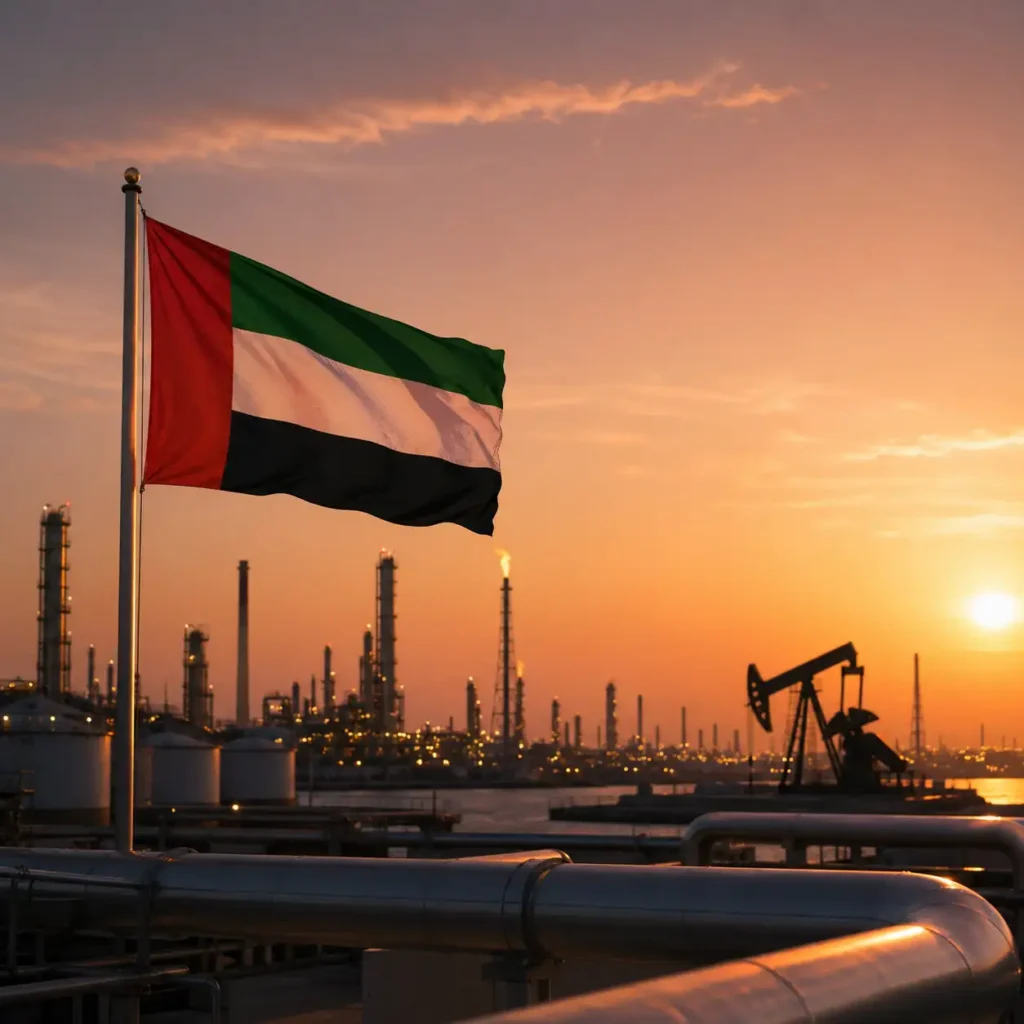

The United Arab Emirates’ decision to leave OPEC and OPEC+ from May 1, 2026, marks a major turning point for the global oil market, not only because of the country’s size as a producer but because of what the move says about the future of energy power in the Gulf.
The UAE confirmed the decision through the state-run Emirates News Agency, saying the withdrawal follows a review of its production policy, future capacity and national energy priorities. The announcement ends a long chapter that began in 1967, when Abu Dhabi joined the oil producers’ group years before the UAE federation itself was formed.
For decades, OPEC membership gave the UAE a seat inside one of the world’s most influential energy alliances. But the country’s latest move suggests Abu Dhabi now sees greater value in flexibility than in quota-based coordination. That is a powerful signal at a time when oil markets are already unsettled by geopolitical risk, supply disruption and shifting demand expectations.
The UAE has been one of OPEC’s most important producers, sitting behind Saudi Arabia and Iraq among the group’s largest members. Its departure therefore cannot be treated as symbolic. OPEC+ relies heavily on discipline among major exporters to influence supply and support price stability. When a key Gulf producer steps away, traders immediately begin asking whether the alliance’s grip on the market is weakening.
The timing makes the announcement even more sensitive. The oil market is already facing severe pressure from the Iran war and disruption around the Gulf. Reports cited in the original news flow said OPEC production fell sharply in March, with a loss of about 7.88 million barrels per day and total output dropping to roughly 20.79 million barrels per day. That scale of supply shock is larger than the cuts seen during the early Covid-19 demand collapse and deeper than many previous oil-market crises.
Much of the concern is focused on the Strait of Hormuz, the narrow route between Iran and Oman that normally carries a major share of the world’s crude oil and liquefied natural gas. Any threat to shipping through that corridor can quickly move energy prices, raise insurance costs and force buyers to reassess supply security. For Gulf exporters, the route is not just a shipping lane; it is the artery connecting their energy economies to the world.
Against that backdrop, the UAE appears to be repositioning itself as a more independent energy supplier. The country has already stated ambitions to raise production capacity from around 3.4 million barrels per day toward 5 million barrels per day by 2027. Remaining inside a system of production quotas could limit how quickly it uses that capacity, especially when global customers are searching for reliable barrels during periods of disruption.
This is why the decision is best understood as a strategic reset rather than a sudden break. Abu Dhabi wants the ability to respond to market demand, protect its commercial interests and reassure long-term buyers that it can act with speed. The official statement also stressed responsibility and market stability, suggesting the UAE wants to avoid being seen as reckless even as it exits the producer alliance.
The move also fits the UAE’s wider economic transformation. Oil remains central to national wealth and influence, but the country has spent years building a broader growth model around trade, finance, aviation, tourism, technology and clean energy. Its non-oil economy now accounts for roughly three quarters of GDP, according to the information shared in the news report. That diversification gives Abu Dhabi more confidence to shape policy around long-term national competitiveness rather than purely around cartel discipline.
At the same time, this is not a story about the UAE moving away from hydrocarbons. The opposite may be true. By leaving OPEC+, the country gains more room to invest across oil, gas, renewables and low-carbon projects while deciding for itself how aggressively it wants to expand production. The UAE is trying to present itself as a modern energy power: still a major crude producer, but one that also wants credibility in future-facing energy sectors.
For Saudi Arabia, the exit creates a delicate challenge. Riyadh remains the central force inside OPEC and OPEC+, but the UAE’s departure weakens the perception of Gulf unity. The alliance has often dealt with disagreements behind closed doors, including disputes over baselines, quotas and market strategy. This time, one of its most capable producers has chosen to leave altogether.
The political layer is equally important. The reports you shared point to frustration inside the UAE over the regional response to Iranian attacks and wider Gulf security tensions. Anwar Gargash, diplomatic adviser to the UAE president, criticized the political and military response from Gulf and Arab partners, saying the stance had been historically weak. That kind of public criticism gives the oil decision a broader regional context: energy policy, security policy and Gulf diplomacy are increasingly intertwined.
The United States is another part of the story. OPEC has frequently been criticized by U.S. political leaders for supporting higher oil prices through coordinated output limits. The UAE’s exit could be viewed in Washington as a blow to OPEC’s influence, especially if it leads to more supply flexibility. But whether consumers actually see relief at the pump will depend on how much additional crude reaches the market and how the wider conflict affects shipping.
For oil prices, the immediate impact could move in more than one direction. More UAE independence may eventually add supply, which would normally weigh on prices. But the loss of coordination inside OPEC+ could also increase volatility, particularly if traders believe the alliance is entering a weaker phase. Markets often react not just to barrels produced today, but to confidence in future supply management.
Importing economies will be watching closely. Higher crude volatility can feed into inflation, airline costs, freight rates and fuel prices. For countries already dealing with expensive energy, even the perception of instability in the Gulf can complicate central bank decisions and business planning.
OPEC’s next response will matter. The group continues to emphasize market stability through coordinated policy, as reflected in recent updates on the OPEC website. But after May 1, it will have to operate without one of its strongest Gulf members. That may force the remaining producers to either tighten cooperation or accept a more fragmented supply landscape.
For readers following broader geopolitical and energy developments, similar global shifts are being tracked in world news and politics coverage, where changing alliances and regional tensions continue to shape market outcomes.
The final outcome will depend on what Abu Dhabi does after the exit becomes effective. If the UAE raises output steadily while keeping communication clear, it could strengthen its role as a reliable independent supplier. If the move triggers deeper divisions inside OPEC+, the oil market could face a more unpredictable era. Either way, May 1 now stands as a key date for the future balance of power in global crude.
You may like: Brazil Bans Election Betting and Prediction Markets

Make Swikblog your go-to source on Google for reliable updates, smart insights, and daily trends.