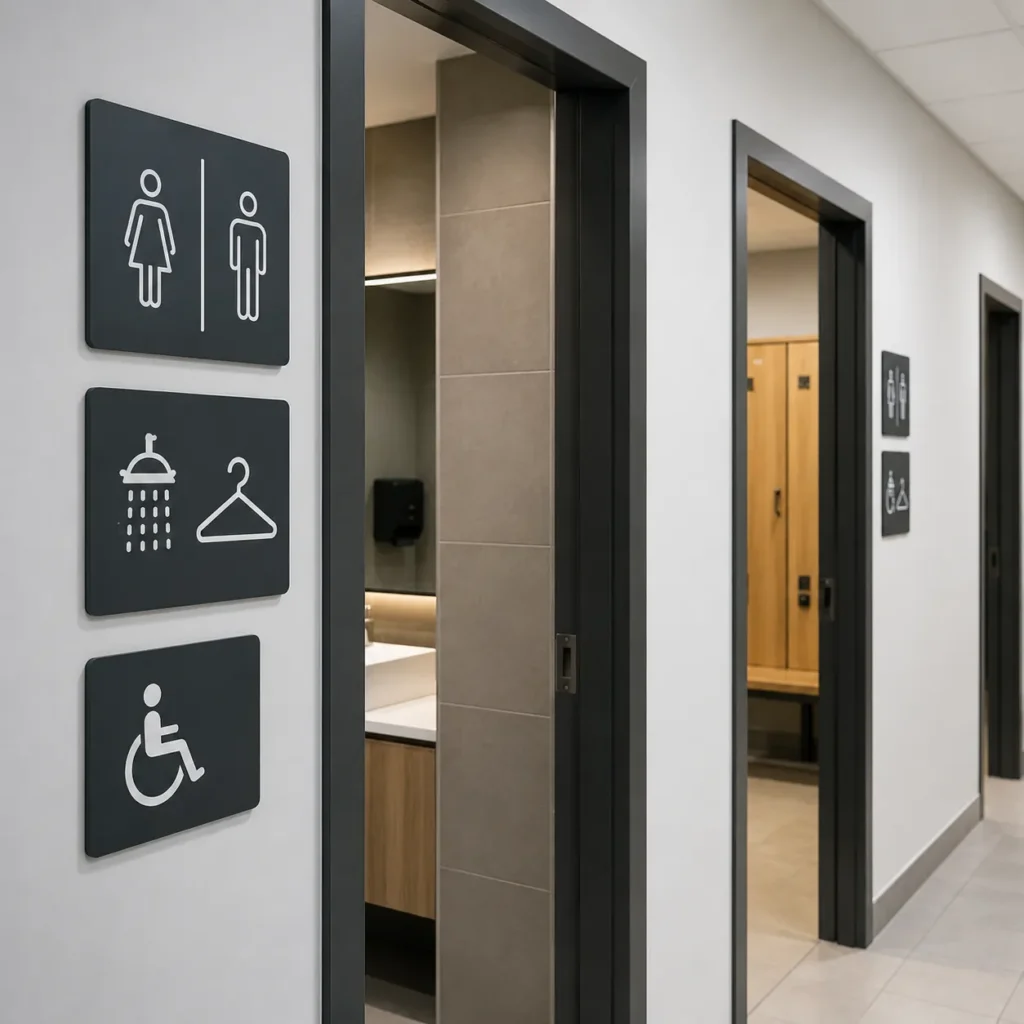

Thousands of organisations across England, Scotland and Wales may need to review toilets, changing rooms, signs and staff policies under the Equality and Human Rights Commission’s updated Code of Practice. The draft guidance was laid before Parliament on May 21, 2026, following the UK Supreme Court’s ruling on the meaning of sex under the Equality Act 2010.
The Equality and Human Rights Commission, known as the EHRC, is Britain’s independent equality regulator. Its revised code explains how businesses, public authorities, charities and associations should apply the Equality Act when providing services, including separate-sex and single-sex facilities.
The latest official position is that the document remains a draft and has not yet commenced. It will gain statutory status only after the UK Government sets a date for it to come into force.
Why the guidance was updated
The changes follow the Supreme Court judgment delivered on April 16, 2025, in the case brought by For Women Scotland against the Scottish Ministers. The court ruled that the terms “woman,” “man” and “sex” in the Equality Act 2010 refer to biological sex.
The court also made clear that transgender people remain protected from discrimination under the separate protected characteristic of gender reassignment. Service providers must therefore consider all relevant Equality Act duties when deciding how facilities will operate.
The code does not create a new Act of Parliament. It provides practical guidance on how existing law should be followed. Courts and tribunals may consider a statutory code when deciding whether an organisation has complied with its legal obligations.
What organisations may need to review
The draft guidance addresses facilities and services where sex can be legally relevant, including communal toilets, changing rooms, hospital accommodation, domestic abuse services and some sports or leisure settings.
It does not mean every building must be redesigned. The appropriate response will depend on the organisation’s size, the service it provides and the facilities already available.
A small business with one self-contained, lockable toilet may require little or no physical work. A hospital, gym or leisure centre with several communal areas may need a more detailed assessment of access, privacy and alternative provision.
A practical review could include checking signs, layouts, booking procedures, written policies and instructions given to staff. Organisations can examine the complete Equality Act 2010 draft Code of Practice published by the UK Government before making decisions.
Nearly 13,000 toilets could be affected
The supporting impact assessment estimates that 12,895 toilets, 5,526 changing rooms and 18,422 signs could be affected across Great Britain.
Of the toilets included in the estimate, 10,563 are linked to private-sector providers, 1,154 to public-sector organisations and 1,178 to voluntary-sector bodies.
The changing-room estimate includes 4,527 privately operated facilities, 494 public-sector facilities and 505 facilities run by voluntary organisations. The assessment also identifies 15,091 private-sector signs, 1,648 public-sector signs and 1,683 voluntary-sector signs that may require attention.
These figures are estimates rather than a confirmed list of compulsory alterations. Some premises may already have arrangements that meet the guidance, while others could require changes to signs, policies or physical facilities.
Ten-year cost estimate reaches £703.1 million
The central estimated implementation cost is £703.1 million over ten years after an optimism-bias adjustment. That adjustment is used in government assessments to account for the possibility that projects may cost more than initially expected.
The estimate includes more than construction. It covers cleaning, staff training, policy revisions, signage and administrative work. Construction costs were assessed at £162.3 million before adjustment and £211 million after it.
Cleaning represents another substantial expense, rising from an estimated £230.2 million to £299.2 million after adjustment. These costs are spread across private businesses, public bodies and voluntary organisations rather than being charged to a single sector.
Regulatory reviews can create different obligations depending on the industry and country involved. Recent examples include the JB Hi-Fi refund process linked to misleading discount claims and compensation arrangements for eligible Telstra customers, both of which required organisations to communicate clearly with affected customers.
Government expects the impact to vary
The Government says the updated code clarifies the law rather than introducing new legal rules. Many organisations may already provide male and female facilities alongside a separate accessible or self-contained unisex option.
Those providers may need only limited changes, such as revising signs or staff instructions. Larger and more complex premises are more likely to face detailed operational reviews because they serve more people and operate several shared spaces.
Organisations should avoid assuming that one approach will suit every service. Decisions must be based on the Equality Act, the purpose of the facility and the circumstances in which it is provided.
Debate continues over practical access
For Women Scotland has welcomed the legal clarity provided by the Supreme Court decision. Transgender rights organisations have raised concerns about how the guidance could affect access to everyday services and the treatment of transgender people.
The draft code seeks to explain how providers should manage rights protected under the Equality Act, including sex and gender reassignment. However, disagreements remain over how those duties should be applied in specific settings.
Front-line staff may require clear training because they could be responsible for explaining policies, responding to complaints and preventing harassment. Poorly written rules or inconsistent enforcement could increase confusion and the risk of disputes.
What happens before the code takes effect
The official government publication continues to state that the draft code has not commenced and does not currently have the force of law. The Government must set a commencement date before it becomes a statutory Code of Practice.
Until then, organisations can review their existing arrangements, identify possible gaps and seek appropriate legal advice where their facilities or services are complex.
Changes are unlikely to look identical across every venue. Some organisations may update a small number of signs, while hospitals, leisure centres and large public buildings may need broader reviews covering layouts, alternative facilities, cleaning, staff training and day-to-day management.

Make Swikblog your go-to source on Google for reliable updates, smart insights, and daily trends.