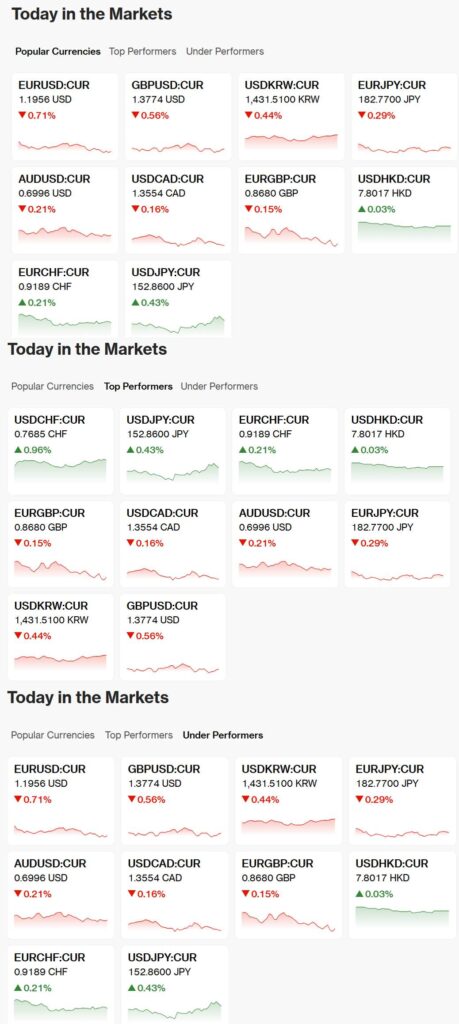
The US dollar price today is under pressure, with the currency extending recent losses as investors across the United States and Canada reassess the outlook for interest rates and economic growth. The move reflects growing expectations that US monetary policy may turn more cautious in the months ahead.
In early trading, the US Dollar Index (DXY) — which measures the dollar against a basket of major global currencies — was hovering near 96, close to its weakest level in several years. A lower DXY generally signals broad-based dollar weakness, something North American markets are watching closely.
For Canadian readers tracking the exchange rate, USD/CAD was trading around the 1.34 level today. That means one US dollar is buying slightly fewer Canadian dollars than earlier this month, offering modest relief for Canadian consumers who rely on US imports, while squeezing exporters who sell into the American market.
Why the dollar is weaker today: Markets are increasingly focused on signals from the Federal Reserve suggesting that the fight against inflation is making progress. Recent economic data has pointed to slower price growth and signs of cooling in parts of the US labor market, leading traders to price in the possibility of interest-rate cuts later this year.
Interest rates are a major driver of currency values. When US rates are expected to fall, the dollar often loses appeal relative to other currencies, as global investors seek higher yields elsewhere. This dynamic has become a key theme in currency markets so far in 2026.
Canada’s perspective: A softer US dollar can help ease imported inflation north of the border, especially for goods priced in US dollars such as vehicles, electronics, and fuel-related products. However, it also complicates the outlook for Canadian exporters and policymakers, as a stronger loonie can weigh on export competitiveness.
Currency traders are also paying close attention to political and fiscal developments in Washington. Uncertainty around government spending, trade policy, and long-term debt has added to volatility in the dollar, making markets more sensitive to headlines than usual.
What happens next: The next policy decision from the US central bank is shaping up as a major turning point. Investors will be watching closely for any shift in language that hints at how soon borrowing costs could come down and how confident policymakers are about the economic outlook.
Readers who want to follow official policy updates can track meeting dates and statements directly via the Federal Reserve’s FOMC calendar, which often acts as a major catalyst for currency moves.
For households and businesses across the US and Canada, the direction of the dollar matters more than daily charts might suggest. It influences everything from mortgage rates and travel costs to fuel prices and corporate earnings. Whether today’s weakness marks a temporary pullback or the start of a longer trend will depend on how inflation, growth, and central-bank policy evolve in the weeks ahead.

Make Swikblog your go-to source on Google for reliable updates, smart insights, and daily trends.