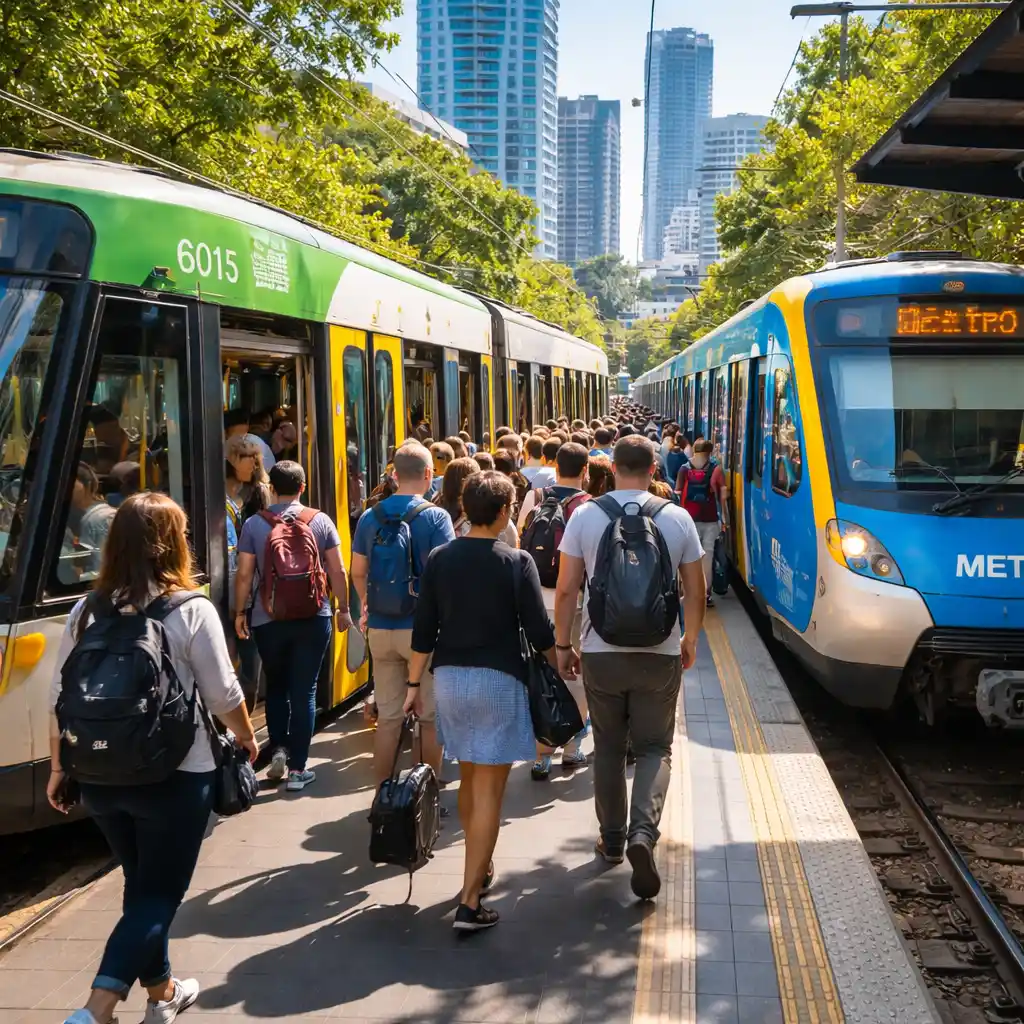

Public transport across Victoria will remain free for longer, with the state government confirming that commuters can continue to travel without paying fares until the end of May 2026. The announcement, made by Premier Jacinta Allan, extends the existing April scheme and introduces a longer-term plan that will see fares cut by 50 per cent through to the end of 2026.
The move is part of a broader cost-of-living response as households face sustained pressure from high fuel prices. For many Victorians, especially daily commuters, the extension provides immediate relief at a time when transport costs have become a growing concern.
Free travel extended as part of cost-of-living relief
The free public transport initiative was originally introduced for April following a sharp rise in fuel prices linked to global tensions. What began as a short-term measure has now been expanded, with the government confirming that all train, tram and bus travel across the state will remain free until May 31.
From June, fares will return but at a reduced level, with tickets priced at roughly half their usual cost. The discounted fares are expected to remain in place until at least the end of 2026, supported by a funding commitment of around $400 million in the upcoming state budget.
The policy is designed not only to ease financial pressure but also to encourage more people to consider public transport as an alternative to driving. With petrol prices remaining volatile, the government is positioning the initiative as both economic support and a shift towards more sustainable travel habits.
According to coverage from The Age, the extension reflects growing concern about household expenses and the need for practical, immediate support measures.
Usage increases, but behaviour shift remains limited
The first weeks of free travel saw a noticeable increase in passenger numbers, particularly on regional train lines where demand surged. Some commuters reported overcrowded services and difficulty finding parking at major stations, highlighting how quickly demand can rise when cost barriers are removed.
However, official data paints a more measured picture. Around 21 million public transport trips were recorded in the first two weeks of the scheme, representing an increase of about 10 per cent compared with the previous fortnight. While that is a meaningful rise, it is broadly in line with the same period last year.
This suggests that while free travel has encouraged additional use, it has not dramatically transformed overall travel behaviour. Experts say this is because cost is only one factor influencing how people choose to get around.
Research conducted during the scheme found that about 26 per cent of Victorians shifted some trips from cars to public transport. But similar patterns were observed in other states where fares were not reduced, indicating that broader factors such as convenience, accessibility and travel time continue to play a major role.
For many commuters, especially those in outer suburbs or regional areas, public transport is not always the most practical option. Longer travel times, limited connections and the need to drive to stations can reduce the appeal, even when fares are free.
At the same time, the initiative has coincided with school holidays and the Easter period, which may have influenced travel patterns. Traffic data shows that road usage dropped at the start of April but has since returned closer to normal levels, suggesting the impact may be temporary.
Despite this, there are clear signs that Victorians are exploring alternatives to manage rising fuel costs. Car-sharing services have reported increased demand, while interest in electric and hybrid vehicles has also grown. The free transport scheme is just one part of a broader shift in how people are responding to economic pressure.
The coming months will be crucial in determining whether reduced fares can lead to more lasting changes. If commuters continue using public transport once fares return at discounted rates, it could support long-term efforts to reduce congestion and reliance on cars.
For now, the immediate benefit is clear. Victorians will have another month of completely free travel, followed by an extended period of significantly cheaper fares. Whether that translates into permanent changes in behaviour remains to be seen, but the policy has already reshaped how many people think about the cost of getting around.
You may like Massive LNG Canada Gas Flaring in Kitimat Sparks Health Concerns.

Make Swikblog your go-to source on Google for reliable updates, smart insights, and daily trends.


















