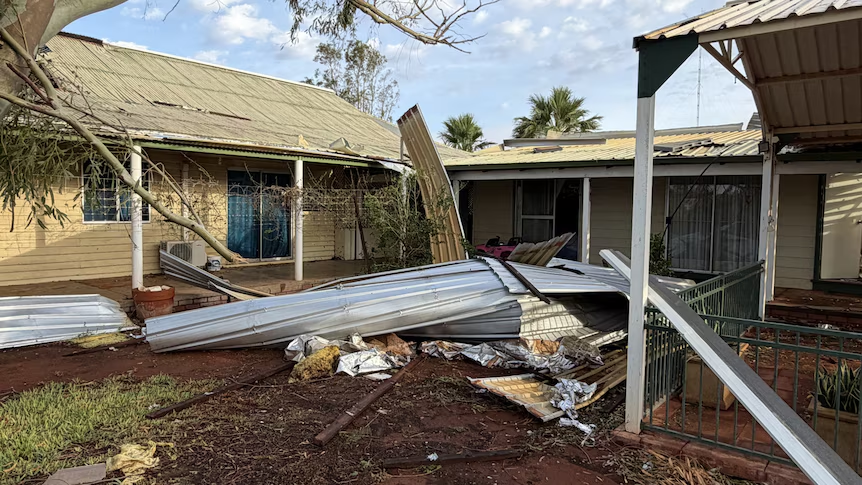

Western Australia’s recovery from Severe Tropical Cyclone Narelle has moved from emergency response into rebuilding, with Exmouth services, roads and flights largely restored by 14 July 2026. However, damaged homes, limited accommodation and repairs to public facilities continue to affect residents, workers, businesses and visitors.
Narelle struck Western Australia’s north-west on 27 March 2026 after redeveloping into a severe tropical cyclone. The system caused destructive winds, flooding, widespread electricity disruption and damage across Exmouth and other affected communities in the Gascoyne, Pilbara and Mid West.
Cyclone Narelle damage and immediate response
Early reports identified four destroyed structures and seven with severe damage, but those figures represented only the first inspections. A later Western Australian Government assessment found that more than 450 structures were damaged across affected areas.
Around 1,400 properties were without electricity during the immediate aftermath in Exmouth. That figure should not be treated as a current outage total because power-restoration work progressed after the cyclone.
The storm also damaged transport links, community facilities, tourism operations and pastoral properties. The wider impact reflected how quickly cyclone-strength winds and severe storms can disrupt power supplies across Western Australia, particularly in communities where repair crews must travel long distances.
Read More
Relief payments and recovery assistance
The Premier’s Relief Payment provided a one-off payment of $4,000 per eligible household where the principal residence was destroyed or suffered severe damage. A payment of $2,000 per eligible household applied where the principal residence suffered major damage.
The payments were not automatically available to everyone living in an affected area. Applicants had to meet the eligibility rules and show that their principal residence had sustained the required level of direct cyclone damage.
The separate Premier’s Natural Disaster Recovery Fund offered $20,000 to eligible residents whose homes were severely damaged or destroyed and $10,000 where a home suffered major damage. Local small businesses and community organisations could receive at least $5,000 for repairs and immediate recovery.
The Australian Government’s Disaster Recovery Allowance provided up to 13 weeks of income support for eligible workers and sole traders who lost income directly because of the cyclone.
Separate business assistance included grants of up to $20,000 for eligible small and medium businesses. Primary producer assistance included grants of up to $40,000 for eligible cleanup and reinstatement costs.
The availability of the Premier’s Relief Payment, the Premier’s Natural Disaster Recovery Fund and assistance for primary producers has changed during the recovery period. Residents, businesses and primary producers should check the official DFES Cyclone Narelle recovery page for the latest program status, eligibility requirements and application deadlines.
Power, legal and community support
Eligible Horizon Power residential and small-business customers in Exmouth who experienced an outage exceeding 12 hours were entitled to an automatic $240 Extended Outage Payment, double the standard $120 amount.
Horizon Power is also offering eligible customers support including waived connection or reconnection fees for destroyed properties, free repair or replacement of cyclone-damaged meters and assistance with temporary power during rebuilding. This additional support is available for eligible services until 31 March 2027.
Legal Aid WA continues to provide help with insurance, debt, tenancy, mortgages and other housing issues. Residents should keep photographs, repair estimates, receipts and correspondence when dealing with insurers or contractors.
The temporary support hub remains listed at the Exmouth Community Centre, 22 Maidstone Crescent, from 9am to noon on Tuesday, Wednesday and Thursday. Hours may change. The Department of Communities Disaster Relief Hotline is 1800 032 965 and operates from 9am to 4pm on weekdays.
Exmouth roads, airport and local facilities
Exmouth is open to visitors, and road restrictions into the town were lifted on 8 April. Travellers should still check current conditions before departure rather than relying on road closures issued during the March emergency.
Regular passenger flights are operating through Learmonth Airport, although cyclone-related repairs and temporary passenger arrangements may continue. Because official airport notices have changed during the recovery, travellers should confirm current screening, baggage, check-in and arrival procedures directly with the airport or their airline before departure.
Accommodation remains limited as rebuilding continues, and visitors are advised to confirm their booking before arriving. Shire administration, the library, visitor centre, aquarium, landfill and swimming pool are operating normally, while the Exmouth Spray Park remains closed for repairs.
Tantabiddi Boat Ramp and Exmouth Marina Boat Ramp are open. Bundegi Boat Ramp remains closed until further notice from Defence. The Shire does not control access to that facility.
Recovery continues after the warnings ended
The cyclone and flood warnings issued during the March emergency are no longer current. The focus is now on rebuilding homes, repairing facilities, supporting local businesses and helping residents manage insurance, housing and financial pressures.
Other severe weather systems, including Cyclone Vaianu’s damaging wind and flood threat in New Zealand, underline why residents and travellers should continue checking official warnings rather than relying on archived cyclone information.
Anyone still seeking assistance should check the DFES recovery page before applying or travelling, as grant availability, support-hub hours, road conditions and facility access can change during the longer recovery period.

Make Swikblog your go-to source on Google for reliable updates, smart insights, and daily trends.