
By Swikriti Dandotia
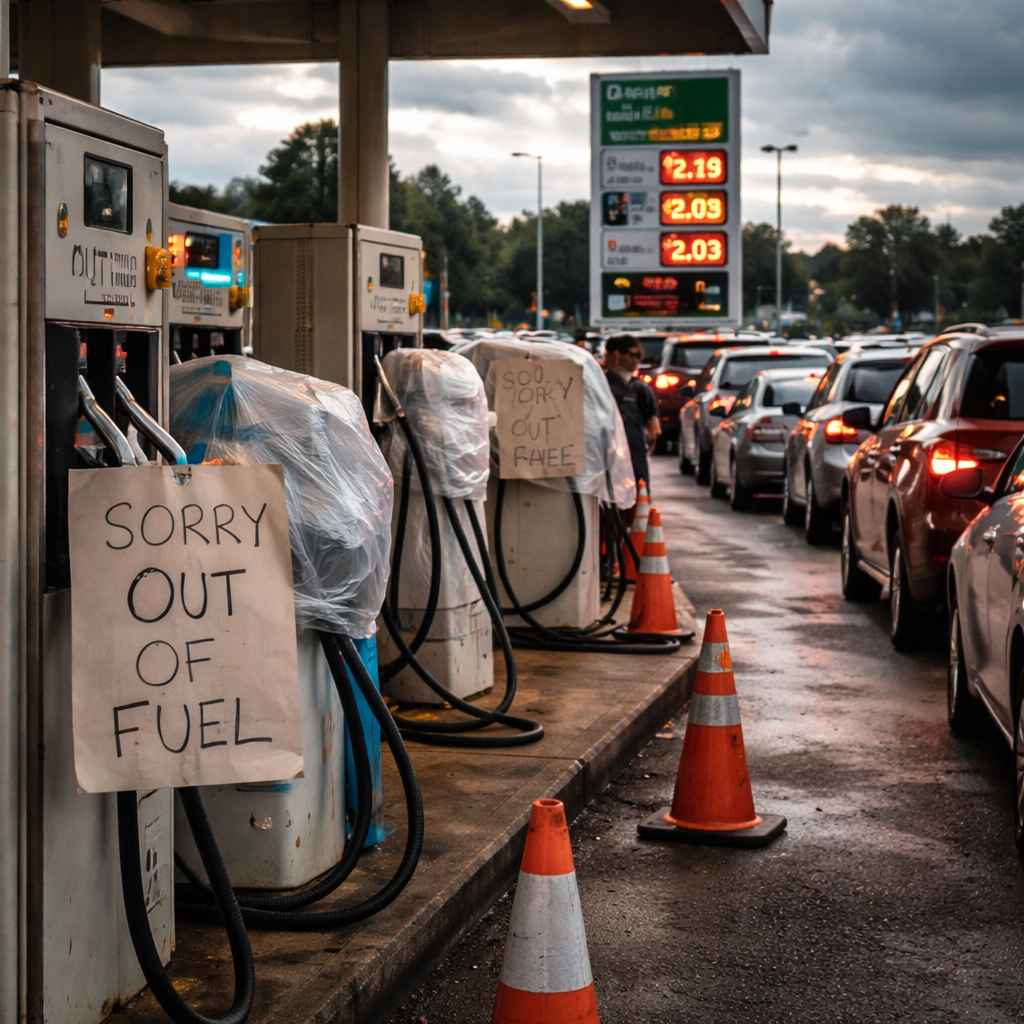
Western Australia’s fuel crisis is escalating rapidly, with more than 45 service stations now running out of petrol or diesel, forcing the state government to take extraordinary action. In a rare move, authorities have invoked emergency powers to gain direct visibility into fuel supply chains, as shortages begin to spread across key regions.
The situation has intensified within hours, with fresh data showing at least eight service stations completely out of both petrol and diesel, while dozens more are running dry on either fuel type. For many residents and businesses, the crisis is no longer a warning — it’s already disrupting daily operations.
Fuel shortages worsen across WA
According to the latest FuelWatch data, 21 service stations across Western Australia currently have no petrol, while 24 are without diesel. This marks a sharp deterioration compared to the previous day, when 13 stations lacked petrol and 27 were without diesel.
The shortages are not evenly spread. Regional areas — especially those tied to agriculture and mining — are experiencing the most severe supply issues. Locations such as Exmouth, Carnarvon, Port Hedland, and parts of the South West have already reported disruptions.
Several stations, including truck stops and regional outlets, are completely out of fuel, raising concerns about supply continuity for freight, farming, and mining operations.
Drivers can monitor live availability through the official FuelWatch website, which is updating station-level shortages across the state.
Emergency powers triggered under 1972 law
In response to the worsening crisis, the WA government has invoked emergency powers under the Fuel, Energy and Power Resources Act 1972. This legislation allows authorities to compel fuel companies to provide detailed information about their operations — something that had previously been requested voluntarily.
Energy Minister Amber-Jade Sanderson said the move was necessary after only three of the six major fuel suppliers complied with earlier requests for transparency.
The government is now demanding critical data, including fuel volumes, distribution points, and how frequently fuel is being delivered across the state.
“This will give us visibility and allow us to respond quickly to supply challenges,” the minister said, emphasizing that the goal is to ensure fuel reaches areas where it is needed most.
Strict penalties for fuel companies
Authorities are taking a hard stance against non-compliance. Companies that fail to provide the required information face significant financial penalties.
Corporations could be fined up to $100,000 per day, while individuals may face penalties of up to $10,000 per day. The final penalty amounts will be determined by the courts, but the message from the government is clear — cooperation is mandatory.
This aggressive approach reflects the urgency of the crisis, as officials attempt to prevent further breakdowns in the fuel distribution network.
Premier signals possible state of emergency
Premier Roger Cook has indicated that the government is prepared to escalate its response further if needed. Authorities have already approached the Governor to declare a formal state of emergency under the same 1972 legislation.
Importantly, the Premier clarified that these powers differ from COVID-era emergency measures. Rather than controlling public behavior, the focus here is on improving transparency and managing fuel supply chains more effectively.
The government had previously written to major fuel suppliers requesting details about stock levels and distribution plans, particularly how they would prioritize fuel for regional, agricultural, and maritime users.
Global tensions driving the crisis
The fuel shortage has been partly triggered by global supply disruptions linked to the ongoing conflict in the Middle East. These disruptions have affected fuel imports into Australia, with Western Australia feeling the impact more acutely due to its geographic isolation.
As supply chains tighten, even small delays or disruptions can quickly translate into shortages at the pump.
Further adding to the urgency, Prime Minister Anthony Albanese is scheduled to address the nation, highlighting the growing national significance of the crisis.
For broader updates on the situation, coverage is also available via ABC News.
Regional industries under pressure
The impact of the crisis is being felt most strongly in Western Australia’s key industries. Mining operations, which rely heavily on diesel, are particularly vulnerable to supply disruptions. Any interruption could affect production and export activity.
Farmers are also facing uncertainty, especially during critical operational periods where fuel is essential for machinery and transport.
Transport and logistics networks are under strain as well, with some operators already adjusting routes and schedules due to fuel availability concerns.
What comes next
The coming days will be critical in determining whether the government’s intervention can stabilize the situation. By forcing fuel companies to share supply chain data, authorities hope to identify bottlenecks and redirect fuel more efficiently.
However, much depends on how quickly supply chains can recover and whether global disruptions ease. Until then, Western Australia remains on edge as the fuel crisis continues to unfold in real time.

Make Swikblog your go-to source on Google for reliable updates, smart insights, and daily trends.