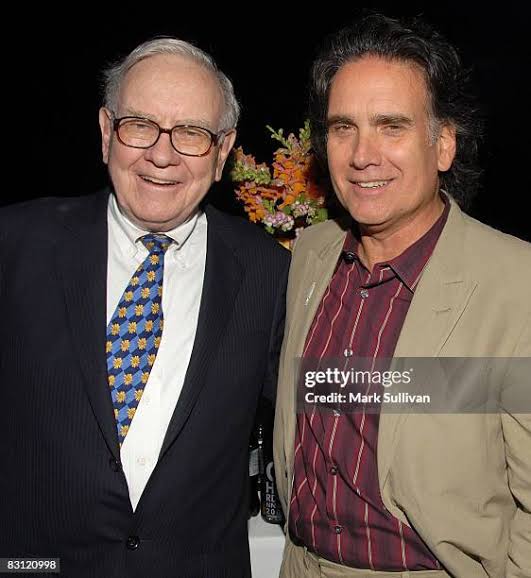

OMAHA, Neb. — Warren Buffett has stepped down as chairman of Berkshire Hathaway, but the change is not a conventional father-to-son transfer of control.
Howard G. Buffett has succeeded his father as chairman, while Greg Abel remains chief executive and controls Berkshire’s business operations. Warren Buffett, meanwhile, becomes chairman emeritus and remains a director, preserving his connection to the company he transformed over more than six decades.
The arrangement divides Berkshire’s leadership among three people—and helps explain why Howard’s appointment does not make him the new Warren Buffett.
Howard Buffett gets the title, but Greg Abel runs Berkshire
In its official announcement, Berkshire said Howard Buffett was elected chairman in accordance with its long-standing succession plan. Susan Decker will continue as lead independent director.
However, Warren Buffett made the limits of his son’s role clear in a letter accompanying the announcement.
“Greg runs the company; Howard will guard its culture and values—both worth more than anything on our balance sheet,” Buffett told shareholders.
That distinction matters. Abel, who succeeded Buffett as CEO at the beginning of 2026, remains responsible for Berkshire’s operations and its most important business decisions. Howard’s chairmanship is focused on oversight and protecting the principles that have shaped the company.
Buffett said Abel had fully taken control of the CEO position and had already been making the decisions that mattered. He added that his expectations for Abel had been “sky high” and that the new CEO had exceeded them.
Howard Buffett, 71, has nevertheless spent decades preparing for the position. He joined Berkshire’s board in 1993, giving him 33 years of experience as a director. His career outside Berkshire has included work in agriculture, global food security and conflict mitigation through the Howard G. Buffett Foundation.
He has also served on the boards of companies including Coca-Cola, Archer Daniels Midland and ConAgra Foods.
Why Buffett called his son an ‘insurance policy’
The most revealing part of Buffett’s farewell letter was his description of Howard’s purpose at Berkshire.
“Think of Howard as a policy the shareholders own and hope never to claim against,” Buffett wrote.
The insurance comparison suggests Howard’s most important responsibility may emerge only if Berkshire’s future leadership begins moving away from its established culture. He would provide board-level protection without taking over Abel’s executive responsibilities.
Greg Abel reinforced that interpretation in a statement issued on behalf of Berkshire’s board.
“The culture Warren built and the values he championed will remain at the heart of Berkshire, and Howard will be their guardian,” Abel said.
Warren Buffett is also not disappearing from Berkshire. At 96, he will remain on the board and continue offering what the company called his “judgment and perspective.”
Buffett acknowledged the passage of time in his letter, writing that “Father Time always wins,” but said he was more confident than ever about Berkshire’s future. He also praised the company’s shareholders for thinking in decades rather than quarters.
The transition therefore creates three distinct positions: Abel runs Berkshire, Howard protects its culture from the chairman’s seat, and Warren remains available as a director and adviser.
For investors, the central question is no longer simply who replaced Buffett. It is whether this carefully divided leadership structure can preserve Berkshire’s discipline when its longtime architect no longer holds either of its two most powerful titles.
Reporting sources: Berkshire Hathaway and The Associated Press.

Make Swikblog your go-to source on Google for reliable updates, smart insights, and daily trends.