For months, a 58-year-old Irish grandmother has woken up each morning in a US jail cell, wondering how a decade-old $25 cheque could now cost her the life she built over nearly half a century in America. Today, her case has suddenly leapt from a Kentucky detention centre to the very top of Washington’s power structure – and it is now gripping audiences in both Ireland and the United States.
Donna Hughes-Brown, a green card holder who has lived in the US since she was a child, is being held by Immigration and Customs Enforcement (ICE) in Campbell County, Kentucky. US officials say a bad cheque she wrote about 10 years ago counts as a “crime involving moral turpitude” – grounds for deportation under US immigration law, even though she repaid the money and completed probation long ago.
Her story has been painstakingly documented by Irish media, with detailed reporting by The Irish Times , and picked up by international outlets including the Guardian and the Independent .
‘She’s not a criminal’: how a $25 cheque turned into an immigration nightmare
Hughes-Brown’s life story does not resemble the typical caricature of an immigration case. She first arrived in the United States as an 11-year-old, has held a green card for decades and built a life in Missouri with her husband Jim, a US Navy veteran. Together they raised a family; she has children and grandchildren, a horse farm and deep roots in her local community.
But in 2025, a routine family trip to Ireland turned into the start of an ordeal. When she flew back into Chicago O’Hare airport in late July, US officials pulled her aside. An old cheque – worth around $25 – that bounced about a decade earlier had been flagged in the system. She says she paid the money back, completed probation and moved on. Immigration authorities saw it differently.
The cheque was categorised as a “crime involving moral turpitude” – a notoriously vague phrase in US law that can turn relatively minor offences into triggers for detention and deportation. Within hours, the grandmother who thought she was simply coming home was on her way to a county jail in Kentucky, placed in isolation as an ICE detainee.
Her husband, who has spoken repeatedly to reporters and local TV stations, insists his wife is being punished far beyond any reasonable measure. He has described the conditions as “absolutely horrible” and says he now regrets voting for Donald Trump, believing the system is targeting families like his rather than dangerous criminals.
Trump’s Homeland Security chief steps in under growing scrutiny
Until this week, Hughes-Brown’s case was one more harrowing story in a wider crackdown on migrants and long-time residents with old convictions. That changed when US Secretary of Homeland Security Kristi Noem was pressed about the case during a congressional hearing on immigration enforcement under President Donald Trump’s administration.
According to Irish media reports, Noem told lawmakers she would personally review the circumstances of the Irish woman’s detention and the decisions that led to her being held for months over a decade-old misdemeanour. It was a rare public intervention by one of the most powerful figures in US homeland security – and an acknowledgment that something about this case may not sit right even within the administration’s own ranks.
For Hughes-Brown’s family, the promise of a review offers a sliver of hope that the system might finally recognise the disproportionate consequences of her case. For Trump’s critics, it exposes the human cost of a hardline agenda that has swept up not only undocumented migrants, but also legal residents with long-settled lives in the US.
A test case for Irish communities in America
Irish officials and advocacy groups have been increasingly alarmed by a series of high-profile detentions of Irish nationals and Irish-Americans in recent years. The Hughes-Brown case is being seen as a test of how far the Trump administration is willing to go – and how hard Ireland is prepared to push back.
Earlier this year, another Irish woman, Clíona Ward, who had lived legally in the US for decades, was detained by ICE over drug-related convictions dating back almost 20 years before eventually being released after 17 days in custody. Her story, reported by outlets such as the Guardian and Global News , raised similar questions about the use of expunged or long-settled convictions to justify detention.
Irish commentators have warned that the Hughes-Brown saga is a “perfect storm” for immigrant communities: a small mistake from years earlier, now weaponised by a more aggressive enforcement climate. For many Irish citizens living in the US on green cards, the message is chilling – even those who believed their records were cleared now fear being stopped when they travel or re-enter the country.
Courts push back as another detainee wins freedom
The review of Hughes-Brown’s case is unfolding against a backdrop of growing judicial scepticism towards some of the Trump administration’s toughest immigration decisions. On the same day her case was making headlines in Ireland, a US federal judge in Maryland ordered the immediate release of Kilmar Abrego García, a Salvadoran man whose detention by ICE was ruled unlawful.
Judge Paula Xinis criticised federal authorities for misleading the court about Abrego García’s deportation options and trying to remove him to countries that had not agreed to accept him. The ruling, reported by the Associated Press and the Washington Post , has been hailed by migrant rights advocates as a rare but significant check on executive power.
Together, the Abrego and Hughes-Brown cases underline a central tension of the Trump era: an administration determined to show toughness on immigration, and a court system that is increasingly being asked to decide where firmness ends and injustice begins.
Inside the Kentucky jail cell
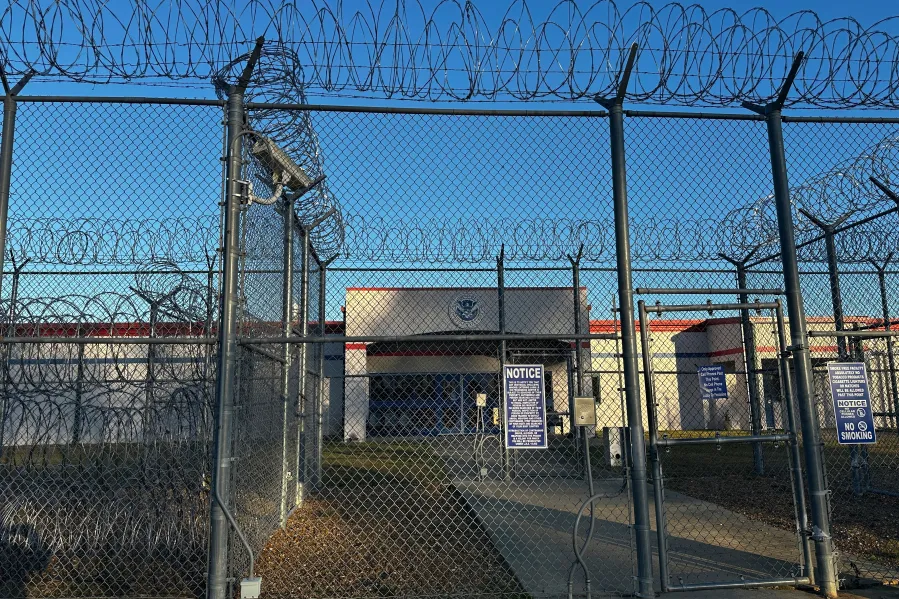
From the outside, the Campbell County Detention Center looks like many other US county jails. For Hughes-Brown, it is a world away from the horse farm in Missouri where she used to start her mornings feeding animals and making breakfast for her family.
According to interviews given by her husband and friends, Hughes-Brown has spent months in isolation and under strict restrictions, sharing space with criminal defendants even though she is in civil immigration detention. The contrast between the minor cheque offence at the heart of the case and the harshness of her current surroundings has become a central point of outrage for supporters.
Supporters have organised online petitions, local solidarity events and fundraising campaigns to help cover legal costs. Irish-American groups have also urged politicians to intervene, arguing that the case sends the wrong message to long-settled migrants who have lived, worked and paid taxes in the US for decades.
What happens next – and what it means for others
The Department of Homeland Security’s review does not guarantee a happy ending. Officials could decide that, under current law, the original assessment stands and deportation proceedings should continue. They could also use their discretion to halt or pause the process, taking into account Hughes-Brown’s decades of residence, family ties and the minor nature of the original offence.
Immigration lawyers say the outcome will send a powerful signal. If a grandmother with nearly 50 years in the US can be deported over a cheque she has already paid back, they argue, almost anyone with a historic blemish on their record could be vulnerable. If, on the other hand, DHS chooses to step back, it might indicate a subtle recalibration of how far Trump’s enforcement agenda really extends.
For now, Hughes-Brown remains in her Kentucky cell, waiting for a decision that could decide where she spends the rest of her life. In Ireland and across Irish communities in the US, people are refreshing news feeds, watching congressional hearings and wondering if this is the moment when a single $25 cheque finally forces Washington to reckon with the human cost of its immigration policies.
You May Also Like

Make Swikblog your go-to source on Google for reliable updates, smart insights, and daily trends.