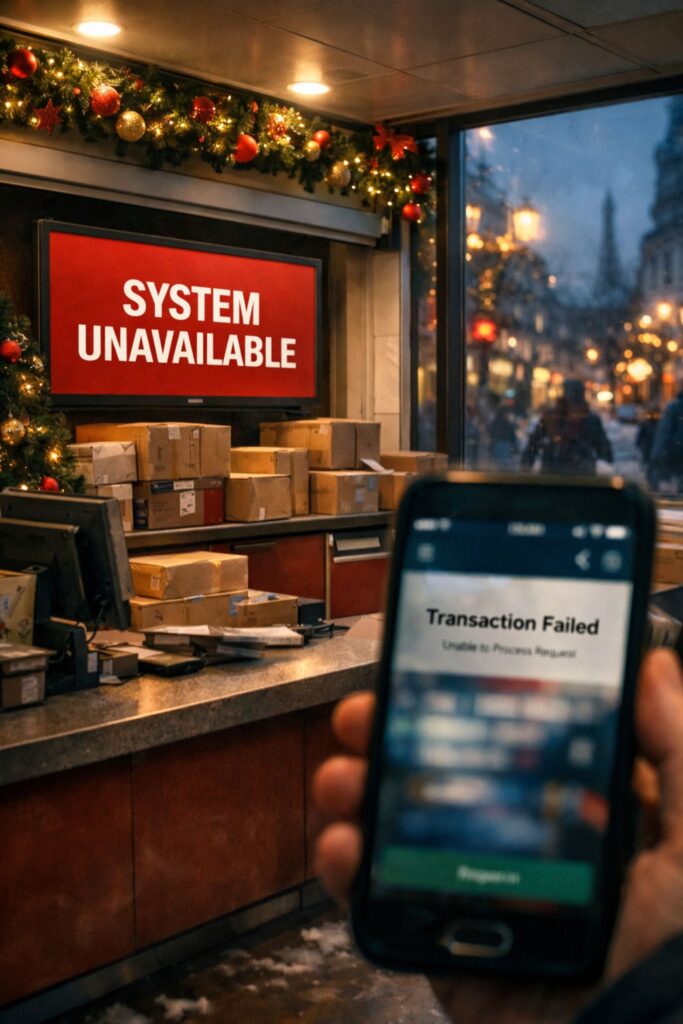

With Christmas only days away, a cyberattack targeting France’s national postal service, La Poste, spilled into everyday life in a way people immediately felt: parcel tracking and digital services went dark, queues grew at post offices, and some customers struggled to complete routine online banking steps needed to approve payments. The incident hit during one of the busiest weeks of the year for deliveries and card authorizations, when even short outages can snowball into missed gifts, delayed packages, and frustrated shoppers.
Key points at a glance
- What happened: La Poste reported a major network incident described as a DDoS attack that made online services inaccessible.
- What was affected: Websites and apps used for tracking, digital services, and some transaction steps were disrupted; some banking access issues were reported for La Banque Postale customers.
- What wasn’t: La Poste said there was no impact on customer data based on what it knew at the time.
- Status: Service teams were mobilized to restore systems as prosecutors reviewed the incident.
La Poste is a massive operation—handling billions of items annually and employing more than 200,000 people—so disruption in its digital backbone can ripple quickly. In practical terms, customers reported problems accessing online services used to manage deliveries and track parcels. Even when physical mail movement continues, modern postal logistics rely heavily on internal IT systems to scan, route, and update tracking events. When those systems slow down or become unavailable, the result is often the same: uncertainty about where parcels are, longer waits, and fewer options for last-minute changes.
The timing amplified the impact. The week before Christmas concentrates a month’s worth of pressure into a few days: shoppers ship gifts late, businesses push final orders, and families monitor tracking updates closely. When those updates stop, anxiety rises. At the same time, many online purchases in Europe require extra identity checks—such as app approvals—before payments are confirmed. If banking apps or approval tools are interrupted, people can be left unable to finish a purchase when they need it most.
Authorities and the company framed the incident as a distributed denial-of-service (DDoS) attack—one of the most common ways to knock services offline without necessarily breaking into systems. In a DDoS event, attackers flood servers with traffic until they struggle to respond to legitimate requests. That can look like a “site is down” problem to customers, even if internal data remains intact. According to reporting, La Poste said the incident rendered online services inaccessible and disrupted deliveries, while the broader investigation moved to prosecutors in Paris. Associated Press coverage described delays in package deliveries and issues affecting online payments and banking functions during the outage.
The disruption also touched La Poste’s banking arm, La Banque Postale, which many customers use for day-to-day banking. When online access is impacted, the effect isn’t only checking balances; it can also interfere with payment approvals, transfers, and the authentication steps required for certain transactions. Reporting in the UK noted that in-person card payments and ATMs continued to function in many cases, but access to online banking and apps was affected for some users—an important distinction during a chaotic shopping week. The Guardian’s report also described the incident as a DDoS attack and said customer data was believed to be safe while online services were disrupted.
While DDoS attacks are often “loud” and disruptive, they can be difficult to attribute quickly. In the early hours after an outage, speculation often spreads faster than confirmed evidence—especially when a national service is hit near a major holiday. As of the initial reporting, no group had publicly claimed responsibility, and officials did not name a culprit while the investigation was underway. That uncertainty is common in cyber incidents: even when the technique is identified, identifying who launched it can take time, and early claims can be misleading.
For readers outside France, the takeaway is bigger than one country’s holiday headaches. Postal services and banks are classic “high-impact” targets because they sit at the intersection of daily life and the economy. When either goes offline, it affects ordinary customers and businesses alike—and during peak holiday periods, the impact is immediate and visible. The incident also highlights how essential digital infrastructure has become to services that still feel physical: sending a package, collecting a parcel, confirming a payment.
If you’re a traveler, expatriate, or anyone expecting deliveries from France, practical steps are straightforward: watch for official updates from carriers, keep alternative payment options available (such as a backup card), and allow extra time for parcels that rely on tracking scans to update. And if you’re following the story as a trend, the next key updates to watch are: confirmation of restoration timelines, whether additional institutions were affected, and any investigative findings that clarify who was behind the attack and whether it was part of a wider campaign.
Read more: Visit Swikblog for more global news explainers and breaking updates.

Make Swikblog your go-to source on Google for reliable updates, smart insights, and daily trends.