
US News · Service Disruptions
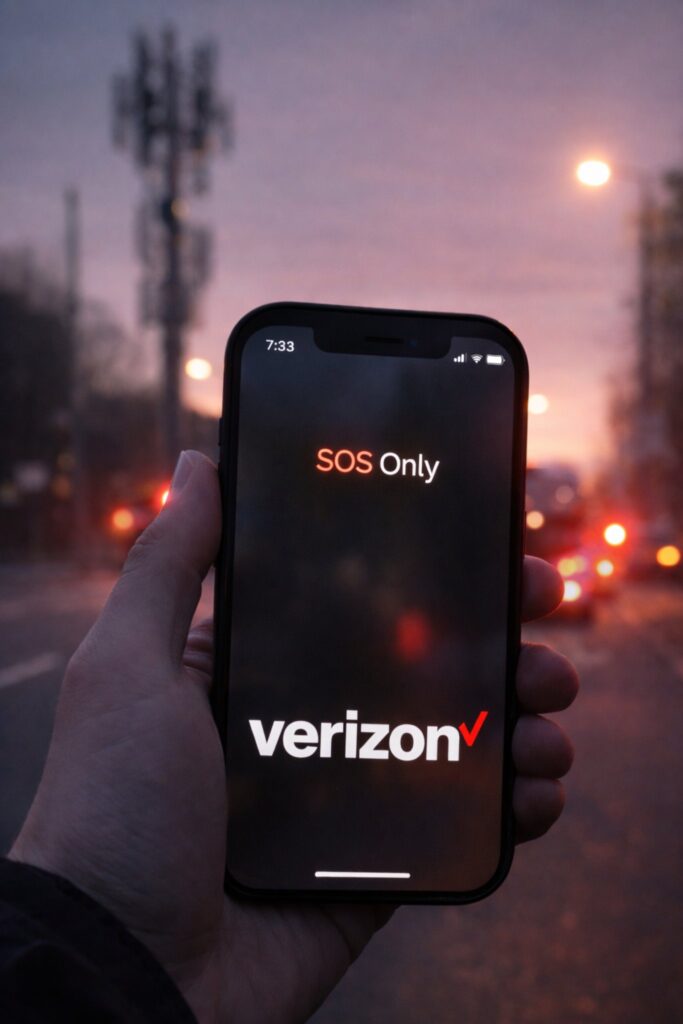
A major Verizon disruption left phones stuck in “SOS-only” mode, cutting off calls, texts and mobile data for hours across the US. Verizon says service is now restored — and credits are coming — but the central question remains: what actually happened, and how can customers protect themselves if it happens again?
By Swikblog · Updated as reports emerged Thursday
What happened — and why so many phones showed “SOS”
The outage began around midday on Wednesday, rapidly snowballing into a nationwide disruption that hit Verizon customers in multiple major cities and smaller communities. For many people, the most visible sign was a sudden switch to “SOS” or “SOS-only” — a status that appears when a device can’t reach its carrier’s network but may still be able to place emergency calls using any available signal.
In practical terms, customers reported the same cluster of failures: calls dropping or failing to connect, texts not sending, and mobile data going dark. Even people with Wi-Fi at home felt the impact because everyday services — bank logins, two-factor authentication codes, ride-hailing, delivery tracking and work messaging — often depend on reliable mobile connectivity.
Outage-tracking platforms lit up as the disruption spread, with reports peaking in the afternoon before tapering as service gradually returned. The pattern suggested something larger than a local tower issue — more like a network-wide problem that caused devices to lose registration on the Verizon system.
So what really caused it?
Here’s the most accurate answer right now: Verizon has not publicly confirmed a single, specific root cause. That gap is exactly why this story keeps trending — people want a plain-English explanation, not just reassurance.
Still, based on how these outages typically unfold, there are a few likely buckets:
- Core network or software fault: A glitch in routing, authentication, or a software update can prevent phones from connecting even if local towers are physically fine.
- Configuration or capacity shock: A misconfiguration can ripple quickly across regions, especially when traffic is rerouted or systems attempt self-recovery.
- Interconnection knock-on effects: Other carriers can appear “impacted” simply because their customers can’t complete calls to Verizon lines during an incident.
What seems less likely, based on reporting so far, is the scenario many customers feared in real time: a confirmed cyberattack. Multiple outlets reported that there was no public indication tying the disruption to an intrusion, even as online speculation surged.
Is the outage fixed now?
Verizon says the issue has been resolved and has advised customers who still see “SOS” or a dead signal to restart their device to force a fresh connection to the network. For most customers, service returned as the evening went on — but as with many large outages, a small number of users may experience lingering problems while systems fully resynchronize.
If you’re still stuck:
- Restart your phone (not just airplane mode).
- Toggle airplane mode on for 10 seconds, then off.
- Try Wi-Fi calling (Settings → Phone/Cellular → Wi-Fi Calling).
- If you depend on 2FA codes, switch to an authenticator app where possible (codes don’t rely on SMS).
For urgent situations during any carrier outage, local authorities often recommend using Wi-Fi calling, a landline if available, or reaching emergency services through alternative channels.
Will Verizon give credits — and who gets them?
Verizon has said account credits will be provided for affected customers, with details shared directly. That promise matters because it’s the clearest form of acknowledgment consumers recognize — and it’s also where frustration tends to concentrate.
What to expect (based on how carriers typically handle compensation):
- Credits may appear automatically on a future bill, but timing can vary.
- Some customers may need to check their account or contact support if credits don’t appear.
- If you’re on a business plan, the process may differ from consumer accounts.
The most important thing to do now: document impacts (screenshots of SOS mode, time stamps, support chat logs). If compensation rules tighten later, having proof helps.
Regulators are watching — and that could shape what Verizon shares next
The Federal Communications Commission has indicated it will review the incident. For customers, that matters because major outages often trigger questions about network resilience, public safety, and whether companies should provide clearer real-time status updates when service fails at scale.
The practical takeaway: Verizon may face pressure to explain the technical trigger more fully once the immediate firefighting is over — especially if emergency access was strained in certain regions.
What to do before the next outage (so you’re not stuck)
Outages are rare — but not rare enough. If your phone is your lifeline for work, family or medical needs, a few small steps can make a big difference:
- Enable Wi-Fi calling today, before you need it.
- Keep at least one secondary contact method (email, WhatsApp, Signal, FaceTime audio) ready.
- Move critical logins away from SMS 2FA to an authenticator app.
- Save your carrier’s support page and an outage tracker for quick checks.
And if you’re following ongoing updates or related telecom coverage, you can browse more on Swikblog here: latest Verizon-related posts.
Helpful links: Reuters coverage · Associated Press report · The Verge live updates
Note: Verizon has said service is restored and credits are coming, but has not publicly shared a detailed technical root cause at the time of publication.

Make Swikblog your go-to source on Google for reliable updates, smart insights, and daily trends.