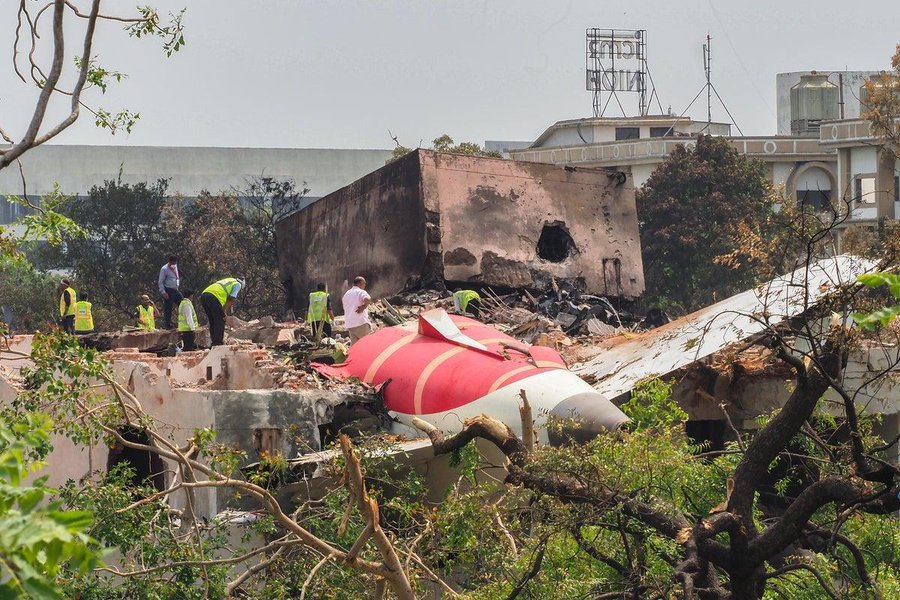
Air India Ltd., once edging closer to a long-promised financial turnaround, is now facing the largest annual loss in its history, after a deadly crash and a series of operational shocks wiped out years of progress. According to a Bloomberg report, the airline is on track to post a loss of at least ₹150 billion (around $1.6 billion) for the financial year ending March 31, 2026.
People familiar with the matter told Bloomberg that the scale of the loss reflects an extraordinary reversal for the airline, which had been nearing operational break-even before a fatal accident last year fundamentally altered its trajectory.
In June 2025, an Air India Boeing 787 Dreamliner crashed in Ahmedabad, killing more than 240 people in one of the deadliest aviation disasters in recent years. The crash dealt a severe blow to passenger confidence at a critical moment for the airline, triggering heightened safety scrutiny, widespread flight cancellations, and a renewed focus on operational reliability.
Before the tragedy, Air India — jointly owned by the Tata Group and Singapore Airlines Ltd. — had been showing signs of recovery. Management had targeted operational break-even during the current fiscal year, supported by fleet upgrades, cost controls, and integration efforts following the airline’s restructuring. Those ambitions are now out of reach, Bloomberg reported.
The crash was followed by another major setback. After a military clash between India and Pakistan, Pakistan shut its airspace to Indian airlines. The move forced Air India to reroute long-haul flights to Europe and the United States, significantly increasing fuel consumption and operating costs. According to people cited by Bloomberg, the longer flight paths further eroded margins at a time when the airline was already under strain.
Together, the crash fallout and airspace restrictions erased much of the airline’s operational momentum. A five-year business plan recently submitted by Air India’s management projected a return to profitability only in the plan’s third year. Bloomberg reported that the board rejected the proposal, asking executives to return with a more aggressive turnaround strategy.
Financial filings compiled by Indian business intelligence platform Tofler show that Air India has recorded cumulative losses of ₹322.1 billion over the past three years. The airline also sought at least ₹100 billion in additional financial support last year, underscoring the depth of the challenge.
The mounting losses have become a growing concern for both of Air India’s owners. Bloomberg reported that the Tata Group has begun exploring options to replace current chief executive Campbell Wilson, although any leadership change may wait until the official crash investigation report is released.
Singapore Airlines, which acquired a 25.1% stake in Air India after merging Vistara with the carrier in 2024, has also been affected. While it is supporting restructuring efforts — including plans to bring aircraft maintenance operations in-house — Air India’s weak performance has weighed on Singapore Airlines’ earnings, according to the report.
The situation has unfolded against a turbulent backdrop for Indian aviation more broadly, marked by passenger anxiety, flight delays, and large-scale cancellations by rival carriers. The challenges have drawn renewed attention to the sector’s highly concentrated market structure, where disruptions at major airlines can quickly ripple across the industry.
Air India, Tata Group, and Singapore Airlines did not respond to Bloomberg’s requests for comment on the projected loss.
For Air India, the coming months will be critical. The airline faces the dual task of restoring passenger trust after a fatal accident while controlling costs in an increasingly complex geopolitical environment. As Bloomberg’s reporting makes clear, the airline’s turnaround is no longer a question of gradual improvement, but one of urgent survival.

Make Swikblog your go-to source on Google for reliable updates, smart insights, and daily trends.