
Oil prices ripped higher Thursday as traders priced in a longer, messier disruption risk across the world’s most important energy corridor. U.S. crude snapped into a fresh breakout with West Texas Intermediate rising about 3.8% to roughly $77 a barrel, while Brent pushed toward $84. The jump extended a multi-session surge driven by the widening Iran conflict, intensifying tanker risk in the Gulf, and a fast-changing picture for both crude and liquefied natural gas shipments.
Market snapshot
WTI crude (CL=F): ~$77 (about +3.8%)
Brent crude: ~$84 (about +3%)
Theme: War-risk premium + shipping disruption + export outages
War-risk premium returns to crude in a hurry
Oil tends to move in two speeds: slow, fundamentals-driven drift when supply and demand are stable, and sudden repricing when physical flows look vulnerable. This week has been the second kind. As headlines multiplied around strikes, retaliation, and maritime incidents, the oil curve effectively reintroduced a war-risk premium that had been largely dormant in recent months.
Brent, the global benchmark, advanced to around $83.99 per barrel in early trade, with WTI near $77.42. The speed of the move matters as much as the level. A sharp, multi-day climb tends to pull in systematic momentum buying, force short-covering, and lift options-implied volatility — the ingredients that can keep prices elevated even when the tape goes quiet for a few hours.
Strait of Hormuz turns from map label into price driver
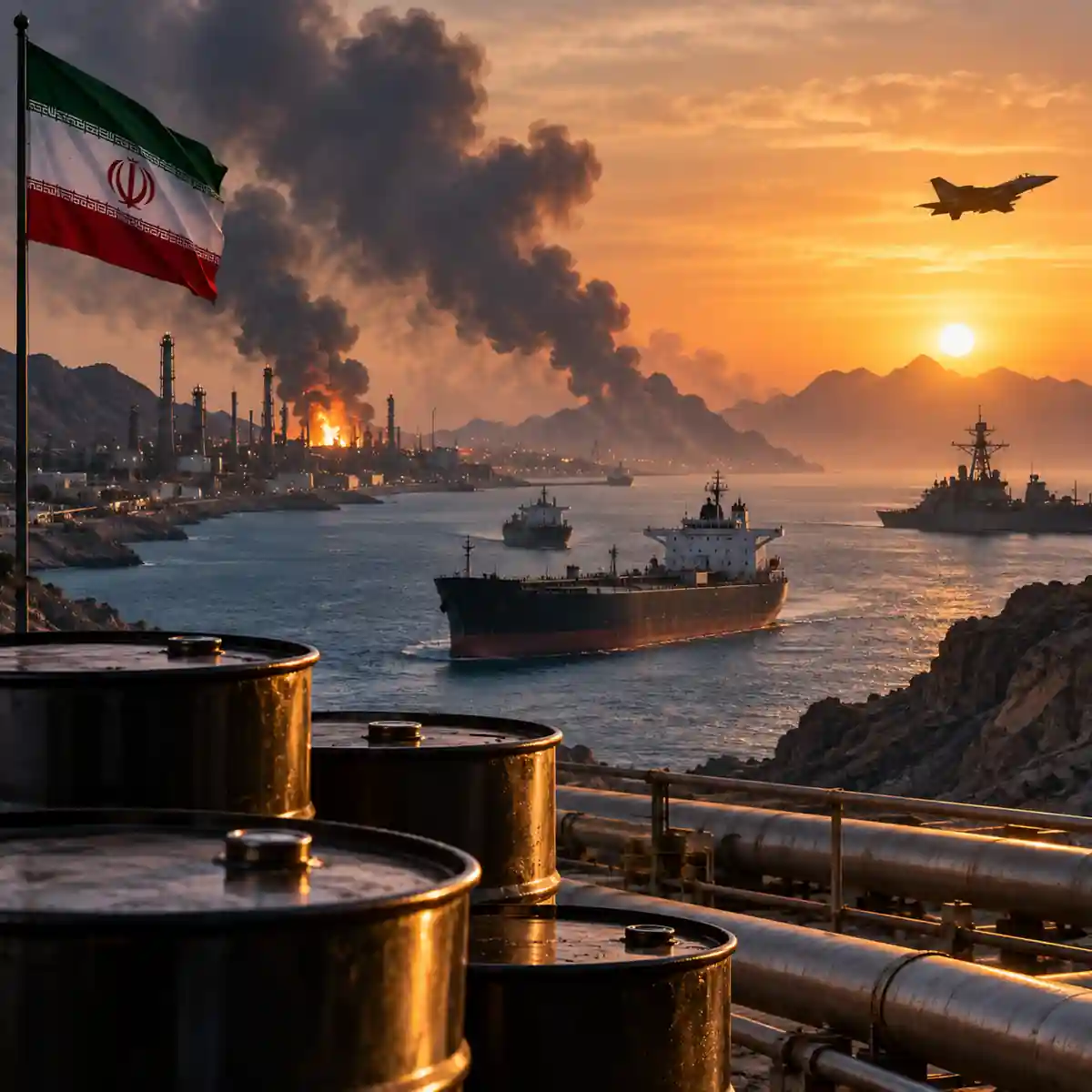
The Strait of Hormuz is not just a geographic chokepoint; it is a pricing mechanism. When risk rises there, crude reacts globally because the corridor acts as a valve for a huge slice of seaborne energy trade. With the conflict widening, investors are focused on the possibility of prolonged disruption — not necessarily a total shutdown, but enough delays, rerouting, and insurance costs to tighten the market.
Reports of tanker incidents and explosions near shipping lanes have added urgency. Even isolated events can produce outsized market reactions if they change behavior: vessels hesitating to transit, operators seeking naval escort, and buyers scrambling to secure alternative cargoes. Once shipping schedules slide, refiners can face gaps in feedstock deliveries, and the market starts pricing scarcity before it actually shows up in inventories.
Shipping gridlock builds across the Gulf
Another pressure point is logistics. When more ships sit at anchor — waiting for safe passage, clearer instructions, or insurance terms — the physical market tightens. Delays reduce the effective supply available “right now,” and near-term barrels carry a premium. The knock-on effect often shows up first in prompt spreads and freight rates, then in outright crude prices.
That matters because the modern oil market runs on timing. Refineries are optimized around continuous flows. When tanker queues build, refiners either pay up for replacement barrels, draw down stocks, or reduce runs — and any of those outcomes can ripple into gasoline and diesel pricing. In short: the risk isn’t only about supply being destroyed; it’s about supply being slowed and dislocated.
Real-world supply disruptions add fuel to the rally
Beyond shipping risk, the story is gaining traction because it includes concrete supply hits. Iraq, one of OPEC’s largest producers, has reported output cuts of roughly 1.5 million barrels per day tied to storage constraints and export-route problems. When a major producer loses the ability to move barrels out, the global system feels it quickly because spare capacity is not evenly distributed or instantly deployable.
At the same time, natural gas markets are taking collateral damage. Qatar, a cornerstone supplier of LNG, has declared force majeure on gas exports, with expectations that a return to normal volumes may take at least a month. LNG disruptions are not a side story. When gas is scarce, some power generation and industrial demand can tilt back toward oil products, tightening the broader energy complex.
Asia faces the sharp edge of the energy shock
The biggest macro risk sits in Asia, where imported fuel underpins transport, industry, and electricity generation. The region’s exposure is structural: large volumes of crude and LNG are shipped through Hormuz, and when those flows get choked, price shocks land first in Asian spot markets and freight costs.
China, the world’s largest crude importer, may be better positioned to source alternative barrels, but the key variable becomes the clearing price. India, another heavyweight importer, faces a more immediate inflation sensitivity when crude spikes. In East Asia, high stockpiles can buy time, but they do not erase vulnerability — especially for energy-intensive sectors that depend on continuous fuel and gas deliveries.
China’s refined-fuel moves signal a defensive posture
One of the most market-revealing developments has been China’s reported request for companies to suspend signing new contracts to export refined fuels and to attempt cancellations of shipments already committed. That kind of directive is a tell: it implies policymakers are prioritizing domestic energy security and trying to keep refined products at home as uncertainty rises.
When major economies take defensive actions, global balancing becomes more difficult. Fewer cargoes available for export can intensify competition among importing nations, and in tight markets, wealthier buyers typically outbid poorer ones. This dynamic can amplify volatility even if global crude production remains broadly sufficient on paper.
What to watch next in the tape
Oil can stay elevated if three forces persist: shipping risk, visible outages, and policy-driven stockpiling. Traders will be watching for changes in maritime transit behavior, any fresh interruptions at export terminals, and signals that insurers are repricing war-risk coverage sharply higher. If tanker queues expand and LNG outages linger, the market may keep paying up for prompt barrels, sustaining the rally.
For now, the message from prices is straightforward: the market is treating the conflict as more than a brief headline burst. It is pricing a higher probability of prolonged disruption — the kind that can lift crude, ripple into fuel costs, and keep energy volatility as a dominant macro theme.
Source context covered in this report is based on details reported by Reuters.
You May Also Like

Make Swikblog your go-to source on Google for reliable updates, smart insights, and daily trends.