
The shutdown at Victoria Pass has turned one of New South Wales’ most important road links into a fast-moving transport crisis, cutting a key connection between Sydney and the state’s west and forcing motorists, freight operators and daily commuters onto longer, slower diversion routes. What began as a targeted closure of the eastbound side quickly escalated after engineers detected further cracking and movement in the road substructure near Mitchell’s Causeway, better known locally as the Convict Bridge. With safety concerns intensifying overnight, authorities moved to close both directions of the Great Western Highway, leaving drivers facing uncertainty, congestion and no firm timeline for reopening.
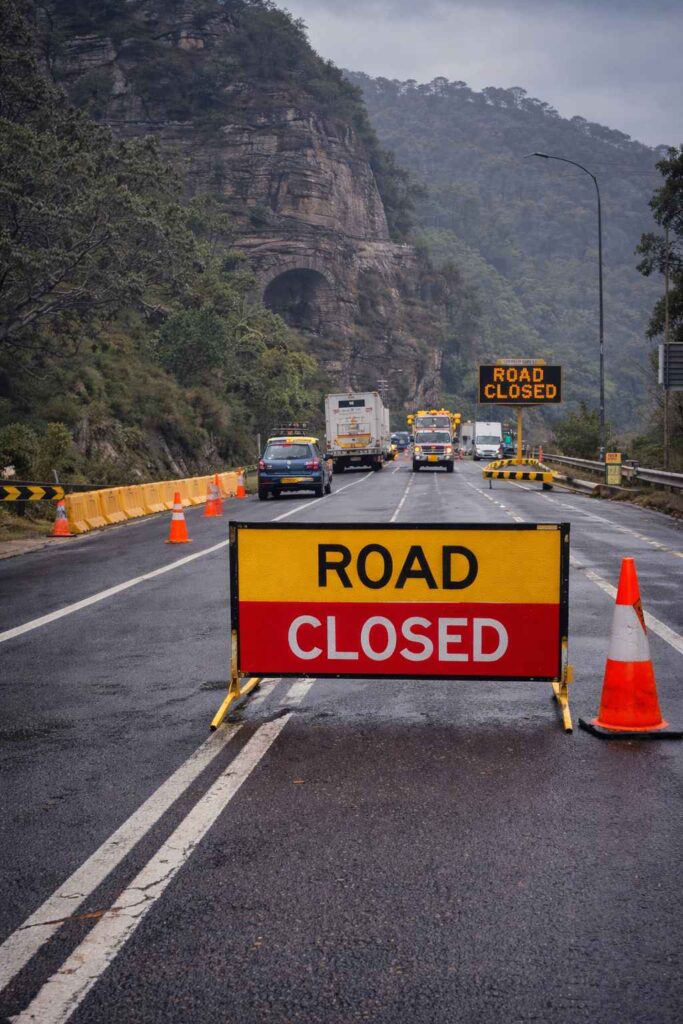
Traffic update: The Great Western Highway at Victoria Pass is closed in both directions, with eastbound and westbound traffic being diverted via alternative routes. Congestion is expected to remain heavy while assessments and emergency repair work continue.
Why the Victoria Pass closure became a much bigger problem
The initial disruption did not look like a full corridor shutdown. Eastbound lanes were first closed after damage was detected in the road surface near the historic bridge structure. But by late Sunday into Monday, geotechnical monitoring pointed to a more serious issue. Further cracks had opened, and movement was confirmed below the pavement, raising fears that keeping any traffic on the section would create an unacceptable safety risk.
That decision matters because Victoria Pass is not just another regional road segment. It is part of the main highway corridor that connects Sydney with western New South Wales, a route relied on every day by commuters, tourists, logistics operators and heavy vehicle drivers. Once both directions were shut, the impact spread well beyond the immediate Blue Mountains area.
A heritage bridge at the centre of the shutdown
Part of what makes this story so striking is the structure involved. The affected section includes the historic Convict Bridge, a hand-built heritage structure dating back to the 1830s. It remains a remarkable piece of colonial-era road building, but its age also adds sensitivity when modern structural stress and slope movement are involved. In a location as steep and winding as Victoria Pass, even small changes in the underlying formation can quickly become a major operational and safety issue.
The result is that authorities are not only dealing with surface defects. They are dealing with a complicated mix of road engineering, slope stability, heritage protection and traffic management on one of the state’s most important transport corridors.
Drivers, freight and western NSW now face the fallout
The closure is especially significant because this corridor carries substantial traffic every day. Transport officials say roughly 11,000 vehicles use the Great Western Highway between Little Hartley and Lithgow daily, including around 1,800 heavy vehicles. Those numbers explain why the closure has quickly become more than a local inconvenience.
Motorists heading east toward Sydney are being diverted through Lithgow via Chifley Road and then onto the Bells Line of Road or the Darling Causeway. Westbound traffic is also being redirected through Mount Victoria and the Bells Line corridor. Those detours are functional, but they are not seamless. Additional roadworks on diversion routes are already adding to travel times, while freight movement through Lithgow remains especially sensitive because of restrictions affecting heavy vehicles.
For commuters, that can mean sharply longer journeys. For transport operators, it means higher fuel use, tighter delivery windows and greater uncertainty. For regional communities, it is another reminder of how quickly a single weak point in the network can affect the broader economy.
Why this closure has become political as well as practical
The Victoria Pass shutdown has also revived a long-running political argument over whether the Sydney-to-western-NSW corridor has been upgraded quickly enough. Debate has been simmering for years over the future of the Great Western Highway, especially around plans once proposed for an 11-kilometre tunnel between Blackheath and Little Hartley. Supporters saw that proposal as a long-term answer to the corridor’s bottlenecks and resilience problems, while critics argued it had ballooned in cost and lacked a workable delivery path.
This latest closure has handed fresh ammunition to those who say the current road link remains too vulnerable. When a defect at one historic section can trigger hours of delay, freight disruption and major detours, the broader question becomes harder to ignore: whether patchwork resilience measures are enough for a route that underpins movement between Sydney and the Central West.
No reopening timeline means uncertainty could linger
The most frustrating part for motorists is the absence of a firm reopening date. Crews remain on site carrying out assessments and urgent repair work, but officials have made clear that safety comes first while movement on the slope is still being monitored. That means drivers should prepare for continued disruption rather than expect a quick fix.
For now, the Victoria Pass closure stands as both a transport headache and a warning sign. A highway used by thousands every day has been cut by a defect in one of its most historically significant sections, and the consequences are being felt from local roads to long-haul freight routes. For travellers planning trips between Sydney and western New South Wales, checking live traffic conditions before departure is essential. The latest official reporting on the closure and diversion arrangements can be followed through ABC’s coverage of the Victoria Pass shutdown.
You May Also Like

Make Swikblog your go-to source on Google for reliable updates, smart insights, and daily trends.