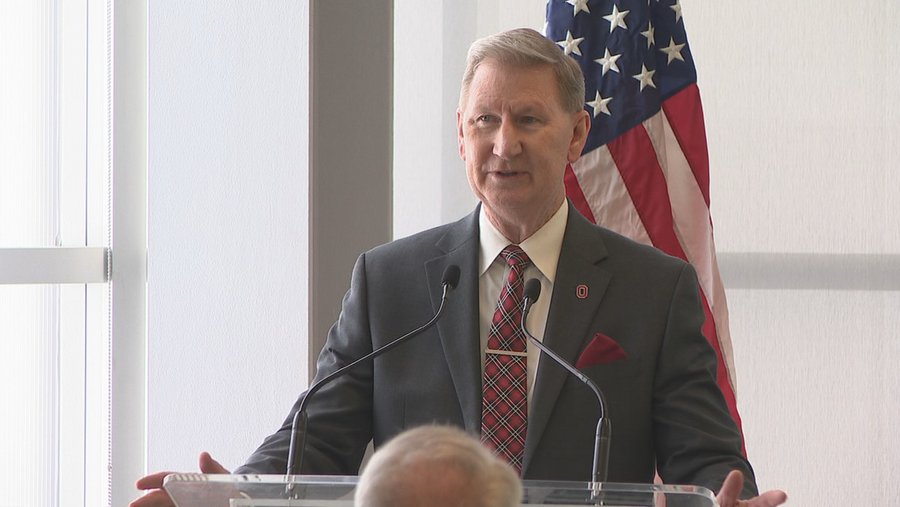

Ohio State President Ted Carter resigns after disclosing an inappropriate relationship, ending a presidency that began on January 1, 2024 and was supposed to run through the end of 2028. The abrupt leadership change has immediately become one of the biggest higher-education stories in the country because it raises fresh questions about governance, transparency, and continuity at one of America’s largest public universities. According to university statements and multiple news reports, Carter informed the Board of Trustees that he had an inappropriate relationship with someone seeking public resources for her personal business, then offered his resignation, which the board accepted. Jump to what happened, why it matters, or what comes next.
For readers following Ohio State closely, the news is especially striking because Carter had spent much of his short tenure promoting a long-term institutional vision through the university’s Education for Citizenship 2035 strategic plan. His resignation now creates an immediate leadership vacuum at a moment when Ohio State is balancing academic priorities, athletics visibility, medical center growth, and a multibillion-dollar operating scale. The university’s own president biography page says Carter was appointed as Ohio State’s 17th president in August 2023 and began the role in January 2024. Read Ohio State’s archived Carter profile.
Ted Carter’s resignation stunned Ohio State
Ohio State’s Board of Trustees accepted Carter’s resignation after he disclosed what the university described as an inappropriate relationship with someone seeking public resources to support her personal business. In comments reported by WOSU and The Associated Press, Carter said he made a mistake in allowing inappropriate access to Ohio State leadership. Board Chair John Zeiger said trustees were surprised and disappointed and would share more about the transition soon.
BREAKING: OSU President Ted Carter resigned effective Monday after an inappropriate relationship with an unnamed person seeking public resources. https://t.co/I8UW7JzXyu pic.twitter.com/18zzXdCZYz— NBC4 Columbus (@nbc4i) March 9, 2026
The resignation followed a rare executive session by the Board of Trustees. Ohio State’s public meeting calendar shows trustees held an executive session in early March 2026, underscoring that this was treated as a serious internal personnel matter rather than ordinary administrative turnover. That detail matters because it suggests the university moved quickly once the disclosure was made. See the trustees meeting calendar.
Why this story is bigger than one resignation
Ohio State is not just another campus. AP reported that the university serves more than 60,000 students, has more than 600,000 living alumni, and operates with a fiscal year 2026 budget totaling $11.5 billion in revenues and $10.9 billion in expenditures. When the president of an institution this large resigns suddenly, the fallout is never limited to optics. It affects donor confidence, board credibility, faculty morale, student trust, and the pace of major strategic initiatives.
The timing also adds to the drama. Carter’s predecessor, Kristina Johnson, also left midstream, meaning Ohio State has now seen another abrupt presidential exit in a relatively short period. That pattern is difficult for any flagship public university to dismiss. Even when operations remain stable, repeated leadership disruption can make external stakeholders wonder whether the institution’s governance system is reactive instead of steady.
Carter’s departure is also notable because he arrived with a résumé built for stability and public confidence. Before Ohio State, he led the University of Nebraska system and earlier served as superintendent of the U.S. Naval Academy. His Ohio State profile highlighted a leadership brand rooted in discipline, mission, and long-horizon planning. That makes the contrast even sharper now: a president hired to project steadiness is leaving because of a personal lapse with institutional implications.
What Ted Carter was trying to build at Ohio State
During his short presidency, Carter positioned himself as a forward-looking leader focused on affordability, student outcomes, AI, research, and talent recruitment. Ohio State’s official communications around the 2025 State of the University address and its strategic planning hub show he was tying those ideas together through Education for Citizenship 2035. The framework emphasized academics, research, health care, talent and culture, operations, and athletics.
That matters because his resignation does not erase the agenda he launched. In fact, the real test for Ohio State begins now: can the university preserve momentum on scholarships, AI fluency, faculty recruitment, and academic investment without the president who became the public face of that vision? Large universities often say institutions are bigger than any one leader. This transition will test whether Ohio State can prove it.
What happens next at Ohio State
Ohio State has said it will announce a transition plan, but as of March 9, 2026, the school had not publicly finalized who would serve as interim president in the materials widely reported by major outlets. That makes the next board moves crucial. The university will need to reassure students, faculty, alumni, lawmakers, and donors that decision-making remains stable and that strategic priorities will continue without interruption.
In practical terms, the near-term questions are straightforward even if the answers are not. Who becomes interim leader? How much more will the university disclose about the relationship? Will trustees launch a broader review of ethics, access, and oversight? And perhaps most importantly, can Ohio State prevent another presidential transition from turning into a longer reputational problem?
For now, the core facts are clear: Ted Carter’s Ohio State presidency is over, the board has accepted his resignation, and one of the nation’s most prominent public universities is once again navigating an unexpected leadership change. Readers who want to follow developments should watch the Ohio State Board of Trustees site, the Office of the President communications page, and continuing coverage from The Columbus Dispatch and WOSU.

Make Swikblog your go-to source on Google for reliable updates, smart insights, and daily trends.