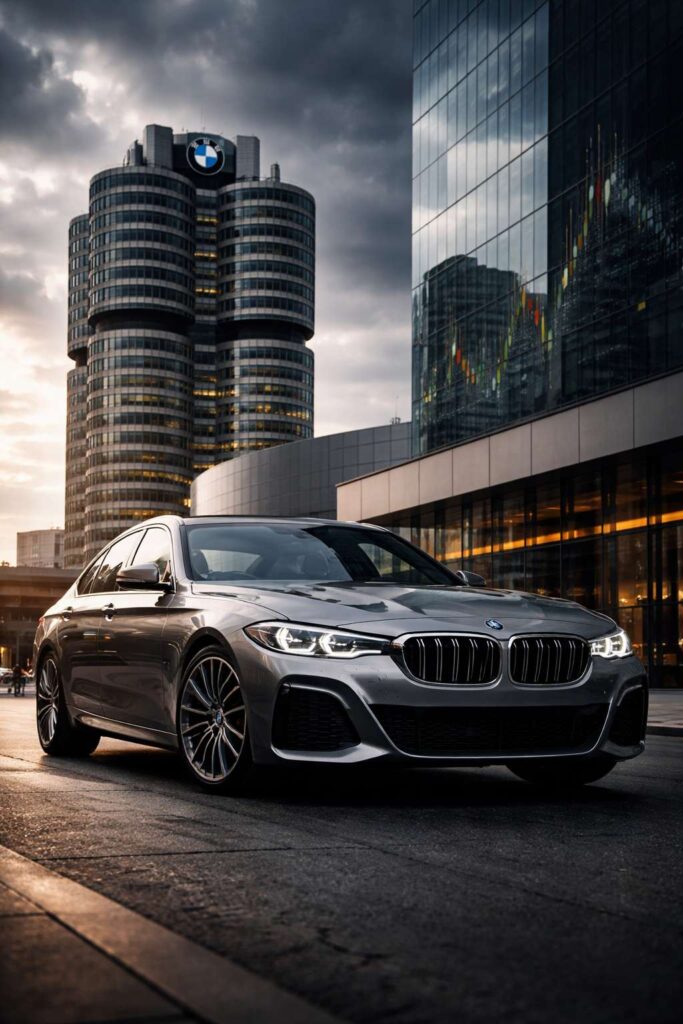

BMW stock fell 1.34% today after the German luxury automaker reported a sharp decline in operating profit, highlighting mounting pressure from international trade tariffs and weakening sales in China. The company said its earnings before interest and taxes (EBIT) dropped 11.5% to €10.2 billion in 2025, the lowest level since the Covid-19 pandemic period.
The results underline the challenges facing global automakers as geopolitical trade tensions, intensifying electric vehicle competition, and uneven demand across key markets weigh on profitability. Despite the decline, BMW’s performance was still considered more resilient than several European rivals that have reported much steeper earnings drops in recent quarters.
Profit and revenue decline in 2025 results
According to the company’s latest financial report, BMW’s EBIT fell from €11.5 billion in the previous year to €10.2 billion. Net profit also declined by around 3% to approximately €7.5 billion. Total revenue dropped 6.3% to roughly €133.5 billion.
The automotive segment absorbed most of the pressure. Its EBIT margin slipped to 5.3%, significantly below BMW’s target corridor of 8% to 10%. The margin compression highlights the rising cost pressures facing global carmakers, including tariffs, higher supply chain costs and increasing competition in electric vehicles.
Even with these challenges, BMW delivered approximately 2.46 million vehicles worldwide in 2025, representing a slight increase of 0.5% compared with the previous year.
Tariffs weigh heavily on margins
Trade tariffs were a key factor behind the earnings decline. BMW said tariffs reduced its operating margins by roughly 1.5 percentage points during the year.
The company faced pressure from US import duties as well as European Union tariffs on Chinese-made electric vehicles. Those EU measures directly affected BMW’s Mini brand, which exports certain electric models from China.
Chief financial officer Walter Mertl said BMW would likely have recorded an increase in earnings in 2025 if tariff-related costs had not risen so significantly.
The situation reflects a broader trend across the global automotive industry, where increasingly complex supply chains expose manufacturers to shifting trade policies and geopolitical tensions.
China sales slump remains a major challenge
Another major factor behind BMW’s weaker earnings was declining demand in China. The country remains the company’s largest single market, but sales there fell by more than 12% during 2025.
The decline comes as local Chinese manufacturers intensify competition, particularly in the electric vehicle segment. Domestic brands have rapidly improved their technology, pricing strategies and product offerings, placing pressure on established international automakers.
For BMW and other European carmakers, China has long been one of the most important drivers of global growth. A double-digit decline in that market therefore has a significant impact on overall profitability.
However, the company did see stronger performance in other regions. Sales in Europe exceeded one million vehicles for the first time since before the pandemic, while deliveries in the United States rose around 5%.
Electrified vehicle sales continue to expand
Despite the earnings pressure, BMW reported strong growth in electrified vehicle deliveries. The company sold more than 640,000 electrified vehicles globally in 2025, representing roughly 26% of total sales.
Fully electric vehicles accounted for around 18% of BMW’s global deliveries, demonstrating steady progress as the company continues expanding its EV portfolio.
BMW has taken a relatively flexible approach to the electric vehicle transition compared with some competitors. Instead of rapidly abandoning combustion engines, the company has maintained a mix of petrol, diesel, hybrid and fully electric models.
This strategy has allowed BMW to adapt more easily to shifting consumer demand across different regions while continuing to grow its EV business.
Performance models hit record deliveries
One bright spot in the results came from BMW’s performance sub-brand, BMW M. The division achieved record deliveries in 2025, with more than 213,000 vehicles sold worldwide.
The strong performance of BMW M highlights continued demand for premium performance vehicles even as the broader industry undergoes a transition toward electrification.
Neue Klasse platform central to future strategy
A key pillar of BMW’s long-term strategy is its new Neue Klasse vehicle architecture. The company believes this next-generation platform will accelerate its transition toward electric mobility while integrating new technologies across its model range.
The architecture is designed to support improved battery performance, digital features and manufacturing efficiency. BMW recently launched the platform with the new BMW iX3, which will play an important role in the company’s next phase of electric vehicle development.
2026 outlook remains cautious
Looking ahead, BMW expects the difficult operating environment to continue. The company forecast its automotive EBIT margin will likely fall between 4% and 6% in 2026.
Tariffs alone are expected to reduce margins by approximately 1.25 percentage points in the coming year. As a result, BMW expects group pre-tax earnings to decline moderately again in 2026.
Chief executive Oliver Zipse struck a confident tone despite the cautious outlook, stating that BMW’s strategic direction remains unchanged.
“We have set the right course in recent years and do not need to change our strategic direction,” Zipse said, emphasizing the company’s focus on long-term growth through technology and electrification.
Investors will be closely watching developments in China, trade policy shifts and the rollout of BMW’s next-generation EV platform as key factors shaping the company’s future performance.
More details on BMW’s financial results can be found on the company’s official investor relations page, while live market updates are available through Yahoo Finance’s BMW stock page.
For now, BMW remains one of the most influential players in the global luxury automotive market. However, the latest earnings report shows that even leading manufacturers are navigating a complex landscape shaped by tariffs, technological transformation and intense competition in key markets.

Make Swikblog your go-to source on Google for reliable updates, smart insights, and daily trends.