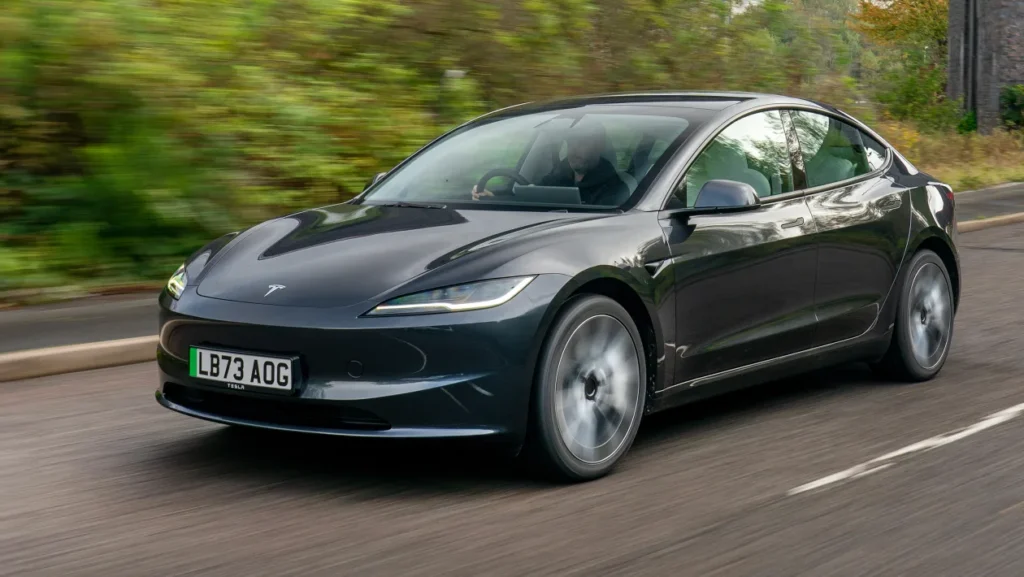

Tesla’s latest camera-related recall is a reminder that even a short software delay can become a real safety concern when a driver is backing out of a driveway, parking space or busy residential street.
The electric-vehicle maker is recalling affected vehicles in both Canada and the United States after a software problem was found to potentially delay the rearview camera image when a car is shifted into reverse soon after start-up. The issue affects 13,846 vehicles in Canada and more than 218,000 vehicles in the U.S., bringing the combined North American total to more than 232,000 vehicles.
The Canadian recall notice was first posted on May 5, 2026, and later updated on May 14, 2026. It warned that the rearview image may not appear quickly enough after the vehicle is shifted into reverse, a problem that matters because Canadian rules require the rear camera display to appear within two seconds.
In practical terms, the risk is simple: if the screen remains blank or delayed while the driver is already reversing, the driver may have less visibility behind the vehicle. That could be especially important in areas where children, pedestrians, pets, cyclists or low objects may be behind the car but outside the driver’s direct line of sight.
The affected Canadian vehicles include certain 2021 to 2023 Tesla Model 3 vehicles, 2021 to 2023 Model S vehicles, 2022 to 2023 Model X vehicles and 2020 to 2023 Model Y vehicles.
In the United States, the recall is broader, covering certain Tesla Model 3, Model Y, Model S and Model X vehicles equipped with Hardware 3 and running a specific software version. Tesla’s official recall page says the condition can cause the rear-view camera image to remain blank for up to 11 seconds after shifting into reverse, and that the issue does not comply with U.S. rear-visibility requirements.
Tesla has addressed the defect through an over-the-air software update rather than a traditional service-center repair. According to Tesla’s official recall support page, vehicles with software release 2026.8.6.1 or any later version do not need further action for this recall.
A software recall with real-world safety stakes
The recall stands out because it shows how modern vehicle safety is increasingly tied to software timing, not only mechanical parts. Rear cameras are now treated as essential safety equipment, particularly because many newer vehicles have higher rear body lines and larger blind zones than older cars.
For Tesla owners, the fix is comparatively simple if the vehicle has already received the update. Drivers can check the installed software version through the vehicle touchscreen by going to Controls and then Software, or by checking the Tesla app. Owners of affected Canadian vehicles are expected to be notified by email.
The company has said no service appointment is needed for vehicles already running the corrected software. That is an important difference from many conventional recalls, where owners may need to wait for parts, schedule a dealer visit and leave the vehicle for inspection or repair.
Still, the safety concern should not be dismissed simply because the remedy is digital. A delayed rear camera can matter most during the first few seconds of a trip, when a driver may quickly start the vehicle and reverse out of a parking spot. Tesla says drivers can continue using mirrors and shoulder checks, but regulators treat the rear camera as a required visibility system because it gives a view that mirrors alone may not fully provide.
The timeline also shows how quickly software problems can move through a connected vehicle fleet. Tesla identified the condition in April, paused further rollout of the affected firmware, and then began sending the corrected version shortly afterward. That speed is one of the advantages of over-the-air repairs, but the recall also shows why regulators still require formal notices when a software defect affects a legally required safety feature.
Models affected and owner action
Canadian owners with affected Model 3, Model S, Model X or Model Y vehicles should watch for Tesla’s email notification and confirm that the vehicle is updated to software version 2026.8.6.1 or newer. If the software update has not installed, owners should connect the vehicle to Wi-Fi, check for available updates and contact Tesla service if the update fails repeatedly.
For U.S. owners, Tesla and federal recall lookup tools can confirm whether a specific VIN is included. The issue is not a sign that every affected vehicle will experience a blank screen, but the recall means the condition was serious enough to be treated as a safety noncompliance.
The wider lesson for drivers is that software updates are no longer just about new features or interface changes. In connected vehicles, they can directly affect required safety systems. For Tesla owners covered by this recall, the most important step is to confirm the corrected software is installed before assuming the issue has been fully resolved.

Make Swikblog your go-to source on Google for reliable updates, smart insights, and daily trends.