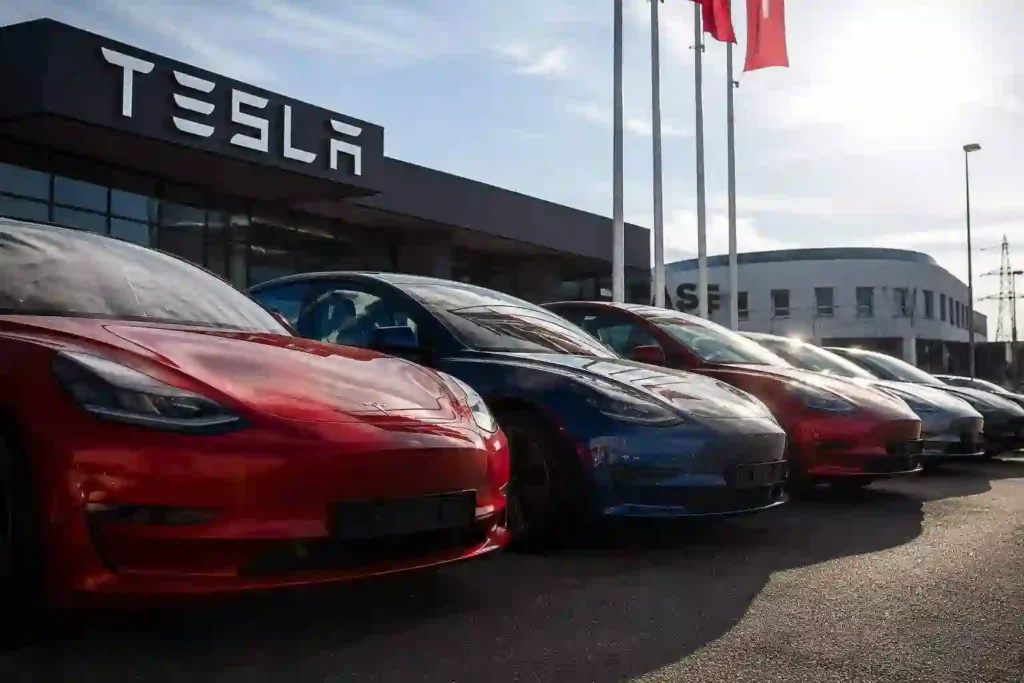

Tesla has announced a new U.S. recall covering 218,868 vehicles after a software problem was found that may delay the rearview camera image when the driver shifts into reverse. The issue affects certain Model 3, Model Y, Model S, and Model X vehicles running software version 2026.8.6.
The recall is not linked to a broken camera or a physical hardware failure. Instead, the problem comes from the timing of the display. In some vehicles, the rearview image may take longer than expected to appear on the screen after reverse gear is selected. That delay could reduce a driver’s view behind the vehicle at a moment when quick visibility matters most.
Rearview cameras are a key safety feature in modern vehicles. Drivers often depend on them while backing out of parking spaces, driveways, garages, and tight city areas. If the image appears late, even briefly, it may increase the risk of hitting another vehicle, a wall, a cyclist, a pedestrian, or an object behind the car.
The National Highway Traffic Safety Administration said the delayed rearview image could increase crash risk. Owners can check whether their vehicle is affected by using the official NHTSA recall lookup tool and entering their vehicle identification number.
Tesla is expected to fix the issue through an over-the-air software update. That means most affected owners should not need to visit a service center or replace any physical part. Once the update is installed, the rearview camera display should operate as required when the vehicle is shifted into reverse.
This type of recall shows how much the auto industry has changed. In the past, a recall usually meant a trip to a dealership and a mechanical repair. With Tesla, many safety-related fixes can now be delivered digitally. That gives the company an advantage in speed and cost, but it also puts more attention on software reliability.
Although the recall covers a large number of vehicles, it may not be as damaging for Tesla as a traditional hardware defect. Software recalls are usually easier to repair, and Tesla’s direct update system allows fixes to reach vehicles quickly. Still, regulators treat software safety issues seriously when they affect federally required systems such as rear visibility.
The timing of the recall also matters because Tesla remains under close public and investor attention. The company is no longer judged only as an electric vehicle maker. Its valuation is closely tied to software, artificial intelligence, Full Self-Driving, robotics, and future autonomous driving services.
That is why even a rearview camera recall can attract wider attention. Cameras are central to Tesla’s broader technology strategy, from basic driver visibility to advanced driver-assistance features. This recall is not about Full Self-Driving, but it still adds to the discussion around how dependable vehicle software must be as cars become more connected and automated.
According to Reuters, Tesla has already released an over-the-air update to address the delayed rearview camera image issue. The recall applies across Tesla’s main U.S. lineup, including its mass-market Model 3 and Model Y as well as the higher-end Model S and Model X.
For owners, the practical steps are simple. Check the recall status, install the software update when available, and confirm that the rearview camera appears immediately after shifting into reverse. Until the update is complete, drivers should use mirrors, turn their head when needed, and avoid relying only on the screen while backing up.
Automotive recalls are common, even among the world’s largest carmakers. What makes Tesla different is how visible every recall becomes. The company has a large retail investor base, a high-profile chief executive, and a brand closely associated with advanced technology. As a result, even routine software fixes can become major news stories.
The recall comes as Tesla is also facing growing questions about its global self-driving plans. In Europe, regulators have been reviewing Tesla’s supervised Full Self-Driving system, with some regions appearing open to a rollout while others continue to raise concerns about safety behavior, speed-limit handling, winter-road performance, and driver-monitoring protections.
Read More
Perth Bushfire: Herdsman Lake Fire Alert and Smoke Warning
Japan School Bus Crash Leaves Student Killed
New Zealand Universities Hit by Global Canvas Hack
Europe remains important for Tesla because approval for advanced driver-assistance software could open another revenue stream. Tesla already earns money from vehicle sales, energy products, software upgrades, and services. A wider FSD rollout would strengthen the company’s software story at a time when electric vehicle competition is rising sharply.
Chinese automakers such as BYD, Chery, Changan, and SAIC’s MG brand are expanding aggressively in overseas markets, including Europe. These companies are launching lower-cost EVs, compact models, and family vehicles aimed directly at buyers who may otherwise consider Tesla. That makes software and autonomy even more important for Tesla’s long-term positioning.
Tesla is also spending heavily to support its future technology plans. The company has increased planned capital spending for 2026 as it invests in artificial intelligence, custom chips, robotics, computing power, and autonomous driving development. These investments may pressure cash flow in the near term, but Tesla is betting they will support larger revenue opportunities over time.
The latest recall is unlikely to change Tesla’s long-term strategy, but it does underline one clear point: as cars become more software-driven, small digital issues can become safety matters. A delayed camera image may sound minor, but in real driving conditions, visibility delays can have serious consequences.
For Tesla owners, the immediate message is clear. Check your vehicle, install the latest update, and use extra caution while reversing until the fix is confirmed. The recall may be handled through software, but the safety concern behind it is real.

Make Swikblog your go-to source on Google for reliable updates, smart insights, and daily trends.