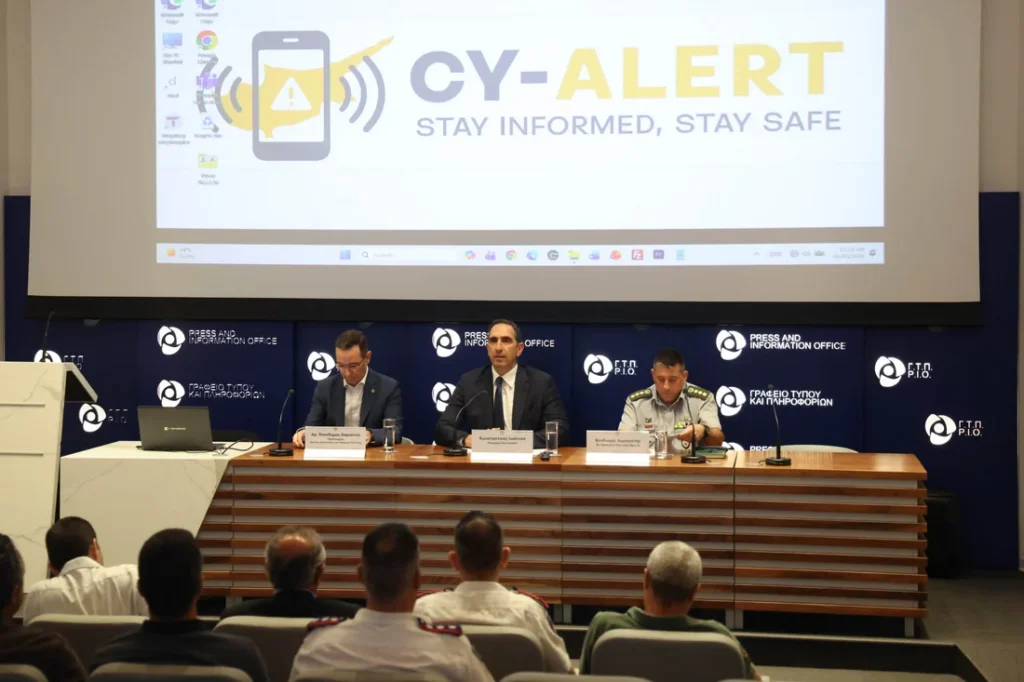

Cyprus is moving to close a major gap in public safety with the launch of CY-Alert, a nationwide emergency phone warning system built to reach people within seconds when fires, evacuations, security threats or other crises unfold.
The system will go live on June 2, 2026, giving authorities a direct way to send urgent instructions to mobile phones in affected areas. The launch comes after two major incidents raised difficult questions about emergency communication on the island: the deadly Limassol wildfires in 2025 and drone-related security scares near RAF Akrotiri earlier this year.
CY-Alert is not a normal text-message service. It uses Cell Broadcast technology, which sends warnings from mobile network antennas to all compatible devices inside a selected location. That means an alert can be sent to one village, a wider district or a larger danger zone depending on the emergency.
The biggest advantage is speed. Cell Broadcast does not rely on overloaded SMS networks, mobile data or an installed app. It can reach residents, workers and tourists even if they use a foreign SIM card, as long as their phone is compatible and updated. Authorities also say the system does not collect or store personal data.
When an alert arrives, it will appear directly on the phone screen with emergency instructions. It will also use a loud siren and strong vibration, including on phones set to silent or mute. That feature is important in fast-moving emergencies where people may not be watching television, checking news websites or following official social media pages.
Why CY-Alert matters for Cyprus
The need for a stronger warning system became clear after the July 2025 wildfires near Malia in Limassol district. The fires broke out during severe heat and led to the deaths of two people, while 16 communities had to be evacuated. Many residents later complained that they did not receive timely official instructions and had to depend on neighbours, phone calls and word of mouth.
Public concern grew again after drone incidents linked to the RAF Akrotiri area triggered evacuations and uncertainty among nearby residents. Those episodes showed that Cyprus needed a single, reliable system for both natural disasters and security-related emergencies.
Interior Minister Konstantinos Ioannou said the new platform is intended to improve preparedness and strengthen trust between the state and the public. Deputy Minister of Research, Innovation and Digital Policy Nicodemos Damianou said Cyprus is becoming the 16th country in Europe to implement the system under EU-Alert technical standards.
According to the Cyprus government, emergency alerts are part of wider efforts to give the public immediate information and guidance during dangerous situations.
Read More
Flight operations restart in Adelaide following the deadly Parafield airport incident as authorities continue investigations.
Ferrari prepares for the EV era with its upcoming Luce project, blending luxury performance with Apple-inspired design influence.
Testing, phone updates and fire-season planning
After the June 2 launch, Cyprus will begin a three-week testing period. Residents may receive test alerts in Greek and English, clearly marked as exercises and accompanied by the same warning sound and vibration used in real alerts. Local authorities are expected to inform communities before tests take place in their area.
Citizens are being advised to update Android and iPhone devices to the latest available software version. A dedicated helpline, 1450, will open from May 27 to provide information and technical guidance.
CY-Alert will later be connected with the Next Generation 112 emergency framework, which is aimed at improving emergency response across Europe. Cyprus is also preparing for the summer fire season through evacuation exercises, Civil Defence training, updates to the “Polyvios” response plan and land-clearing work around vulnerable communities.
The government has allocated €3.1 million to local authorities for clearing abandoned agricultural land around communities under Fire Service guidance. District administrations are also moving ahead with road clearances to reduce fire risks and improve access during emergencies.
Emergency alert systems are becoming more common as countries face stronger wildfire seasons, extreme weather and security risks. Swikblog recently reported on Canada’s Alert Ready emergency phone test, another example of governments using direct phone warnings to reach the public quickly.
For Cyprus, CY-Alert is more than a technology rollout. It is a response to past failures, public pressure and the growing reality that warnings must reach people before a crisis becomes impossible to control.

Make Swikblog your go-to source on Google for reliable updates, smart insights, and daily trends.