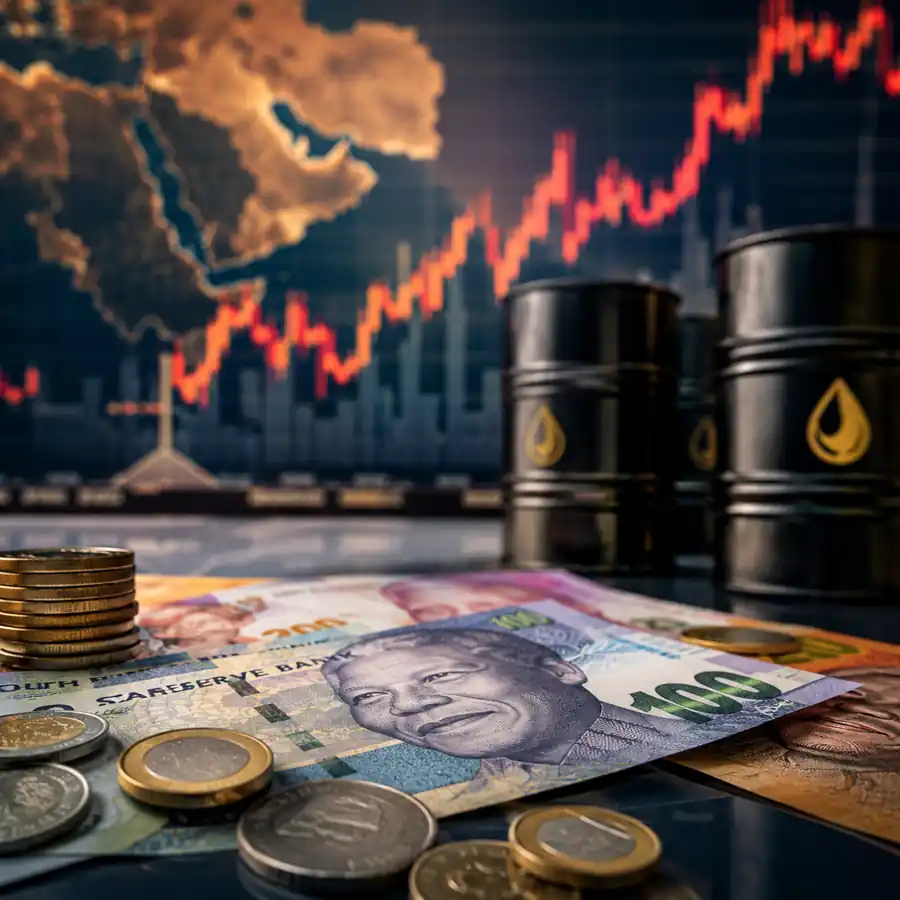

South Africa’s rand moved lower on Tuesday as traders weighed two risks at once: rising oil prices linked to Iran uncertainty and a crucial week for domestic monetary policy. The currency traded near 16.3375 against the U.S. dollar in early trade, around 0.3% weaker from its previous close.
The pressure came as Brent crude futures climbed about 2%, with markets still waiting for a clear sign that tensions involving Iran are easing. Hopes for a quick agreement faded after U.S. Secretary of State Marco Rubio said talks with Iran could “take a few days,” following what Washington described as defensive strikes in southern Iran.
For currency markets, the concern is not only the conflict itself. The bigger issue is the risk around the Strait of Hormuz, a key route for global oil shipments. When uncertainty grows around that corridor, crude prices often rise quickly because traders start pricing in possible supply disruptions.
That is uncomfortable for South Africa. The country is a major fuel importer, so higher oil prices can feed into petrol, transport and food costs. A sustained rise in crude can also add pressure on inflation, which makes life harder for households and complicates the South African Reserve Bank’s policy decision.
Swikblog has previously covered how Middle East tensions can move energy markets sharply, including its report on US crude oil jumping as Middle East conflict rattled markets. The latest rand move follows the same pattern: geopolitical risk lifts oil, and oil-importing emerging markets feel the pressure.
Rand faces SARB data test before rate decision
Investors are also watching fresh economic signals from the South African Reserve Bank, which is due to publish the country’s leading business cycle indicator for March. The index combines several forward-looking measures, including vehicle sales, business confidence, money supply and other economic indicators.
The February reading showed a small improvement, rising to 120.2 points from 119.6 points in January. That suggested South Africa’s economy had been showing signs of better momentum before the latest global pressures intensified.
However, that recovery picture now looks less secure. ETM Analytics said the earlier increase in the leading indicator suggested the economy had been on track for another year of improved growth before recent developments. But the firm also warned that supportive conditions are reversing, with inflation rising sharply, interest rates likely to increase, gold prices slipping, fiscal risks worsening and 2026 growth likely to be weaker.
Read More
Flight operations restart in Adelaide following the deadly Parafield airport incident as authorities continue investigations.
Ferrari prepares for the EV era with its upcoming Luce project, blending luxury performance with Apple-inspired design influence.
The SARB’s interest-rate decision on Thursday is now the key domestic event for markets. Economists polled by Reuters expect a 25 basis point hike. A rate increase could help defend the rand by making local assets more attractive, but it would also raise borrowing costs for consumers and businesses.
South Africa’s benchmark 2035 government bond was flat in early trading, with the yield near 8.515%. That calm suggests bond investors are waiting for stronger direction from the central bank before making bigger moves.
For now, the rand remains caught between external and domestic pressure. If oil prices keep rising and Iran uncertainty drags on, the currency may struggle to recover quickly. But a firm SARB message on inflation could limit further losses and give investors more confidence heading into the rest of the week.

Make Swikblog your go-to source on Google for reliable updates, smart insights, and daily trends.