
McLaren’s Chinese Grand Prix weekend ended in one of the most damaging ways possible after both Lando Norris and Oscar Piastri failed to start Sunday’s race, forcing the team into an immediate investigation with Mercedes High Performance Powertrains. What began as a realistic top-six opportunity in Shanghai quickly turned into a major reliability concern just as the 2026 Formula 1 season is beginning to take shape.
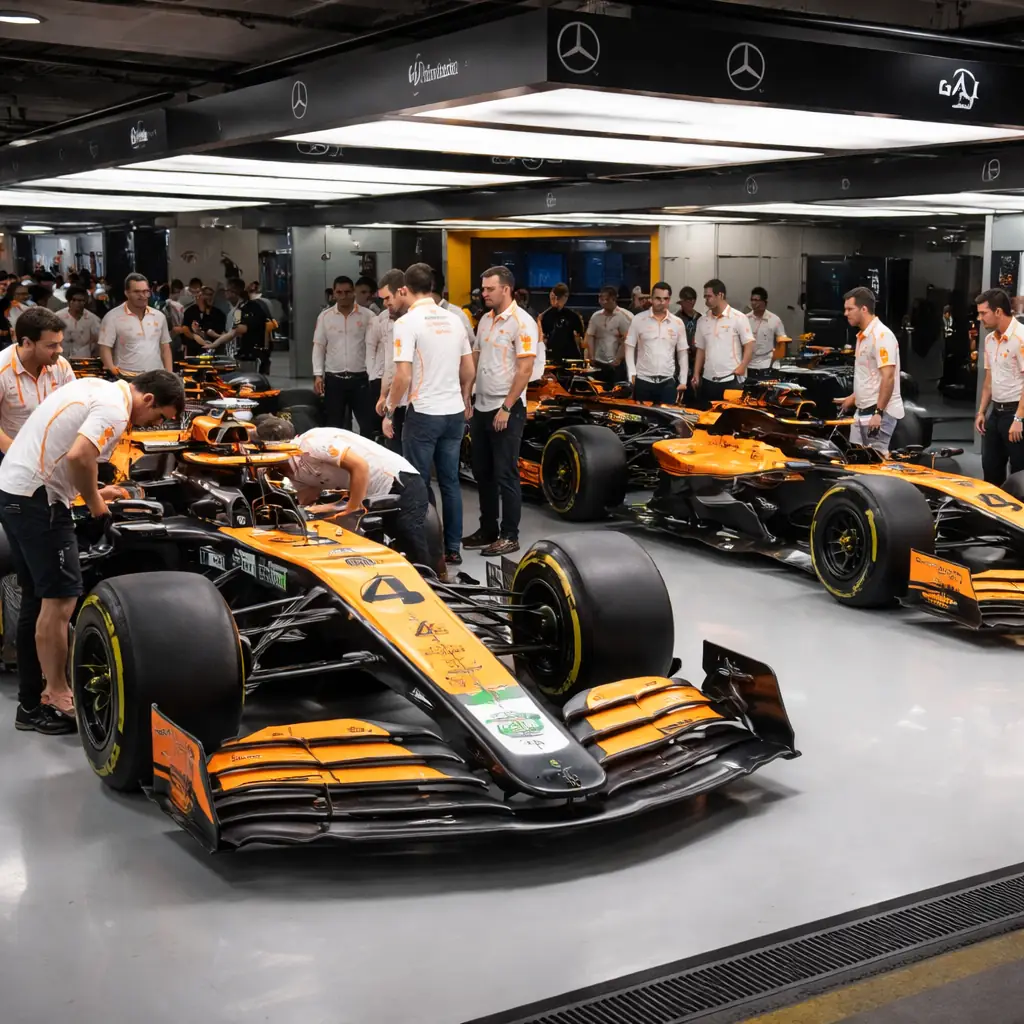
The team had lined up in a competitive position after Piastri qualified fifth and Norris sixth. But while the field assembled on the grid, Norris remained stranded in the McLaren garage as mechanics worked to solve a problem that prevented the car from starting. Minutes later, Piastri was also withdrawn before the formation lap, leaving McLaren with a double non-start that wiped out any chance of points before the race had even begun.
Two different failures, one major setback
McLaren said the issues were not identical. Piastri described his problem as an electrical fault on the power unit, while Norris said his own car was hit by a separate issue that stopped the team from being able to start it at all. That made the outcome even more frustrating, because it pointed not to one simple fault but to two different failures striking both cars at the worst possible time.
For Norris, the Shanghai DNS carried extra weight. It was the first time in his eight-season Formula 1 career that he has missed a race. Piastri’s absence was also significant, marking his second missed race in a row after crashing on the way to the grid at his home race in Australia. In practical terms, McLaren lost both cars on a day when it badly needed a clean run just to stay in touch with the leading teams.
Norris made clear afterward that the team had little choice but to move on and get answers quickly. He said McLaren, its mechanics, engineers and Mercedes HPP all wanted to be racing and scoring points, but that the priority now was to understand the cause and make sure the same scenario does not happen again. Piastri struck a similar tone, calling the result unfortunate and admitting that the team still does not fully know any more than the basic diagnosis at this stage.
Early 2026 pressure is building
The timing makes the setback especially painful. McLaren has so far failed to match the pace of the works Mercedes outfit, whose drivers have now won both Grand Prix races and the only sprint race held under Formula 1’s new 2026 rules. Those regulations place greater emphasis on electrical power, and McLaren has already indicated that it is concerned about a lack of information on how to get the best from the Mercedes systems in this new era.
That wider context turns a double DNS into more than a one-off embarrassment. McLaren is not only trying to recover reliability, it is also trying to unlock the performance needed to keep Mercedes within reach. The official Formula 1 report from Shanghai underlined how abruptly both cars dropped out before the race began, and how little time the team had to react once the problems surfaced.
There was no shortage of evidence across the grid that reliability remains a live issue in the opening weeks of the season. Four cars in total failed to start on Sunday, including Gabriel Bortoleto’s Audi and Alex Albon’s Mercedes-powered Williams, which suffered a hydraulic-system failure. That broader picture does not make McLaren’s pain any smaller, but it does show how aggressively the new package is testing teams as they adapt to the revised power-unit demands.
A race that exposed wider reliability worries
Shanghai also brought more bad news for Aston Martin, another team wrestling with serious durability concerns. Lance Stroll retired early after a battery failure, a repeat issue linked to its Honda power unit, while Fernando Alonso was forced to stop because of what the team described as discomfort caused by vibrations. That added another layer to a weekend in which technical weakness overshadowed outright pace for several teams outside the Mercedes camp.
Those Aston Martin problems have become more notable after Adrian Newey recently warned that the car was shaking so violently it risked causing permanent nerve damage in the drivers’ hands if major improvements were not made. Against that backdrop, McLaren’s own reliability blow looked less like an isolated mishap and more like part of a wider early-season struggle as teams search for control under the new rules.
For McLaren, though, the main concern remains internal. The team arrived in China needing progress and left with two cars that never made the start, a growing performance gap to Mercedes, and a fresh investigation into systems that should have been dependable enough to at least get both drivers onto the grid. The next race in Japan now carries extra significance, because another weekend lost to technical trouble would turn frustration into a much larger competitive problem.

Make Swikblog your go-to source on Google for reliable updates, smart insights, and daily trends.