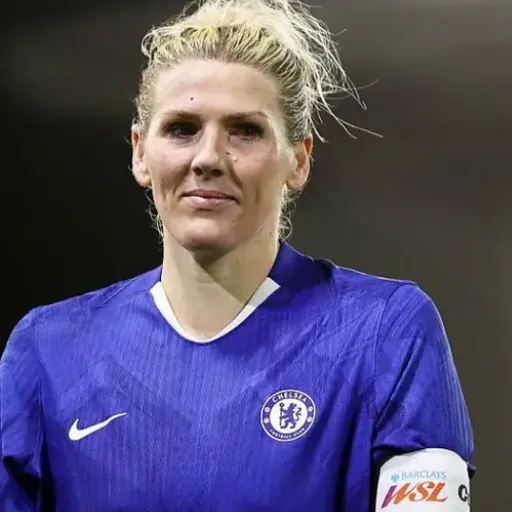

Millie Bright has brought the curtain down on her playing career at 32, ending a Chelsea journey that stretched across more than a decade and helped shape one of the most successful periods in the history of English women’s football.
The Chelsea captain has retired with immediate effect after a career filled with domestic dominance, international milestones and a level of loyalty rarely seen in the modern game. Her decision means she will not return for Chelsea’s final fixtures of the season, including the closing Women’s Super League matches and the club’s remaining cup commitments.
Bright’s retirement is not just another end-of-season squad update. It is the departure of a player who became part of Chelsea’s identity. From her arrival from Doncaster Rovers Belles to captaining one of Europe’s biggest clubs, she built a reputation as a fearless defender, a demanding leader and one of the most respected figures in the women’s game.
Across her Chelsea career, Bright made 314 appearances, scored 19 goals and collected 20 trophies. That haul includes eight Women’s Super League titles, six Women’s FA Cups and four League Cups, numbers that underline how central she was to Chelsea’s long spell of domestic control.
Why Millie Bright has stepped away now
Bright’s final season was shaped by injury and reduced minutes. She has been sidelined since February because of an ankle problem, and the timing of her decision reflects the physical demands that have built up over years at the highest level.
Her retirement from England duty in 2025 had already shown that she was thinking carefully about her body, her mindset and what she could still give to elite football. At the time, she made it clear she could not offer 100 percent physically and mentally, a rare public admission from a player known for toughness and reliability.
That honesty gives more context to this latest decision. Bright did not leave because her influence disappeared. She left after a long run of carrying responsibility for club and country, playing through pressure, expectation and injury, while helping to lift the standards around her.
In her retirement message, Bright said representing Chelsea had meant everything to her and that she had given all she could. She also made clear that she never wanted to fight for any other badge, a line that will resonate strongly with Chelsea supporters.
For full club confirmation, readers can visit the official Chelsea statement on Millie Bright’s retirement.
A Chelsea legacy built on more than trophies
Bright joined Chelsea at a time when the women’s side was still building towards the dominance it would later enjoy. She grew with the club, adapted as the league became more competitive and remained a constant figure as Chelsea turned ambition into silverware.
Her first major honours helped set the tone for what followed. Chelsea became the benchmark in English women’s football, and Bright was repeatedly at the heart of that success. She was not a defender who only did the quiet work. Her presence was visible, vocal and often decisive.
At her best, Bright gave Chelsea authority from the back. She was strong in the air, aggressive in duels and comfortable stepping forward when needed. Her defensive style suited a team that often controlled games but still needed leaders capable of managing dangerous moments under pressure.
Her captaincy from the 2023–24 season gave formal recognition to what had already been clear for years. Bright was one of the dressing room’s main voices. She understood the standards expected at Chelsea and helped pass them on to newer players arriving into a winning environment.
That is why replacing her will not be simple. Chelsea can recruit another defender, but replacing more than 300 games of experience, trophy knowledge and emotional connection to the club is a different challenge.
The club is now moving through a new phase, with younger players pushing for bigger roles and the squad evolving under Sonia Bompastor. Bright’s retirement speeds up that transition and leaves Chelsea with a leadership gap as well as a defensive one.
England impact and the moments that changed her career
Bright’s international career added another layer to her legacy. She earned 88 caps for England and was part of the Lionesses team that won Euro 2022 on home soil, a tournament that changed the visibility and commercial future of women’s football in the country.
She started every match during that European Championship run and provided the type of defensive security that allowed England’s attacking players to thrive. It was a defining moment not only for the Lionesses but also for players like Bright, who had helped build towards that breakthrough for years.
One year later, she took on an even bigger role at the 2023 World Cup. With Leah Williamson injured, Bright captained England through the tournament and led the team to the final. That run confirmed her status as one of the most trusted leaders in the national setup.
Her England career was also marked by advocacy and honesty away from the pitch. Bright became one of the senior voices in conversations around player welfare, standards, and the mental and physical demands placed on elite footballers.
That openness matters. In a sport growing quickly, players are often expected to carry more visibility, more commercial responsibility and more pressure without the same recovery time. Bright’s decision to step away highlights the cost behind the success.
What happens next for Millie Bright
Bright will not disappear from Chelsea. She is expected to remain connected to the club through off-pitch work, including an ambassadorial role and her position as a trustee of the Chelsea Foundation.
That next chapter feels fitting. Bright has long spoken about using her platform beyond football, and staying involved with Chelsea allows her to continue influencing the club without the weekly demands of training, travel and matchday pressure.
Her retirement also gives supporters a chance to reassess the scale of her career. She leaves as a Chelsea legend, an England European champion, a World Cup finalist and one of the most decorated defenders of the modern WSL era.
There will be debates about where she ranks among England’s greatest centre-backs, but her place in Chelsea history is already secure. Few players have been so closely tied to one club’s rise, and even fewer have helped deliver so much success while remaining so strongly identified with a single badge.
For Chelsea, 16 May at Stamford Bridge against Manchester United will carry added emotion as the club prepares to honour Bright’s career. For the wider women’s game, her retirement marks the end of a chapter shaped by loyalty, resilience and a standard of leadership that younger players will now be asked to follow.
You may also like: Romania Coach Mircea Lucescu Hospitalised After Sudden Health Scare Before Training

Make Swikblog your go-to source on Google for reliable updates, smart insights, and daily trends.