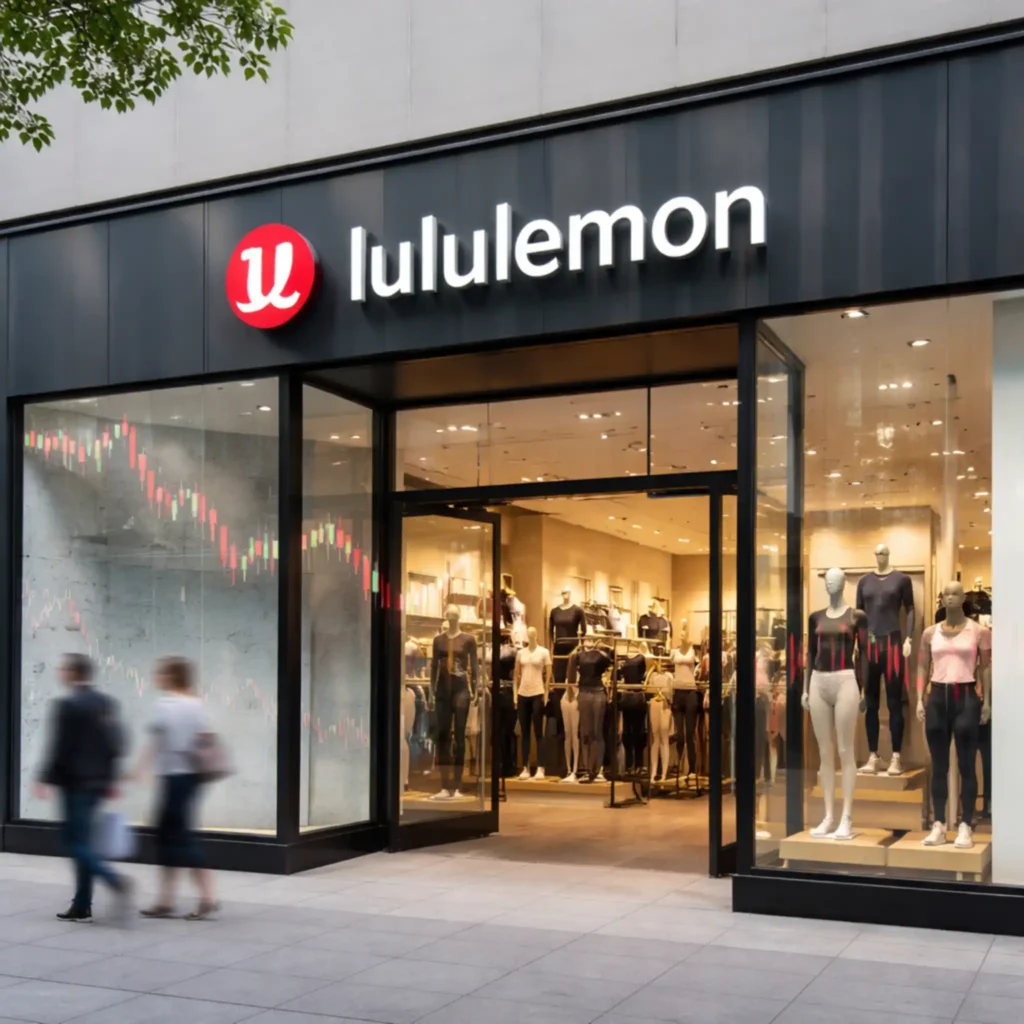

Lululemon (NASDAQ: LULU) stock rose 2.8% to around $163 on Wednesday, but the bounce came against the backdrop of a much darker story. The athletic apparel company has lost roughly 51% of its value over the past year, and investors are still trying to judge whether the latest leadership move signals the start of a real reset or just another short-term headline pop. The catalyst this time was Lululemon’s decision to add former Levi’s CEO Chip Bergh to its board, a move that immediately drew attention because of Bergh’s reputation as one of the most respected operators in modern retail.
Lululemon said late Tuesday that Bergh will join the board and succeed David Mussafer in the role. Bergh is not only known for leading Levi Strauss through a long turnaround, but also for his wider consumer-products background. He is currently the chair of HP, and earlier in his career at Procter & Gamble he was involved in creating the Swiffer mop, one of the most successful household product launches of its era. That combination of brand-building, merchandising, and operational experience is exactly why investors took a second look at what might otherwise have seemed like a routine governance update.
Why Chip Bergh matters for Lululemon now
Bergh’s arrival matters because his 12-year run as Levi’s CEO from 2011 to 2024 is widely regarded as one of retail’s stronger comeback stories. When he arrived at Levi’s, the brand was still heavily tied to a narrower men’s denim business sold largely through US wholesale channels. Under his leadership, Levi’s broadened its reach, modernized its distribution strategy, expanded more aggressively into women’s categories, and repositioned itself as a more global, digital-first lifestyle company.
His achievements at Levi’s included a major financial turnaround, the company’s 2019 IPO, a deliberate move away from heavy dependence on department stores, a revitalization of the women’s business, and the 2021 acquisition of Beyond Yoga. For Lululemon shareholders, that track record matters because the company is no longer dealing with a simple growth slowdown. It is facing questions about strategy, brand execution, and leadership credibility all at the same time.
Bergh is also a high-profile personality in retail, remembered in some circles for the unusual story of him wearing Levi’s jeans in the shower to wash them. That anecdote has long followed him, but investors are focused on something more serious now: whether his presence can strengthen Lululemon’s board during one of the most unsettled periods in the company’s recent history.
Lululemon’s deeper problems are not solved yet
Even with the stock pushing higher intraday, the company’s core issues remain firmly in place. Lululemon’s once-premium valuation has been crushed as the market has grown more doubtful about its near-term direction. The stock’s slide of 51% over the past 12 months reflects far more than temporary volatility. It reflects a broad loss of confidence that Lululemon can keep delivering the kind of category leadership and consistent execution that once made it one of retail’s most admired brands.
The pressure has become even more visible because the criticism is not just coming from Wall Street. Founder and major shareholder Chip Wilson has publicly attacked the company’s strategy, a sign of how serious the internal strain has become. His criticism recently coincided with the departure of CEO Calvin McDonald, further destabilizing investor confidence at a moment when the business needed a clearer hand at the top.
Adding to the tension, Elliott Management has emerged as a shareholder. The arrival of a feared activist investor usually sharpens expectations around governance, strategy, accountability, and capital allocation. In other words, Lululemon is no longer being judged purely as a premium consumer brand. It is now being watched as a company under mounting pressure to prove it can fix itself quickly.
The CEO gap is still the biggest overhang
One of the most important details in the story is that Lululemon still does not have a permanent chief executive in place. The company is currently being run on an interim basis by co-CEOs Meghan Frank and André Maestrini. The market understands that as a temporary arrangement, not a long-term answer. According to reports, Lululemon would prefer to hire an external executive to take the job permanently.
That unresolved CEO search may be the single biggest reason the stock’s recovery attempts keep running into skepticism. Investors may welcome Bergh’s appointment, but they still want to know who will lead the business day to day, rebuild strategy, reset accountability, and tackle the operational issues that have hurt the brand in North America. Until that name is in place, the market is effectively being asked to underwrite hope rather than a complete turnaround plan.
Sales numbers show where the strain is showing up
The latest financial figures explain why patience is wearing thin. Lululemon reported that fourth-quarter sales in the Americas fell 4%. Within that, US sales dropped 6%, while Canada rose 1%. That split is important because the American business has historically been a major growth and profit engine for the brand. Weakness there suggests the problem is not limited to isolated product cycles or temporary macro noise.
The earnings outlook also disappointed. Lululemon guided for first-quarter earnings per share of $1.63 to $1.68, far below the $2.09 analysts had been expecting. That is the kind of gap that tends to shake confidence because it implies management sees pressure lasting longer than investors had hoped. In retail, soft guidance often carries more weight than headline revenue because it raises questions about demand, promotions, product mix, and margin resilience.
Competition is getting tougher in athleisure
Lululemon is also no longer competing in the same market structure that made it dominant years ago. Its once-formidable market share in sportswear has been chipped away as newer and faster-moving brands such as Alo and Vuori continue to win attention. The company’s struggles have been compounded by frequent product missteps and inconsistent execution under prior leadership, making it easier for rivals to build momentum with shoppers looking for freshness and brand heat.
That is why Bergh’s arrival is being interpreted as more than a ceremonial board refresh. Lululemon needs sharper judgment on product, positioning, channel strategy, and leadership selection. It needs someone who has already managed a legacy brand through disruption and knows how to add “shock absorbers” to a business facing changing consumer habits and rising competition.
Wall Street is not ready to celebrate yet. Jefferies analyst Randy Konik summed up the cautious mood by arguing that there is still little to get excited about right now and that the CEO decision remains the key issue. Until a credible long-term leader arrives to reset strategy, organizational design, and accountability — especially in North America — the stock is likely to remain vulnerable to sharp swings in sentiment. Investors looking to follow the latest share-price action and company developments can track the stock on Yahoo Finance’s LULU page. For now, Lululemon has bought itself some attention with a respected board hire, but it still has much bigger problems to solve before the market is ready to believe in a lasting recovery.

Make Swikblog your go-to source on Google for reliable updates, smart insights, and daily trends.