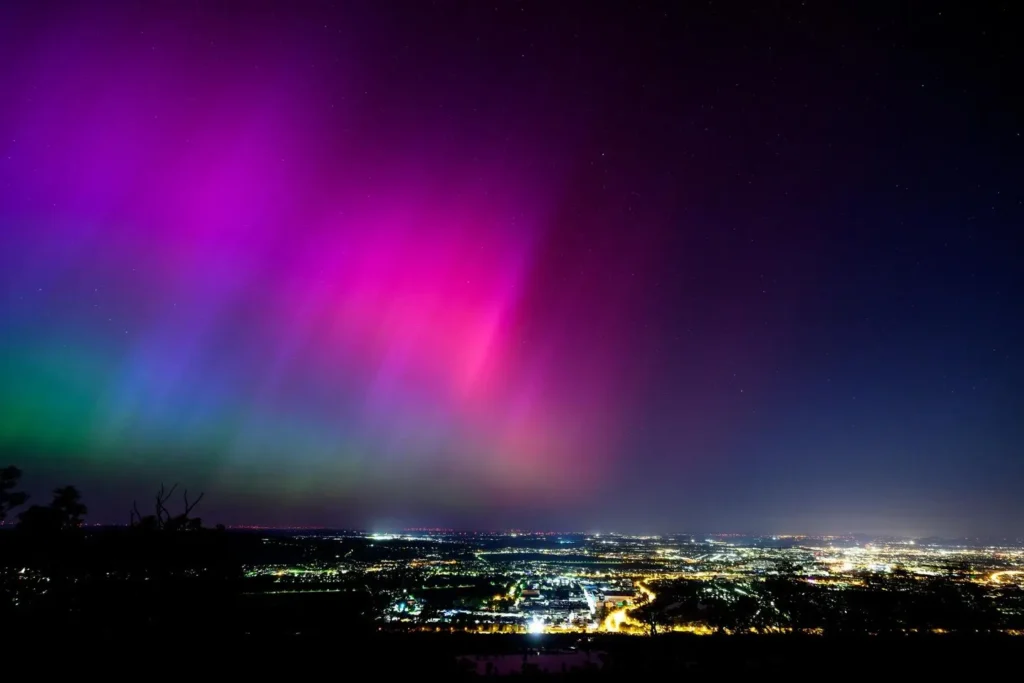

A powerful solar storm is set to hit Earth, and it could trigger one of the most widespread Northern Lights displays of 2026. A fresh geomagnetic storm alert suggests that up to 20 U.S. states could witness a rare aurora surge tonight, with visibility stretching far beyond typical northern regions.
Driven by multiple solar eruptions, this event is gaining massive attention across the U.S. and Canada, with skywatchers preparing for a potentially historic night.
What’s Triggering This Rare Aurora Surge
The upcoming aurora display is being fueled by multiple coronal mass ejections (CMEs) released from the Sun on March 16 following an M-class solar flare. These massive bursts of plasma and magnetic energy are now heading directly toward Earth.
According to the NOAA Space Weather Prediction Center, at least four CMEs could impact Earth in quick succession, significantly increasing the intensity and duration of geomagnetic activity.
This is not a single short event — experts warn the storm could last 24 to 48 hours or longer, creating multiple opportunities to see the aurora.
Geomagnetic Storm Levels Explained
The storm is expected to reach:
- G2 (Moderate) geomagnetic storm levels
- Possible escalation to G3 (Strong)
A G3-level storm is significant because it can push auroras deep into mid-latitudes — something rarely seen in the United States.
Exact Timing: When the Northern Lights Could Peak
The timing of this event is still evolving due to the complexity of multiple incoming CMEs. However, current forecasts suggest:
- Initial impact: Around 11 PM EDT (March 18)
- Peak storm window: 2 AM to 8 AM EDT (March 19)
- Extended activity: March 20–21 and possibly beyond
Because multiple solar eruptions are involved, auroras may appear in bursts, known as substorms, which can intensify quickly and fade within minutes.
20 States That Could See the Aurora Tonight
NOAA’s aurora viewline indicates visibility across a wide region of the United States.
Best visibility (strong displays):
- Alaska
- Washington
- Idaho
- Montana
- North Dakota
- South Dakota
- Minnesota
- Wisconsin
- Michigan
- Maine
Possible visibility (low on horizon):
- Oregon
- Wyoming
- Nebraska
- Iowa
- Illinois
- Indiana
- Ohio
- New York
- Vermont
- New Hampshire
In rare cases, if the storm intensifies to G3 levels, auroras could become visible even further south.
Why This Event Is So Powerful
This aurora surge is happening at a perfect time due to two major factors:
- New Moon (March 19) — darker skies for better visibility
- Spring Equinox (March 20) — boosts geomagnetic activity
This seasonal boost is known as the Russell-McPherron effect, where Earth’s magnetic field aligns in a way that allows solar energy to enter more efficiently. This increases the chances of stronger auroras.
The Science Behind the Northern Lights
Auroras occur when charged particles from the Sun collide with gases in Earth’s atmosphere, primarily oxygen and nitrogen. These collisions release energy in the form of colorful light displays.
The intensity of the aurora depends heavily on the Bz component of the interplanetary magnetic field:
- When Bz points north → weaker auroras
- When Bz turns south (below -5 nT) → strong aurora activity
This is why space weather forecasts can change rapidly, making real-time monitoring essential.
How to Get the Best View Tonight
To maximize your chances of seeing the Northern Lights:
- Find a dark sky location away from city lights
- Look toward the northern horizon
- Wait until after moonset for darker skies
- Check cloud cover before heading out
- Use live tracking tools like SpaceWeatherLive
Even faint auroras can appear much brighter in photos than to the naked eye.
How to Capture the Aurora on Your Phone
You don’t need professional equipment to capture this event. Follow these tips:
- Use night mode or manual settings
- Stabilize your phone using a tripod or flat surface
- Set exposure between 5–10 seconds
- Shoot in RAW format if available
Colors like green, purple, and red often appear more vivid in photos than in real life.
Why This Event Is Going Viral
Searches for “northern lights tonight,” “aurora forecast 2026,” and “solar storm impact” are surging across Google and social platforms. Events like this drive massive traffic due to their rarity and visual appeal.
Similar to trending updates in breaking financial news, rare natural phenomena create high engagement and strong click-through rates, especially on Google Discover.
What Happens After This Storm
NOAA forecasts suggest continued geomagnetic activity on:
- March 20–21
- March 24
- March 26–28
- March 30
This means multiple chances to see auroras over the coming days, although intensity may vary.
Final Outlook
This is shaping up to be one of the most significant aurora events of the year. With multiple CMEs, strong geomagnetic storm potential, and ideal sky conditions, millions of people across North America could witness the Northern Lights.
If skies are clear tonight, step outside, look north, and stay patient — you may witness a rare and unforgettable celestial display.

Make Swikblog your go-to source on Google for reliable updates, smart insights, and daily trends.