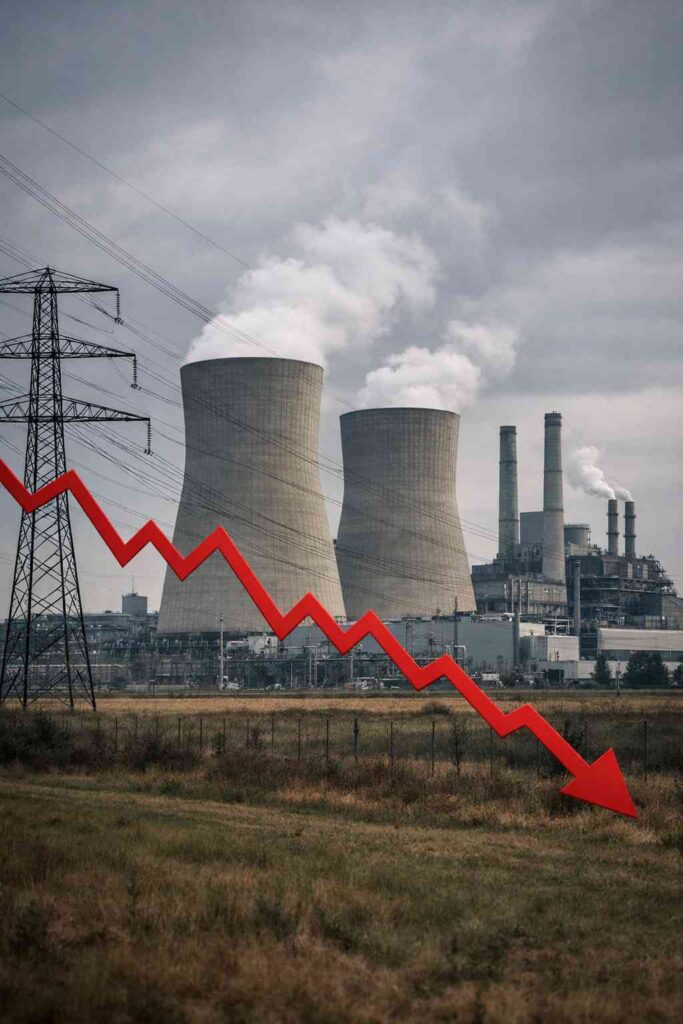

Vistra Corp. (NYSE: VST) plunged 12.64% to $146.02, marking one of the sharpest single-day declines among energy stocks, as investors reacted immediately after the stock crossed its dividend record date. The sudden drop triggered heavy selling pressure, raising questions about whether the move was purely technical or a reflection of deeper concerns around the company’s financial trajectory.
The timing of the decline aligns closely with Vistra’s latest dividend announcement. The company had declared a quarterly dividend of $0.2280 per share for common shareholders, payable on March 31, 2026, to investors on record as of March 20. As the stock moved past this cutoff date, short-term holders who aimed to capture the dividend began exiting positions, contributing to the sharp downward move.
Dividend Mechanics Trigger Initial Selling Pressure
Dividend-related sell-offs are not unusual, particularly when a stock has seen strong prior momentum. Once a stock goes ex-dividend, it typically adjusts lower to reflect the payout. However, in Vistra’s case, the scale of the decline far exceeded the value of the dividend itself, suggesting that additional factors amplified the sell-off.
Alongside the common dividend, Vistra also outlined payments for its preferred shareholders. Holders of the company’s “8% Series A Fixed-Rate Reset Cumulative Redeemable Perpetual Preferred Stock” are set to receive $40 per share, with a record date of April 1, 2026, and payment scheduled for April 15. These preferred dividends are paid semi-annually, bringing the total annual payout to $80 per preferred share.
The combination of multiple dividend-related events may have contributed to heightened trading activity, but the magnitude of the stock’s decline indicates that broader investor sentiment played a significant role.
Earnings Decline Adds to Investor Concerns
Beyond dividend-related dynamics, Vistra’s latest financial performance provides additional context for the market reaction. The company reported a significant drop in full-year profitability, with net income falling 66% to $944 million compared to $2.812 billion in 2024. This sharp decline in earnings has raised concerns about the sustainability of its recent growth trajectory.
Revenue performance remained relatively stable but still showed signs of pressure. Operating revenues dipped 3% year-over-year to $17.7 billion, reflecting a modest contraction in top-line growth. Meanwhile, adjusted EBITDA declined by 5.3% to $5.9 billion, indicating some softness in operational efficiency.
The fourth-quarter results painted a similar picture. Vistra reported net income of $233 million for the quarter, down 52% from $490 million in the same period a year earlier. Adjusted EBITDA for the quarter fell 14% to $1.7 billion from $1.9 billion, highlighting continued margin pressure.
Why the 12.64% Drop Stands Out
While dividend-related adjustments typically lead to minor price corrections, a double-digit percentage drop is rarely driven by dividends alone. The $0.2280 per share payout is relatively small compared to the more than $20 decline in Vistra’s stock price during the session, signaling that other forces were at play.
One likely factor is profit-taking. Stocks that attract strong investor interest often become crowded trades, and once a trigger event occurs, such as a dividend cutoff, it can lead to a wave of selling. Investors who entered positions ahead of the dividend may have chosen to lock in gains immediately after qualifying for the payout.
Additionally, the sharp decline in earnings and weakening profitability metrics may have prompted more cautious positioning among institutional investors. When combined with a technical catalyst like the ex-dividend date, these concerns can accelerate downside momentum.
Market Sentiment and Broader Implications
Vistra has been closely followed due to its exposure to the power generation sector, which is increasingly tied to rising electricity demand from data centers and artificial intelligence infrastructure. This narrative has supported strong investor interest, but it also means expectations remain high.
When expectations are elevated, even modest signs of weakness can trigger outsized reactions. The latest decline suggests that investors are beginning to reassess valuations and weigh whether recent optimism has already been priced into the stock.
Despite the sell-off, Vistra remains a significant player in the U.S. energy landscape, with a diversified generation portfolio and a strong presence in competitive power markets. However, the recent drop underscores the volatility that can accompany stocks tied to high-growth themes.
What Comes Next for VST
Going forward, investor focus is likely to shift toward Vistra’s ability to stabilize earnings and maintain operational performance. The company’s future guidance, capital allocation strategy, and ability to navigate market conditions will play a crucial role in determining whether the stock can recover from this sharp decline.
For now, the key takeaway is clear. Vistra (VST) plunged 12.64% to $146.02 in a move that extends beyond simple dividend mechanics. The combination of profit-taking, weaker earnings performance, and shifting sentiment appears to have driven the sell-off, leaving investors closely watching the next phase for the stock.
For more details, investors can review the company’s official updates via Yahoo Finance and broader market insights on MarketWatch.
You may also like: UAL Stock Falls to $89.95 as Oil Nears $175 and Cost Warning Shakes Outlook

Make Swikblog your go-to source on Google for reliable updates, smart insights, and daily trends.