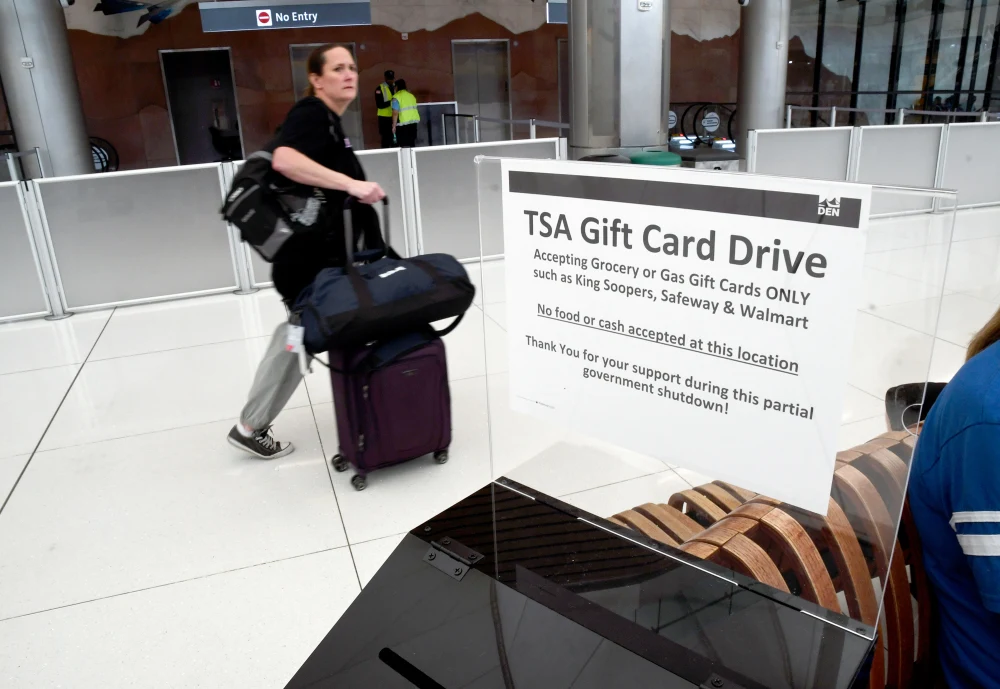

The ongoing U.S. government shutdown is rapidly turning into a full-blown financial crisis for federal workers, with over 120,000 Department of Homeland Security (DHS) employees affected. Among them, nearly 50,000 Transportation Security Administration (TSA) officers have now gone 36 days without full pay, creating severe financial and emotional strain across the country.
As political negotiations remain stalled in Washington over immigration enforcement funding, the real impact is being felt on the ground — at airport security lines, in family homes, and increasingly at food distribution centers set up specifically for unpaid federal workers.
While TSA officers continue to report for duty to keep airports secure, many are now struggling to afford basic necessities. The situation has become so critical that nonprofits, unions, and airport communities nationwide are stepping in to provide emergency support.
36-day shutdown leaves thousands without pay
The shutdown, now in its 36th day, stems from a funding deadlock over immigration policies, particularly disagreements around agencies like Immigration and Customs Enforcement (ICE) and Customs and Border Protection (CBP). Lawmakers have failed to reach a compromise, leaving critical departments like DHS partially unfunded.
This comes just months after a record 43-day shutdown, which had already pushed hundreds of thousands of federal workers into financial distress. Now, history is repeating itself — but faster and with deeper consequences.
Despite not receiving full paychecks, TSA officers are classified as essential workers and are required to continue working. This means they are performing high-responsibility security duties daily without immediate financial compensation.
Workers facing eviction, debt, and daily survival struggles
The financial toll on TSA officers is becoming alarming. According to union leaders, many employees are:
- Falling behind on rent and utility bills
- Facing eviction notices and car repossessions
- Unable to afford medical procedures for their children
- Struggling to buy basic items like milk, toothpaste, and household supplies
“For some people it can be life or death,” said a union representative, highlighting the severity of the crisis.
The reality is stark — even everyday essentials have become difficult to manage. For many TSA workers living paycheck to paycheck, missing even one paycheck creates a domino effect of financial instability.
Nonprofits step in with food, groceries, and emergency aid
As the crisis deepens, nonprofit organizations across the U.S. have mobilized quickly to support affected workers.
World Central Kitchen, known for responding to war zones and disaster areas, has started providing meals at airports in the Washington, D.C. region after TSA officers missed their first full paycheck.
In California, Feeding San Diego distributed 400 food boxes filled with essential groceries such as pasta, beans, peanut butter, strawberries, and potatoes to TSA workers near the airport.
Similarly, Operation Food Search set up a temporary food pantry directly at St. Louis Lambert International Airport. In just a two-hour window, they distributed over half of their prepared food bags, each carefully kept under $20 in value to comply with federal ethics rules.
These efforts are designed to make access easier by delivering aid directly at workplaces, eliminating the need for workers to travel extra distances after long shifts.
According to NBC News, these coordinated efforts between nonprofits and airport authorities are crucial in ensuring support reaches TSA employees efficiently.
Strict ethics rules limit how workers can receive help
Despite widespread public support, federal ethics regulations make direct assistance more complicated. TSA officers are prohibited from accepting cash or gifts directly at security checkpoints, and any gift must not exceed $20 in value if it is tied to their government role.
To navigate these restrictions, donations are being routed through:
- Labor unions such as the American Federation of Government Employees (AFGE)
- Airport-approved distribution systems
- Nonprofit partnerships working directly with TSA offices
Unions have become a key support channel because they can legally accept donations and redistribute them to members. This has made them one of the most effective ways for the public to help.
Airports and communities unite to support TSA staff
Airport communities across the country are also stepping up in remarkable ways.
At Seattle-Tacoma International Airport, officials have collected approximately $6,000 in cash and gift cards along with over $10,000 worth of food and household supplies. Local nonprofits like Food Lifeline have distributed fresh produce to more than 460 people, many of them TSA employees.
Airport vendors, usually focused on serving travelers, are offering free or discounted meals to TSA officers. Other aviation-related unions, including air traffic controllers, have also contributed donations despite not being directly affected by this shutdown.
This growing wave of support highlights how deeply the crisis is resonating with local communities and fellow workers.
Travelers react as crisis unfolds in plain sight
For regular travelers passing through airport security, the situation is becoming increasingly visible. Donation boxes, food drives, and volunteer efforts are now common sights at major airports.
Many passengers have expressed sympathy for TSA workers who continue performing critical duties without pay.
“The work they are doing is serious and they aren’t getting paid for it,” one traveler said. “My heart goes out to them.”
This emotional connection is driving more public awareness and support, but it also underscores the seriousness of the situation.
Relief helps, but ending the shutdown is the real solution
While nonprofit aid and community support are helping thousands of workers stay afloat, they are not a long-term solution. Food boxes and donations can ease the burden, but they cannot replace lost income.
The reality remains simple — TSA officers need their paychecks.
Until lawmakers reach an agreement and restore full funding, the financial strain on federal workers will continue to grow. For official updates on airport security operations, readers can visit the Transportation Security Administration website.
The longer the shutdown lasts, the more it transforms from a political dispute into a nationwide economic and human crisis — one that is already being felt by tens of thousands of families across the United States.

Make Swikblog your go-to source on Google for reliable updates, smart insights, and daily trends.