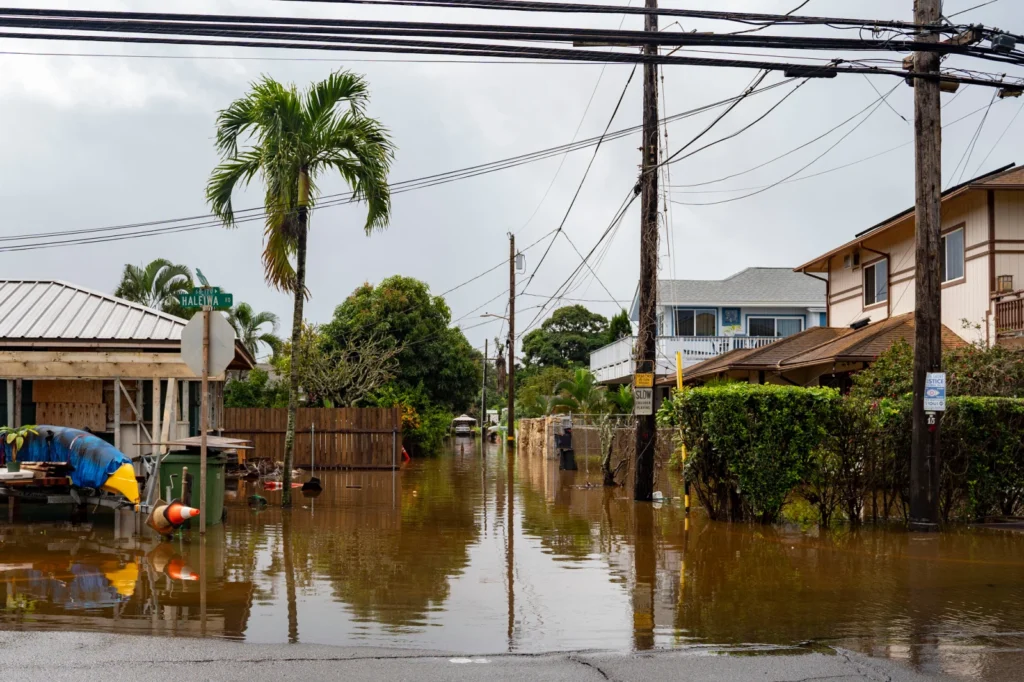

Hawaii is battling one of its most devastating natural disasters in decades as powerful flash floods ripped through Oahu and Maui, triggering mass evacuations, dramatic rescues, and fears of a catastrophic dam failure. Officials have warned that the total damage could exceed $1 billion, making this one of the costliest weather events in the state’s recent history.
What began as heavy rainfall quickly escalated into a full-blown crisis. Muddy floodwaters surged through streets, lifted homes off their foundations, swallowed vehicles, and left entire neighborhoods buried in debris. The situation became even more alarming when authorities issued a warning that a 120-year-old dam was at risk of imminent failure.
230+ Rescued as Floodwaters Trap Residents
Emergency teams carried out more than 230 rescues across Oahu as people became trapped in rising waters. Rescue operations were conducted by air, boat, and ground, with officials racing against time to reach stranded residents.
In one of the most dramatic missions, the Hawaii National Guard and Honolulu Fire Department airlifted 72 children and adults from a spring break youth camp after floodwaters cut off all access routes. Authorities said the camp was on higher ground, but they chose not to take any risks as conditions worsened rapidly.
Search operations were briefly hampered by civilians flying drones over affected areas, forcing rescue teams to pause flights for safety reasons. Officials urged the public to avoid interfering with emergency efforts.
5,500 Evacuated as Sirens Blare Across Oahu
Emergency sirens echoed across Oahu’s North Shore as authorities issued evacuation orders for approximately 5,500 residents. Communities such as Haleiwa and Waialua were among the hardest hit, with floodwaters inundating homes, roads, and local businesses.
One evacuation shelter itself had to be evacuated after being flooded, forcing around 185 people and dozens of pets to relocate again. Many families were left scrambling to find safe shelter as conditions continued to deteriorate.
Residents described the situation as chaotic and terrifying, with water rising rapidly and leaving little time to react. Thick mud, fallen trees, and debris now cover large parts of affected towns.
120-Year-Old Wahiawa Dam Sparks Fear of Disaster
The biggest concern during the crisis was the Wahiawa dam, an aging structure built in 1906. Officials warned it was at risk of failure as water levels surged dangerously close to its maximum capacity.
Within just 24 hours, water levels rose from 79 feet to 84 feet — only about six feet below its limit. Authorities described the situation as “touch-and-go,” emphasizing that additional rainfall could push the dam beyond safe levels.
The dam has long been classified as having “high hazard potential,” meaning its failure could result in significant loss of life. It has also faced multiple safety warnings over the years, including deficiency notices issued to Dole Food Company, which previously owned the structure.
Although water levels later began to recede slightly, officials continue to monitor the dam closely. More updates and warnings can be tracked via the National Weather Service Honolulu.
Worst Flooding in 20 Years with Massive Rainfall
Officials confirmed this is the worst flooding Hawaii has experienced in over two decades. The disaster was fueled by intense rainfall combined with already saturated ground from previous storms.
Some areas of Oahu recorded between 8 to 12 inches (20–30 cm) of rain in less than 24 hours. Higher elevations saw even more extreme conditions, with nearly 16 inches (40 cm) falling in a single day.
The heavy rainfall overwhelmed drainage systems, turning streets into rivers and causing widespread flash flooding. Homes were flooded, roads washed out, and entire communities were left isolated.
No Deaths, But Injuries and Widespread Damage
Despite the scale of the disaster, officials confirmed that no deaths have been reported. However, around 10 people were hospitalized for hypothermia, and many others were displaced after losing access to safe shelter.
Dozens — possibly hundreds — of homes have been damaged, though a full assessment is still ongoing. Roads, bridges, farms, and businesses have all been affected, with debris and mud covering large areas.
A boil water advisory has also been issued in some regions, adding another layer of concern for residents returning home.
Maui Also on Alert After Near-Capacity Basins
The crisis extended beyond Oahu, with parts of Maui also placed under evacuation advisories. Retention basins in areas near Lahaina — already devastated by wildfires in 2023 — approached capacity, raising fears of additional flooding.
This has heightened concerns about repeated disasters hitting vulnerable communities in a short span of time.
$1 Billion Economic Impact and Long-Term Damage
Hawaii Governor Josh Green warned that the financial impact of the floods could exceed $1 billion. Damage includes destruction to homes, infrastructure, airports, schools, and even healthcare facilities.
Local businesses, especially in tourism-dependent areas like the North Shore, are expected to face significant losses. Agricultural damage could also be severe, as floodwaters destroyed crops and disrupted supply chains.
For many families, the financial recovery will take months — if not years — as insurance claims, rebuilding efforts, and government assistance programs begin.
Climate Change and “Kona Lows” Behind the Disaster
Meteorologists attributed the extreme weather to a system known as a Kona low, which brings moisture-rich air and prolonged rainfall to Hawaii. These systems have historically caused flooding, but experts say their intensity is increasing.
Scientists warn that climate change is making such extreme weather events more frequent and severe. This raises serious concerns about the future, especially for regions with aging infrastructure like Hawaii’s dam systems.
For preparedness tips and flood safety guidelines, readers can visit Ready.gov’s flood preparedness page.
What Happens Next?
While rainfall is expected to ease, officials caution that the danger is not over. Localized flooding may continue, and the stability of the Wahiawa dam remains a critical concern.
Cleanup operations are already underway, but the scale of destruction means recovery will take significant time. Residents are now returning to damaged homes, sorting through debris, and beginning the long rebuilding process.
This disaster serves as a stark warning about the growing risks posed by extreme weather and aging infrastructure. Hawaii is not just recovering from a flood — it is confronting a future where such events could become more common and more costly.

Make Swikblog your go-to source on Google for reliable updates, smart insights, and daily trends.