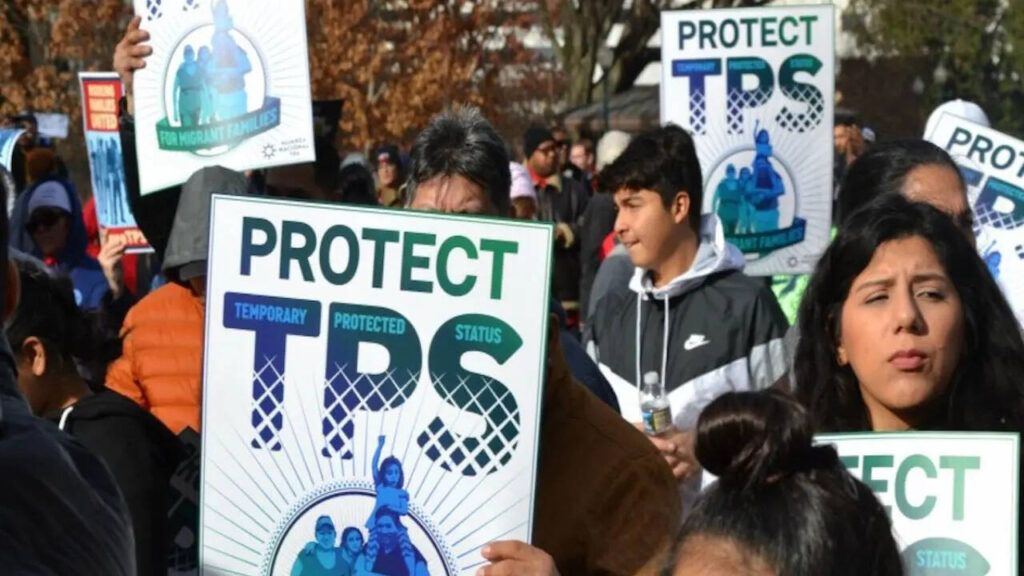

A new immigration proposal in Washington is drawing sharp attention because it targets one of the biggest unanswered questions in the U.S. system: what happens to people who have lived and worked in America for years under temporary protection but still have no direct route to permanent residency. The newly introduced Respect for Essential Workers Act aims to change that by opening a green card path for eligible Temporary Protected Status holders, a move that could affect thousands of migrants already woven into the country’s workforce and communities.
The measure was introduced by Representative Sheila Cherfilus-McCormick, who said the bill is meant to protect workers with TPS and give them a clear opportunity to pursue lawful permanent residence. According to the official announcement from her office, the proposal is designed around long-term stability rather than automatic status. That distinction matters. The bill would not instantly convert TPS into green cards. Instead, it would create a legal opening for qualifying individuals to begin the application process after enactment.
Why this bill is getting so much attention
Temporary Protected Status has always been exactly what its name suggests: temporary. It allows people from designated countries facing war, natural disasters, or other extraordinary crises to stay and work in the United States for a limited period. What it has never reliably offered is permanence. For many families, that gap has become the central problem. People have built lives over many years, raised children, worked in essential industries, paid taxes, and remained deeply tied to local economies, yet their legal future can still hinge on short-term government renewals and court rulings.
That uncertainty has intensified over the past year as TPS protections for several nationalities have faced termination efforts, legal disputes, and shifting deadlines. In practical terms, many TPS holders have been left in a familiar but exhausting limbo: authorized to work for now, uncertain about next year, and with no guaranteed path to remain permanently even after long residence in the country.
The green card path at the center of the proposal
The strongest click-driving part of this story is also the most important legal point: this bill does not hand out green cards automatically. Instead, it opens a structured path for eligible TPS holders to apply. That may sound like a technical difference, but in immigration policy it is huge. A pathway means screening, eligibility standards, paperwork, and a formal process. Automatic status would mean something very different politically and legally. By framing the proposal around applications rather than instant residency, backers are clearly trying to present it as both humanitarian and administratively grounded.
The bill also focuses on essential workers, which gives it a sharper political message. Supporters argue that many TPS holders already serve in sectors the U.S. relies on every day, including healthcare, construction, hospitality, food production, transport, and community services. That argument is likely to remain central as the proposal gains attention, because it shifts the conversation away from abstraction and toward labor, stability, and economic continuity.
Why essential workers are central to the debate
This is where the proposal becomes bigger than an immigration headline. TPS holders are not being discussed only as a protected group under humanitarian law. They are also being discussed as workers whose presence already supports businesses, neighborhoods, and tax bases across the country. Advocates point to their role in industries that are difficult to staff consistently and argue that forcing large numbers of legally authorized workers out of those sectors would create avoidable disruption.
That message is especially strong in states with large immigrant populations and labor-intensive industries. The politics of the bill may remain divisive, but the economic framing is clear: supporters want this to be seen not only as a moral case, but as a workforce and community stability case.
The pressure created by shifting immigration rules
The headline phrase about immigration rules shifting is not just rhetorical. TPS has become one of the most closely watched parts of the immigration system because policy decisions can quickly change the outlook for large groups of people. Court interventions, termination notices, redesignations, and federal agency actions have all played a role in shaping the current moment. That has left many TPS holders watching Washington more closely than ever.
For readers following this issue, the appeal of the story is obvious. A bill like this is not merely symbolic to affected families. It speaks directly to whether years spent working lawfully in the United States can eventually count for something more durable. It also lands at a time when the broader immigration climate remains tense, heavily politicized, and highly reactive.
What the bill changes for TPS holders right now
In immediate practical terms, the bill changes the conversation more than the law, at least for now. No new status is created unless Congress acts. But the introduction itself matters because it puts a specific legislative idea back into the center of debate: that long-term TPS holders, especially essential workers, should have a route toward permanent residency rather than perpetual temporary extensions.
That alone can reshape expectations. Families, employers, advoca cy groups, and immigration lawyers now have a concrete proposal to follow, rather than a vague promise of future reform. Even if the path through Congress is difficult, the bill gives supporters a sharper message and a clearer legislative target.
The bigger reason this proposal is likely to keep drawing clicks is simple. It touches law, work, family, and uncertainty all at once. For thousands of migrants living under TPS, the bill represents something the current system has long failed to provide: the possibility that temporary protection might finally lead to a more permanent future in the United States.

Make Swikblog your go-to source on Google for reliable updates, smart insights, and daily trends.