
The Senate meeting on the DHS shutdown has emerged as a potential turning point in one of Washington’s most disruptive standoffs, as lawmakers scramble to contain a growing travel crisis that is now spilling across major U.S. airports. After weeks of gridlock, a breakthrough framework is beginning to take shape — one that could restore funding to most of the Department of Homeland Security while sidestepping the most contentious issue: immigration enforcement under ICE.
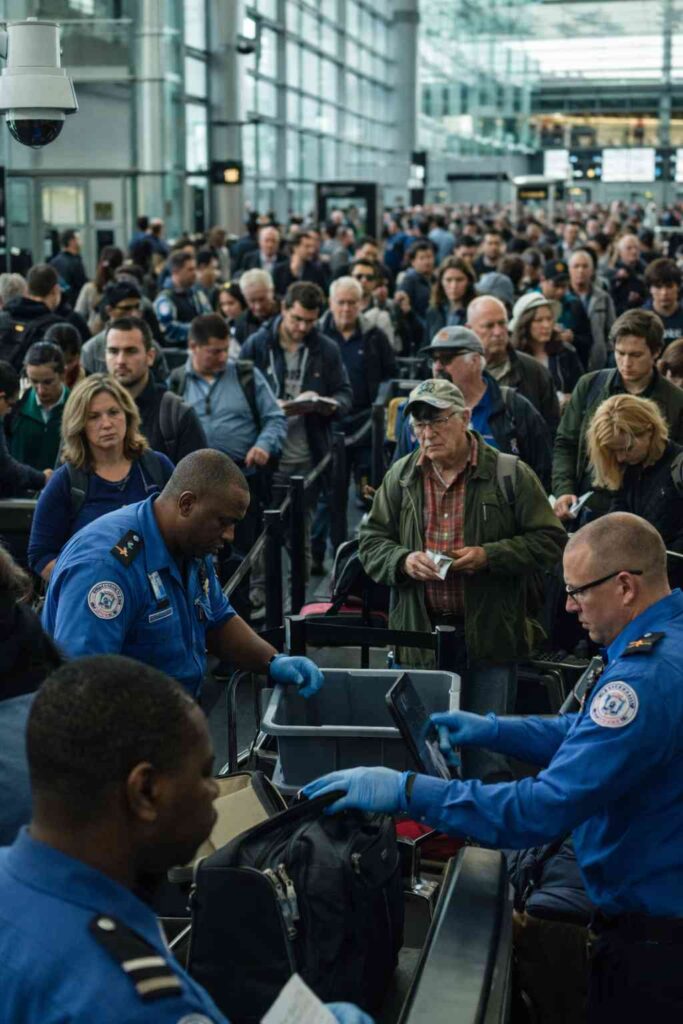
The urgency is no longer theoretical. Across airports in Atlanta, Houston and Baltimore, passengers are being told to arrive hours early as security lines stretch longer each day. Behind the scenes, the strain is even more visible. Nearly 11% of TSA workers — over 3,200 employees — missed work in a single day, while at least 458 officers have quit entirely since the shutdown began in mid-February. With paychecks halted, the workforce is thinning just as travel demand picks up.
Senate meeting signals breakthrough momentum
At the center of the shift is a high-stakes Senate meeting following discussions at the White House with President Donald Trump. Republican negotiators described the talks as “positive and productive,” with signs that both parties are moving closer to a workable compromise. The emerging proposal would fund roughly 90% to 94% of DHS operations — enough to restore functionality to key agencies like TSA, FEMA, the Coast Guard and Customs and Border Protection.
The key political maneuver is the decision to separate out ICE’s enforcement and removal operations, which have become the core sticking point. Instead of resolving that battle now, lawmakers are considering leaving that portion unfunded temporarily, creating space for a narrower agreement that can pass quickly and stabilize airport operations.
ICE funding split becomes the defining issue
The dispute over ICE is not just about budget numbers — it reflects deeper political tensions around immigration enforcement. Democrats have refused to approve full DHS funding without new restrictions after federal agents were involved in the deaths of two citizens in Minneapolis earlier this year. Their demands include stronger oversight, mandatory body cameras and clearer identification requirements for officers.
Under the proposed framework, some ICE divisions — such as Homeland Security Investigations — would still receive funding, while deportation-focused operations would be excluded. That distinction allows Democrats to claim they blocked additional enforcement funding, while Republicans can argue that core security functions remain intact.
Importantly, ICE is not entirely without resources. A significant portion of its funding — roughly $75 billion — was already secured through last year’s major spending legislation, meaning agents are still receiving paychecks despite the shutdown. The current fight centers around an additional ~$10 billion in routine annual funding, which could be reduced significantly under the new proposal.
Airport chaos forces political urgency
The worsening conditions at airports have fundamentally changed the political calculus. What began as a policy disagreement has evolved into a visible national disruption. Travelers are facing delays, airlines are adjusting schedules, and TSA staffing shortages are becoming increasingly difficult to manage.
Union leaders representing TSA workers have also intensified pressure on Congress, warning that continued financial strain could push more employees to quit. The longer the shutdown continues, the greater the risk of a breakdown in airport operations — a scenario lawmakers from both parties are eager to avoid.
This growing pressure is why the Senate meeting carries more weight than previous negotiations. It reflects a shift from ideological positioning toward operational urgency — a recognition that critical infrastructure cannot remain underfunded indefinitely.
Trump’s shifting stance reshapes talks
President Donald Trump has played a central role in shaping the trajectory of the negotiations. Over the weekend, he complicated talks by demanding that any DHS funding agreement be tied to the SAVE America Act, a strict voter ID and proof-of-citizenship bill that has stalled in the Senate.
That move briefly derailed progress, but the latest Senate meeting suggests a pivot. Lawmakers are now exploring a two-track approach: pass immediate DHS funding to resolve the shutdown, while addressing election-related legislation separately at a later stage.
This shift appears to have reopened a path forward. A White House official indicated that separating immigration enforcement funding and election legislation “seems to be acceptable,” signaling that the administration may support a more limited deal to restore DHS operations quickly.
Reconciliation strategy and political risks
Republicans are also considering using the budget reconciliation process to address the unresolved portions of ICE funding and potentially advance elements of the SAVE America Act. This approach would allow them to bypass the Senate’s 60-vote threshold and pass legislation with a simple majority.
However, this strategy comes with constraints. Reconciliation rules limit what can be included to provisions directly affecting the federal budget, raising doubts about whether key aspects of the election bill would qualify. Some Republican lawmakers have already expressed skepticism, warning that the plan could face procedural hurdles and political backlash.
For Democrats, the strategy introduces another layer of uncertainty. While they may support the immediate DHS funding deal, they remain cautious about what could follow in a separate reconciliation package.
What happens next
The next step is translating the framework discussed in the Senate meeting into formal legislative text. Lawmakers must then secure enough bipartisan support in the Senate and navigate approval in the House, where the Republican majority remains slim.
Timing is critical. With airport disruptions intensifying and TSA staffing under pressure, any delay could deepen the crisis. At the same time, unresolved disagreements over ICE funding and immigration policy mean the deal is not guaranteed.
Still, the tone emerging from the Senate meeting suggests momentum is building. After weeks of stalemate, Washington may finally be moving toward a resolution — one driven less by political victory and more by the need to restore basic functionality.
For continued updates, follow coverage from Associated Press and NBC News.

Make Swikblog your go-to source on Google for reliable updates, smart insights, and daily trends.