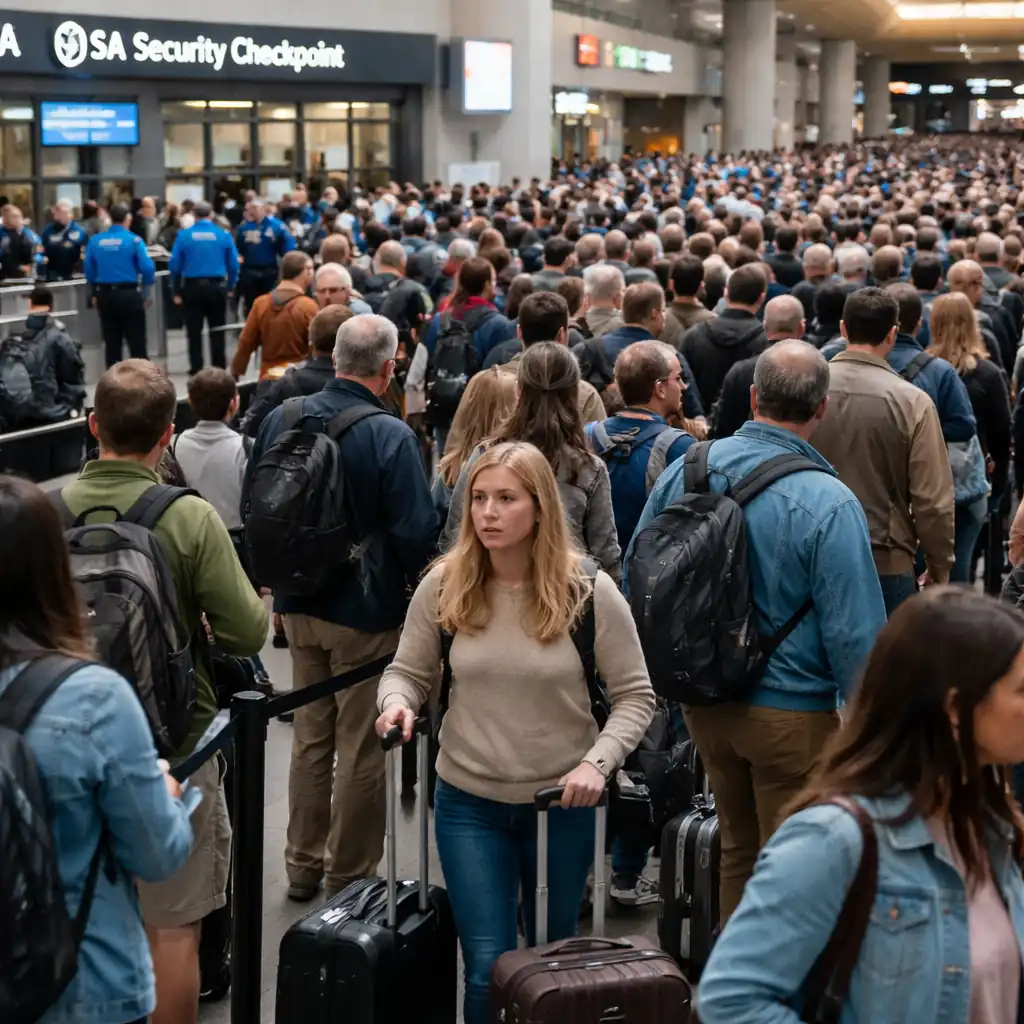

Travelers across the United States are walking into one of the most chaotic airport situations in recent years, as TSA lines surge dramatically amid an ongoing government shutdown. What should have been a routine weekend for flyers has quickly turned into a stressful experience, with security lines stretching for hours and, in some cases, even spilling outside airport terminals.
The root of the problem is a growing staffing crisis at the Transportation Security Administration. With the shutdown dragging on, thousands of TSA workers have been working without pay. That pressure has now started to impact attendance, with many officers reportedly calling out or leaving their jobs entirely, leaving airports short-staffed at a critical time.
The situation escalated sharply this week, forcing emergency action from the White House. President Donald Trump signed an order on March 27 to redirect federal funds and ensure TSA employees receive paychecks earlier than expected. Instead of waiting until the shutdown ends, workers could start receiving payments as early as March 30.
While that move offers some relief, it does not instantly fix the operational breakdown already visible at airports. Staffing gaps remain, and the backlog of passengers continues to grow as travel demand stays high.
Shutdown impact triggers nationwide airport chaos
The ongoing partial government shutdown has exposed how fragile airport operations can become when TSA staffing drops even slightly. Security screening is a tightly coordinated process, and when fewer officers are available, everything slows down — from ID checks to baggage scans.
Across several major airports, passengers are reporting wait times running into hours. In extreme cases, travelers have had to stand in lines that extend beyond standard security areas, creating scenes more commonly associated with peak holiday rush periods.
The situation is not limited to major hubs. Officials have warned that smaller airports could face even greater challenges. Unlike large airports that have multiple screening lanes and backup staff, regional airports operate with tighter resources. A small drop in workforce availability can quickly turn into major disruption, leaving travelers with fewer options and longer delays.
To manage the growing crisis, the federal government has already begun deploying additional personnel. Immigration and Customs Enforcement (ICE) officers have been sent to assist with security operations at select airports. Their presence is intended to fill immediate staffing gaps, though they are not a long-term replacement for trained TSA officers.
There is also discussion within the administration about potentially deploying National Guard personnel to support airport operations if the situation worsens. While no widespread deployment has been confirmed, the fact that it is being considered highlights the seriousness of the current disruption.
Congress remains stuck as funding deal collapses
At the heart of the crisis is a political deadlock in Washington that shows little sign of resolution. As of March 28, negotiations to end the shutdown remain stalled, primarily over disagreements related to immigration enforcement funding.
The House of Representatives passed a stopgap funding bill on March 27, but it was quickly labeled “dead on arrival” in the Senate due to lack of support from Democrats. At the same time, a bipartisan agreement that had been reached in the Senate collapsed after House Republicans refused to back it.
This breakdown has left both sides without a clear path forward, prolonging the uncertainty for federal workers and travelers alike. Until a deal is reached, TSA operations will continue to operate under strain, and airport disruptions are likely to persist.
The administration has framed the situation as an “unprecedented emergency,” pointing to the growing impact on national travel infrastructure. Homeland Security officials have already begun implementing the process to distribute pay following the president’s order, but the broader funding issue remains unresolved.
What travelers should expect this weekend
For anyone planning to fly this weekend, the message is clear: expect delays and prepare accordingly. The usual airport timing strategies may not be enough under current conditions.
Travelers should plan to arrive at least three to four hours before departure, even for domestic flights. Peak travel times — particularly early mornings and evenings — are expected to be the most congested.
Passengers are also advised to monitor real-time security wait times before heading to the airport. USA TODAY has introduced a live TSA wait-time tracker that updates frequently and can help travelers make more informed decisions.
For official updates and security guidelines, travelers can also check the TSA website. Flight status and nationwide delay patterns can be tracked through the FAA’s airspace status map.
Families, elderly passengers, and those traveling with special assistance needs should consider allowing even more buffer time. Long security lines can be physically exhausting, and navigating crowded terminals adds another layer of difficulty.
Beyond logistics, travelers should also prepare for a more stressful airport environment overall. Overcrowding, longer wait times, and limited staffing can create a tense atmosphere, making patience just as important as planning.
For now, much depends on how quickly Washington can resolve the funding impasse. While the move to pay TSA workers early could help stabilize attendance in the coming days, it is unlikely to immediately reverse the disruptions already underway.
Until a broader agreement is reached, the reality remains unchanged: airport security lines will stay longer, wait times will remain unpredictable, and travelers will need to adjust their plans accordingly. What was once a routine part of flying has now become one of the biggest challenges of the journey.

Make Swikblog your go-to source on Google for reliable updates, smart insights, and daily trends.