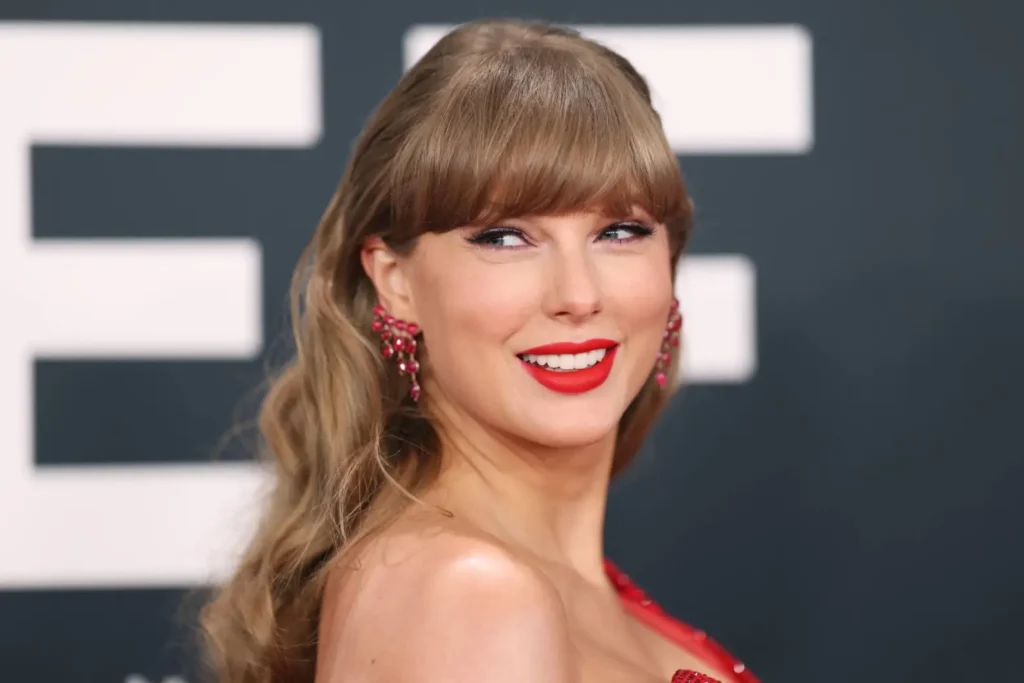

Taylor Swift has built a career on controlling the spotlight, but with the release of the “Elizabeth Taylor” music video, she’s done something that instantly caught fans off guard — she stepped out of it completely. The visual, which dropped on March 31, arrives as a surprise continuation of her The Life of a Showgirl era, and instead of featuring Swift, it is entirely dedicated to the Hollywood icon who inspired the track.
The music video doesn’t follow Swift’s usual formula of narrative storytelling or high-concept visuals starring herself. Instead, it’s a carefully curated montage of Elizabeth Taylor’s most celebrated film moments and public appearances. Clips from classics like Cleopatra, Cat on a Hot Tin Roof, Father of the Bride, Giant, A Place in the Sun, and Who’s Afraid of Virginia Woolf? are woven together to create a cinematic tribute that feels both nostalgic and strikingly intentional.
Beyond film scenes, the video also includes archival footage of Taylor in real life — dazzling in jewels, surrounded by flashing cameras, and navigating the intense scrutiny that came with her fame. These moments echo the themes of Swift’s song, which draws parallels between her own experience in the spotlight and the pressures Elizabeth Taylor faced decades earlier.
What makes the release even more unusual is where it lives. Unlike most major music videos today, “Elizabeth Taylor” has not been uploaded to YouTube. Instead, Swift chose to release it exclusively on Spotify and Apple Music, adding an extra layer of exclusivity and fueling curiosity among fans who rushed to streaming platforms to watch it.
The song itself is one of the standout tracks from Swift’s 12th studio album, The Life of a Showgirl, following earlier singles like “The Fate of Ophelia” and “Opalite.” In “Elizabeth Taylor,” Swift leans into the emotional complexity of fame, singing about love, loneliness, and the illusion of glamour. Lyrics like “Oftentimes it doesn’t feel so glamorous to be me” underline the contrast between public perception and private reality — a theme that aligns closely with Taylor’s life story.
Importantly, this tribute wasn’t done casually. Swift revealed that she sought permission from Elizabeth Taylor’s estate before writing and releasing the song, a step she takes when referencing real people in her work. The video itself includes a thank-you note to the House of Taylor & the Elizabeth Taylor Trust, along with acknowledgments of the Todd and Wilding families — direct links to Taylor’s personal life, including her son Christopher Wilding and her marriage to Mike Todd.
That level of care adds weight to the project. It’s not just a stylistic choice — it’s a respectful homage. Swift has long spoken about her admiration for Elizabeth Taylor, describing her as a figure who thrived under immense pressure while continuing to take creative risks. In interviews, she’s pointed out how Taylor remained fearless in her roles and artistic choices, even when public opinion was divided.
The connection between the two women is part of what gives the video its emotional edge. Both have lived under constant public attention, both have had their personal lives dissected, and both have shaped their industries in lasting ways. The video quietly emphasizes that parallel without spelling it out, letting the imagery do the work.
There are also subtle modern echoes woven into the narrative. The inclusion of Taylor’s iconic jewelry moments — including references to the famous diamond gifted by Richard Burton — has drawn comparisons among fans to Swift’s own high-profile relationship with Travis Kelce. While the video doesn’t explicitly connect the dots, the visual storytelling invites that interpretation, blending past and present ideas of celebrity romance and public fascination.
The reaction has been immediate. Fans were quick to express surprise that Swift chose not to appear, with many calling it one of her most unconventional creative decisions to date. But that absence is exactly what makes the video stand out. By removing herself from the frame, Swift shifts the focus entirely onto the legacy she’s honoring, allowing Elizabeth Taylor’s presence to dominate the screen.
At the same time, the move reinforces Swift’s evolving approach to storytelling. Rather than relying solely on her own image, she’s experimenting with format, distribution, and perspective. It’s a reminder that even after years at the top of the industry, she’s still willing to take creative risks that challenge expectations.
For viewers unfamiliar with Elizabeth Taylor’s full legacy, the video also works as an introduction to her cultural impact. Her influence stretches across film, fashion, and celebrity culture, making her one of the most enduring icons of the 20th century. More on her life and career can be explored through this detailed profile on Biography.
In the end, “Elizabeth Taylor” isn’t just another music video release. It’s a statement — about fame, legacy, and the power of stepping back to let a story speak louder. Swift may be absent from the screen, but her creative presence is unmistakable throughout. And that balance is exactly why the video has everyone talking.
By Chetan Sharma
About Author
Chetan is a versatile content writer with more than 9 years of writing experience covering finance, business, sports, current affairs, and general editorial content. He is known for producing clean, structured, and factual articles that help readers make sense of rapidly changing stories. Chetan continues to write with a focus on quality, trust, and strong digital publishing standards.

Make Swikblog your go-to source on Google for reliable updates, smart insights, and daily trends.