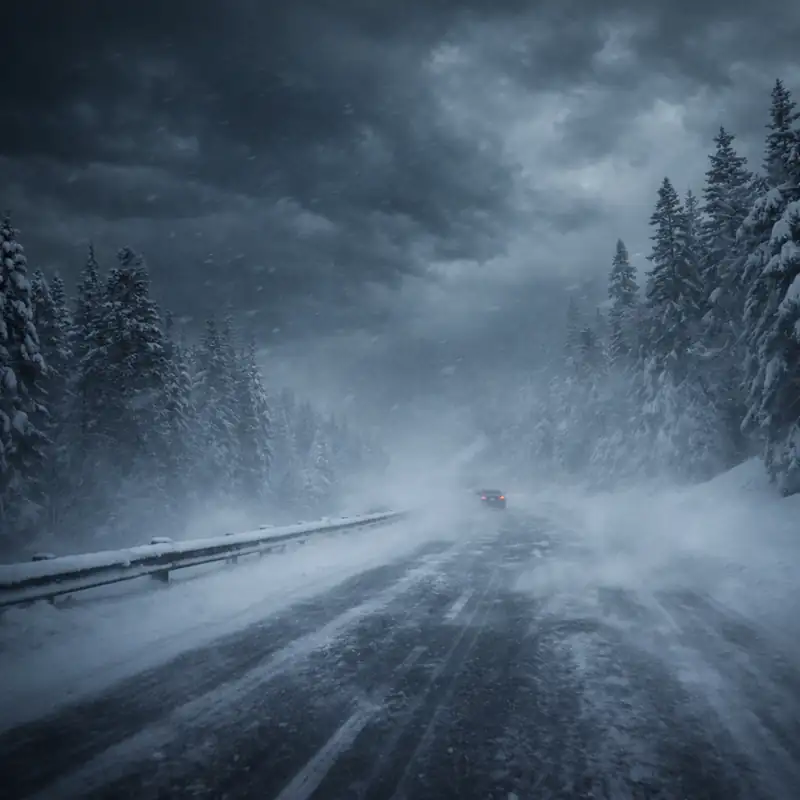

A powerful winter storm is sweeping across Southern Oregon and Northern California to kick off April, bringing a dangerous mix of heavy rain, mountain snow, strong winds, and even isolated thunderstorms. The system is already prompting multiple weather alerts, with forecasters warning of rapidly changing conditions that could make travel difficult, especially in higher elevations.
This late-season storm is unusual not just because of its timing, but also due to its intensity. Snowfall totals in the Cascades could reach as high as 1 to 3 feet, while wind gusts up to 45 mph are expected to impact coastal areas, mountain regions, and parts of the east side.
Rain, Thunderstorms and Falling Snow Levels
Rain will dominate the early part of Wednesday, becoming widespread across the region, particularly along the coast and coastal mountains where heavier bursts are expected. However, conditions won’t stay stable for long.
As colder air pushes into the region later in the day, snow levels will begin to drop sharply. Snow is expected to stay near or above 5,000 feet through early Wednesday afternoon, but by evening, levels could fall to around 2,500 feet. This shift means many areas could transition from rain to snow within just a few hours.
Forecasters are also tracking isolated thunderstorms across Southern Oregon and Northern California. These storms could bring sudden heavy downpours, small hail, lightning, and brief periods of strong wind, adding to already hazardous conditions.
According to the National Weather Service, storms like this can create rapidly changing road conditions, especially when snow levels drop quickly.
Heavy Snow and Dangerous Travel in the Cascades
The biggest impacts are expected in the Cascades and Siskiyou Mountains, where a Winter Storm Warning remains in effect from early Wednesday through Thursday evening. These areas could see between 1 and 3 feet of snow, with blowing snow significantly reducing visibility.
Travel above 4,000 feet is expected to become increasingly difficult, especially Wednesday night into Thursday morning. Mountain passes will likely see snow-covered roads, chain requirements, and possible delays.
Higher terrain east of the Cascades could receive 3 to 6 inches of snow, while areas like Siskiyou Summit, Klamath Falls, and Lakeview are expected to see lighter totals of around 1 to 3 inches. Snowfall along Interstate 5 in Siskiyou County is expected to remain limited, generally under 1 inch.
In Central Oregon, snowfall totals in the mountains could reach 8 to 10 inches by Thursday morning. While lower elevations will mainly see a mix of rain and snow, roads are expected to turn slushy and slick, particularly during the Thursday morning commute along Highway 97, as well as routes 126 and 20.
Strong Winds and Regional Impacts
Wind will be another major factor with this storm system. Gusts exceeding 45 mph are expected along the coast, in mountainous areas, and across parts of the east side. The Shasta Valley is also likely to see gusts approaching 45 mph, raising the risk of reduced visibility and difficult driving conditions.
In the Rogue Valley, winds will be less intense but still breezy enough to impact outdoor conditions. Combined with rain and snow, these winds could lead to isolated power outages and falling debris.
A Wind Advisory has been issued for the Shasta Valley and parts of Eastern Lake County, highlighting the potential for strong, sustained gusts throughout Wednesday.
Rainfall Totals and Additional Alerts
Rainfall from Wednesday through Thursday is expected to be beneficial overall, with most areas receiving between 0.50 and 1.5 inches. Higher totals are likely along the coast and in the Cascades, while parts of the east side may see lighter amounts.
In addition to the Winter Storm Warning, a Winter Weather Advisory is in effect for Klamath County and western Lake County, as well as portions of western Siskiyou County above 4,000 feet. These alerts signal the potential for moderate snowfall and hazardous travel conditions.
Drivers are encouraged to check live updates and road conditions before traveling, especially through mountain passes. Real-time updates are available via TripCheck Oregon, which provides information on closures, delays, and weather impacts.
Cold Snap Followed by Rapid Warm-Up
Temperatures will vary sharply throughout the storm. Ahead of the cold front, daytime highs will climb into the 50s, supported by mild southwest winds. Once the front passes, colder northwest winds will take over, dropping temperatures into the upper 20s and low 30s overnight.
Thursday will remain chilly, with daytime highs only reaching the upper 40s. Clear skies later in the day combined with light winds could lead to freezing overnight temperatures, posing a risk to early spring vegetation.
Despite the wintry conditions midweek, a dramatic warm-up is expected soon after. By Friday, temperatures are forecast to return to the 60s, followed by highs in the 70s from Saturday through early next week.
For now, though, residents across Oregon and Northern California are being urged to stay alert, prepare for sudden weather changes, and use caution when traveling. This early April storm is a reminder that winter conditions can still return with force, even as spring begins to take hold.

Make Swikblog your go-to source on Google for reliable updates, smart insights, and daily trends.