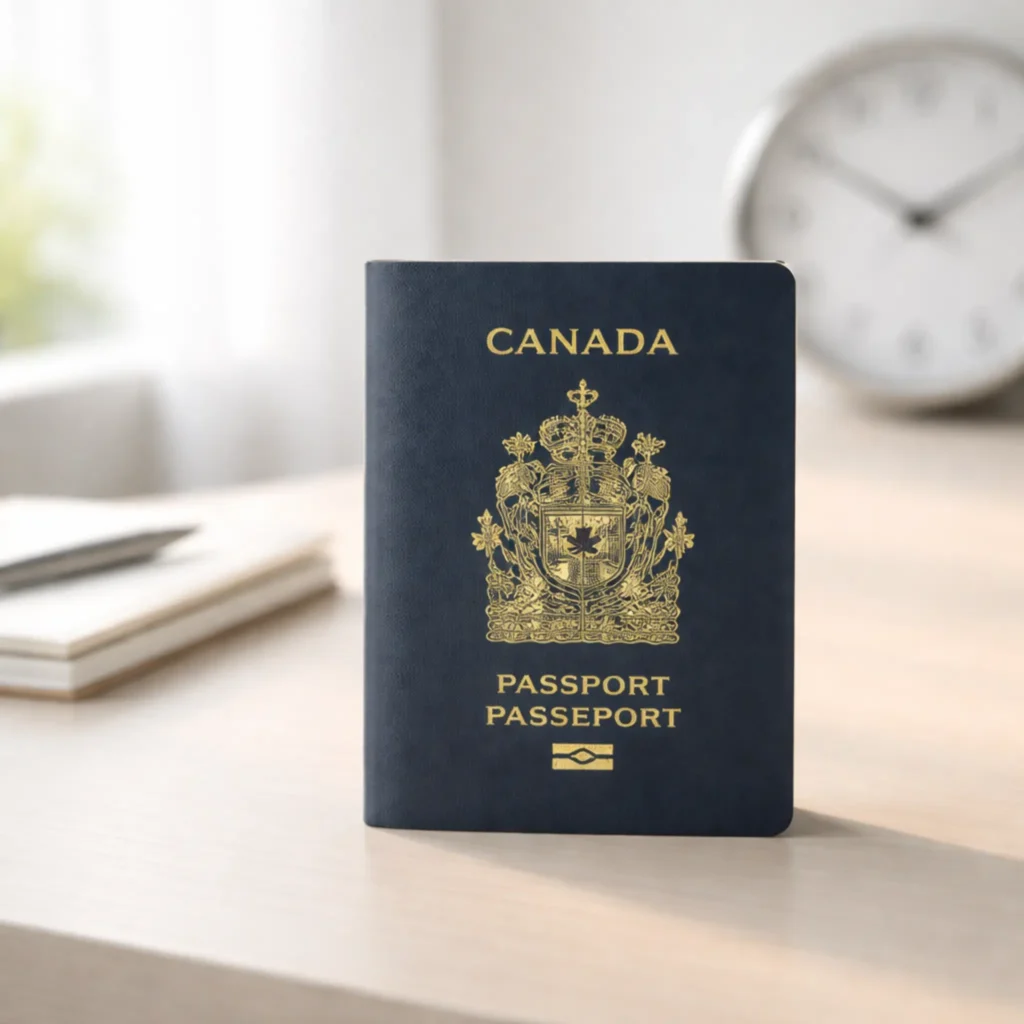

Canada has rolled out a new passport service rule that puts more pressure on the government to deliver on time. Under the new 30-days-or-free policy, eligible applicants will receive a full refund of their passport or travel document fee if their application takes longer than 30 business days to process. The measure is now in effect and marks one of the clearest attempts in recent years to restore public confidence in passport processing after the long backlogs and frustration that followed the return of international travel.
For many travellers, the change is simple but meaningful. It creates a direct link between government service standards and financial accountability. If a routine passport application is delayed beyond the stated timeline, applicants will not just have to accept the inconvenience. They will be compensated. That makes the policy stand out as more than an administrative update. It is also a public promise.
The federal government says most passport applications are already processed within the current service standards of 10 to 20 business days. That means the new rule is not designed for the average application that moves through the system normally. Instead, it is aimed at cases where delays stretch well past the expected timeframe and leave applicants paying for a service that was not delivered as promised.
A tighter standard for routine passport applications
The new guarantee applies once the government has received a complete application. That detail matters. The 30-business-day clock does not start when someone begins filling out the paperwork or mails it in. It starts when officials have the full and correct application in hand. Mailing time is also excluded, which means applicants should not count delivery days as part of the government’s processing window.
There are limits to the policy as well. It does not apply to every type of passport request. The government has made clear that urgent and express services are not covered under the standard. Those services operate on different timelines and are built for applicants with immediate travel needs. In practice, the new refund rule is targeted mainly at standard applications where the government has more time to meet its own service benchmark.
That distinction is important because it helps set expectations. Someone applying for a passport at the last minute will still need to follow the special procedures attached to urgent processing. But for routine applicants planning ahead, the new measure offers a stronger sense of predictability. It also gives Canadians a clearer reason to submit complete documents early and avoid preventable mistakes that could slow down their case.
The policy arrives at a time when passport services have become a close-watched issue in Canada. When travel rebounded sharply after pandemic restrictions eased, passport offices were hit by a surge in demand. Long lines, missed travel plans and delayed documents became a source of public anger. Since then, Ottawa has worked to improve service delivery and reduce wait times. The new guarantee suggests the government believes the system is now stable enough to be judged more firmly against a measurable national standard.
Why the refund guarantee matters for travellers
For households managing tight travel budgets, the value of a refund can be more than symbolic. Passport fees are a routine part of travel planning, and any delay can also lead to added costs elsewhere, from flight changes to hotel rebookings and lost bookings. The refund policy does not erase those wider disruptions, but it does acknowledge that delayed processing carries real consequences for applicants.
It also changes the tone of the relationship between the public and the service itself. Rather than simply promising improvement, the government is attaching a consequence to underperformance. That may help rebuild trust among Canadians who came away from previous delays feeling that the burden fell entirely on the applicant.
At the same time, the policy gives officials an incentive to keep routine processing steady as demand shifts throughout the year. Seasonal travel periods, school holidays and summer vacation windows often increase pressure on passport offices. A refund guarantee raises the stakes during those periods because delays could now carry a direct financial cost for the system.
Travellers who want to understand the latest rules around passports and travel documents can still check official guidance through the Government of Canada passport services page, where application requirements and service details are updated for the public.
The practical takeaway for Canadians is that planning ahead remains the safest route, but the rules have shifted in a way that gives ordinary applicants more protection than before. A passport application is still something best handled early, carefully and with complete paperwork, yet the new standard means the responsibility no longer falls only on the traveller. If the system misses its own mark on an eligible routine application, applicants now have a guaranteed financial remedy built into the process.
That may not remove every stress tied to travel documents, but it does send a clearer message than Canadians have heard in years: when passport service runs late beyond the promised limit, the government will now have to pay for it.

Make Swikblog your go-to source on Google for reliable updates, smart insights, and daily trends.