
By Swikriti Dandotia
London’s retail sector is facing a new kind of threat—and it’s unfolding in real time on social media.
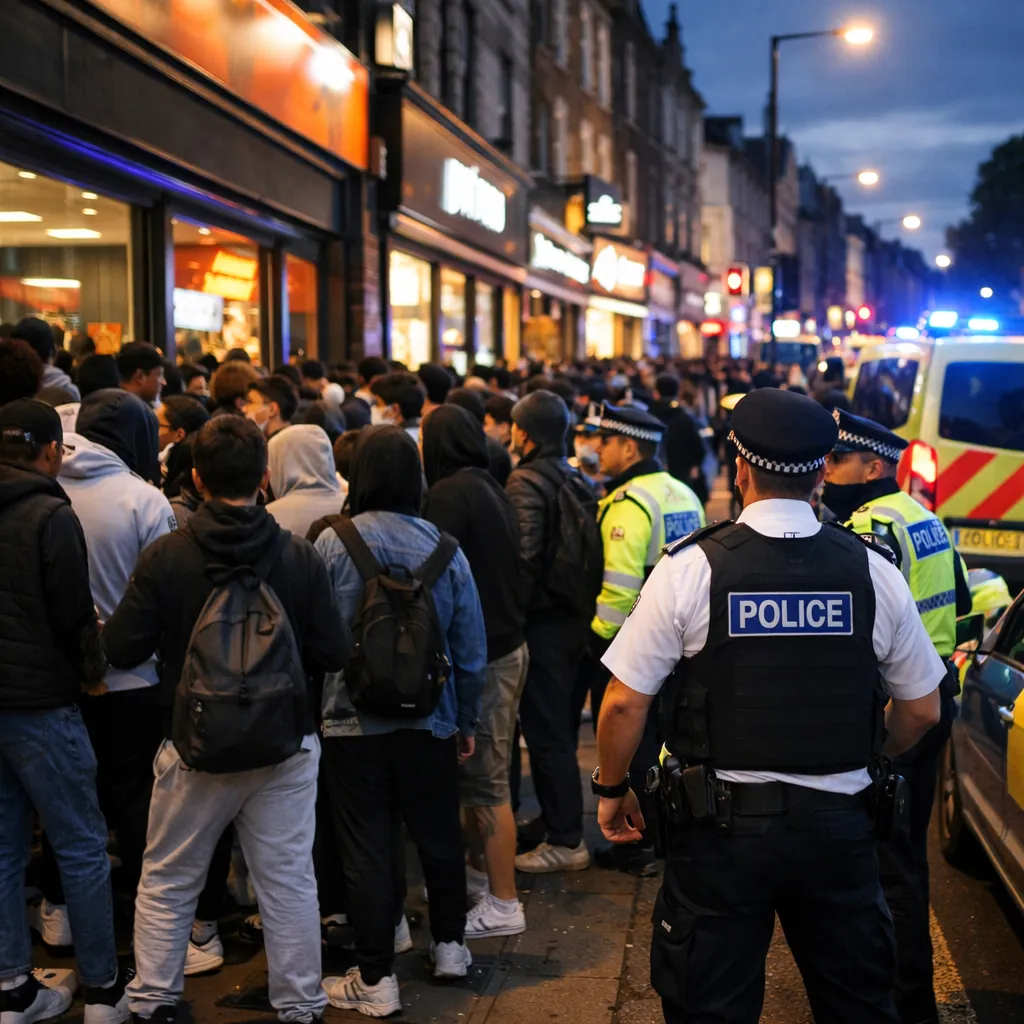
What began as a viral “link-up” trend quickly turned into chaos on Clapham High Street, where hundreds of young people gathered, surged into shops, set off fireworks and overwhelmed police presence. Now, with retailers like Marks & Spencer sounding the alarm, the incident has exposed a deeper and more troubling reality: retail crime in the UK is rising, becoming more aggressive, and increasingly coordinated online.
London Mayor Sadiq Khan has issued a stark warning, calling the scenes “utterly unacceptable” and promising a zero-tolerance crackdown. His message ahead of the busy Easter weekend was clear—those involved will be identified, arrested and face serious consequences.
Clapham Chaos: How Social Media Turned Into Street Disorder
The disorder unfolded over multiple days, with major incidents reported on Saturday and Tuesday. Police say gatherings were organised عبر platforms like TikTok and Snapchat, where young people coordinated mass meet-ups before descending on shops.
Footage from the scene showed hundreds crowding the high street, while fireworks were set off nearby on Clapham Common. Businesses quickly became targets. Food outlets—including McDonald’s and local takeaway shops—were hit as groups rushed in, with reports of theft and fights breaking out.
At least six teenage girls have been arrested so far, and authorities imposed a 48-hour dispersal order to control the situation. Around 100 police officers responded during peak unrest, with several officers and a member of the public reportedly assaulted.
For shop workers, the experience was overwhelming. One employee described how 70 to 80 young people flooded into a single shop at once during peak evening hours, disrupting business and creating fear among staff and customers.
Marks & Spencer Sounds the Alarm
The Clapham unrest has become a tipping point for the UK retail sector—and Marks & Spencer is now openly warning that the situation is spiralling.
Retail director Thinus Keeve said crime is becoming “more brazen, more organised and more aggressive”, criticising both government and city leadership for failing to respond strongly enough. In a direct message, he warned that without tougher action and effective policing, retailers are being left “powerless”.
The company revealed a disturbing snapshot of recent incidents:
- Gangs forcing open locked cabinets and clearing shelves
- Groups ransacking stores and assaulting security guards
- A store manager headbutted while trying to defuse a situation
- A worker hospitalised after ammonia was thrown in their face
These are not isolated cases. According to M&S, such incidents are becoming part of everyday reality for retail staff.
Employees are now “worried about coming into work”, with concerns extending beyond the shop floor to their safety while commuting home. That shift—from inconvenience to fear—marks a significant turning point in how retail crime is being experienced across the UK.
The Numbers Behind the Crisis
Official data backs up what retailers are seeing on the ground.
According to the latest figures from the Office for National Statistics, there were 519,381 shoplifting offences recorded in England and Wales in the year to September 2025—a 5% increase compared to the previous year.
While slightly below the peak of 530,439 recorded earlier in 2025, the trend remains deeply concerning. Industry leaders warn that the nature of crime is evolving—from opportunistic theft to organised, coordinated activity that often leads to violence.
The British Retail Consortium has highlighted that theft is now one of the main triggers for abuse and assaults against shop workers. Across the UK, an estimated 1,600 retail workers face violence or abuse every day, underlining the scale of the issue. You can explore more official data via the Office for National Statistics.
Police Crackdown and Social Media Pressure
Authorities are now shifting strategy—not just on the streets, but online.
The Metropolitan Police confirmed that more arrests are expected and that a stronger policing plan is already in place. This includes increased officer presence in hotspot areas and the use of dispersal powers to prevent gatherings from escalating.
But crucially, police are also calling on social media companies to act. Officials have urged platforms to take responsibility for content that promotes or coordinates disorder, warning that viral videos encouraging theft and violence can quickly translate into real-world harm.
City leaders say this type of content is not harmless—it “breaks down social fabric and undermines community cohesion”.
A Wider Debate: Crime, Responsibility and “Societal Breakdown”
The Clapham incidents have also triggered a political debate about the root causes of the unrest.
While authorities point to social media as a key driver, others argue the blame lies squarely with individuals involved. Some political figures have described the events as evidence of a broader “societal breakdown”, suggesting deeper issues around discipline, accountability and law enforcement.
Retail leaders, meanwhile, are focused on practical solutions. They are calling for:
- Stronger and faster police response to incidents
- Better use of data to target repeat offenders
- Clear legal protections for retail workers
- Greater collaboration between police and businesses
The upcoming Crime and Policing Bill, which will make assaulting a retail worker a specific offence, is seen as a step in the right direction. Industry voices, including the British Retail Consortium, argue that stronger enforcement is essential to restore confidence.
High Streets at a Crossroads
For businesses on Clapham High Street, the damage goes beyond lost sales. Peak evening trading was disrupted, customers stayed away, and staff were left shaken.
For major retailers like Marks & Spencer, the stakes are even higher. Rising crime means higher security costs, lower staff morale and growing uncertainty about the future of physical retail spaces.
The bigger question now is whether this is a temporary spike—or a sign of a lasting shift.
What happened in Clapham lasted only a few hours. But its impact is spreading across the UK, forcing retailers, police and policymakers to confront a new reality: when online trends can mobilise crowds instantly, maintaining order on the high street is becoming a far more complex challenge.
And for thousands of retail workers heading into stores each day, the issue is no longer abstract—it is personal, immediate and impossible to ignore.

Make Swikblog your go-to source on Google for reliable updates, smart insights, and daily trends.