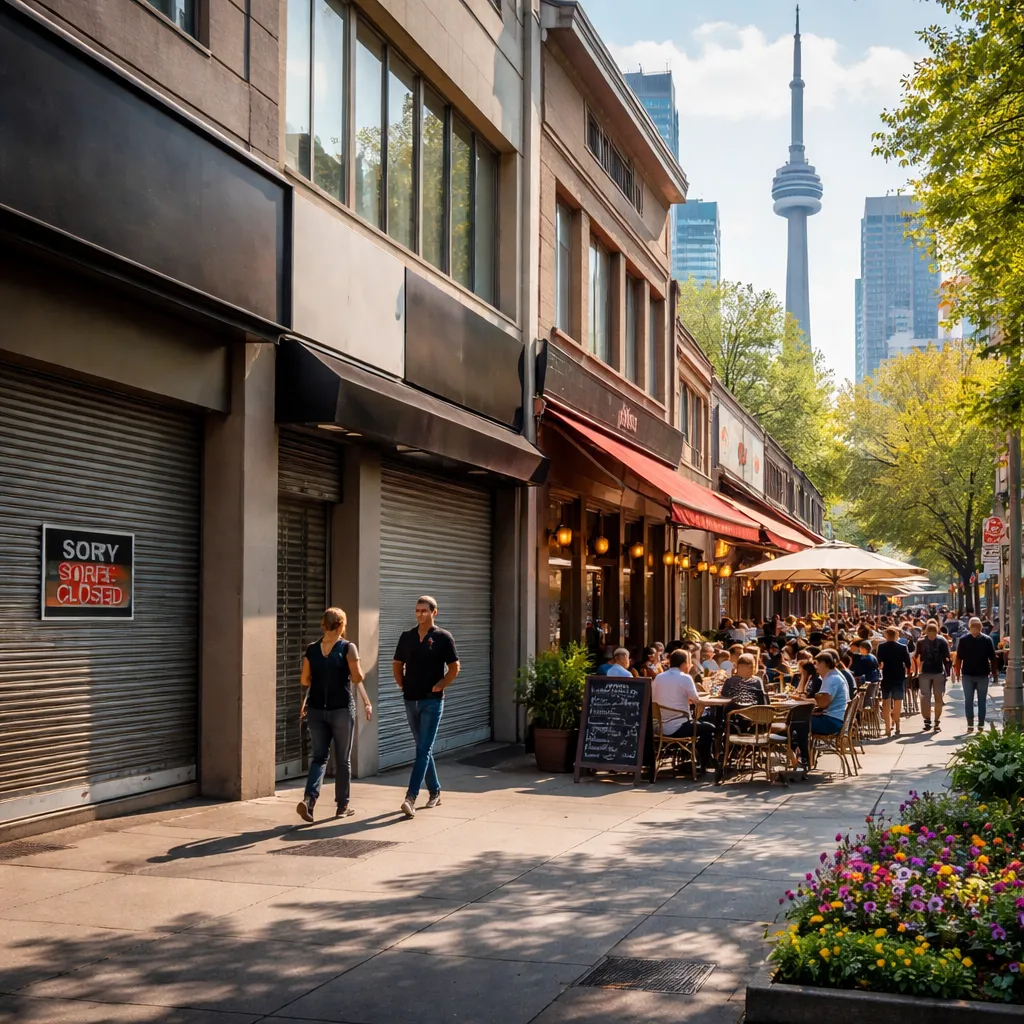

Toronto is moving through Easter Sunday with much of its usual shopping routine switched off, and that change is being felt across the city. Most major malls, large grocery stores, liquor outlets, libraries and government counters are closed today, while restaurants, tourist attractions, pharmacies and many convenience-focused businesses remain open.
That split is the real story. Easter Sunday does not shut Toronto down completely. It turns it into a narrower, more selective version of itself, where routine errands suddenly become difficult but meals, family outings and leisure plans still feel very much alive.
Quick answer: If the plan involves mall shopping, stocking up on groceries, buying alcohol, visiting a library branch or sorting out government paperwork, it will likely have to wait. If the plan involves lunch, a family outing, a pharmacy stop or a trip to a major attraction, the city is still workable today.
That contrast is especially noticeable in a place as fast-moving as Toronto. On a normal Sunday, the city runs on choice. On Easter Sunday, that choice narrows quickly. Families looking for last-minute groceries often discover that major chains are dark. Shoppers heading to large retail centres find locked doors. Anyone hoping for a casual stop at an LCBO or Beer Store is likely out of luck.
At the same time, downtown and destination areas remain active. Restaurants continue to welcome diners. Attractions still pull visitors. Pharmacies and smaller convenience-oriented stores help cover essential needs. The result is a city that feels quieter, but not empty.
Why Toronto Feels Quieter Today
The reason so much of the retail landscape is dark comes down to holiday trading rules and longstanding retail practice around Easter Sunday. This remains one of the clearest days of the year when large-format commerce slows all at once. That is why Toronto can feel calmer than usual even when sidewalks, dining districts and tourist-heavy areas still carry visible energy.
It also changes how people use the city. Instead of moving through the usual cycle of errands, grocery runs and shopping stops, many residents shift into leisure mode. They head to the waterfront, plan a meal out, visit relatives, spend time outdoors or make a day of one of the city’s entertainment districts.
That movement matters. Consumer activity does not disappear on Easter Sunday. It simply shifts away from mainstream retail and toward hospitality, tourism and neighbourhood convenience.
This helps explain why restaurants and attractions often feel busier on a holiday like this. They are not merely open while others are closed. They become the default option. In a city where long weekends carry real weight for families and visitors alike, people still want somewhere to go, somewhere to eat and something to do.
Transit remains part of that picture as residents travel for meals, religious services, family visits and events. Anyone heading out should still check service changes before leaving home, especially on a holiday schedule. Riders can find updates and trip planning information through the TTC official website.
The tone of the city also shifts for more personal reasons. For some households, Easter Sunday is a religious observance. For others, it is a family gathering day or simply part of the long weekend. That mixed rhythm is one reason Toronto feels uneven today. Some churches are fuller, some restaurant corridors are livelier, and some retail-heavy areas feel almost paused.
What Is Open Today — and What Isn’t
For readers searching this topic, usefulness matters more than ceremony. The simplest way to read the day is this: Toronto still functions on Easter Sunday, but it functions differently.
Open today: many restaurants, cafes, pharmacies, entertainment venues, outdoor spaces and major visitor attractions. Depending on neighbourhood and staffing, some smaller convenience-based retailers may also operate.
Closed today: many shopping centres, most large grocery stores, liquor outlets, library branches and a range of public-facing government services. That is where the biggest friction appears, especially for anyone leaving ordinary errands until the last minute.
Easter Sunday has a way of exposing just how much Toronto usually depends on broad retail availability. On most weekends, the city offers almost constant access. Today, that access is selective. Essentials and experiences remain visible. Bulk shopping and bureaucracy step back.
There is an economic angle to that as well. Holiday weekends do not affect every business the same way. Big-box retail loses a day. Hospitality and attractions may gain one. Independent operators in high-footfall neighbourhoods often benefit from the temporary absence of larger competitors, which is why some restaurant strips and tourist zones can feel surprisingly lively even while suburban shopping hubs sit quiet.
That is also what makes the “what’s open” question more significant than it first appears. It is not just about inconvenience. It is about the shape of the city on a day when its priorities become easier to read. Food, leisure, faith, family and movement continue. Routine transactions largely pause.
So while the headline may be about closures, the more useful truth is that Toronto has not stopped. It has narrowed. For one holiday Sunday, the city becomes less about shopping and more about where people gather, move and spend time together.
You may like: Chrome Zero-Day Exploit Alert: 3.5 Billion Users at Risk

Make Swikblog your go-to source on Google for reliable updates, smart insights, and daily trends.