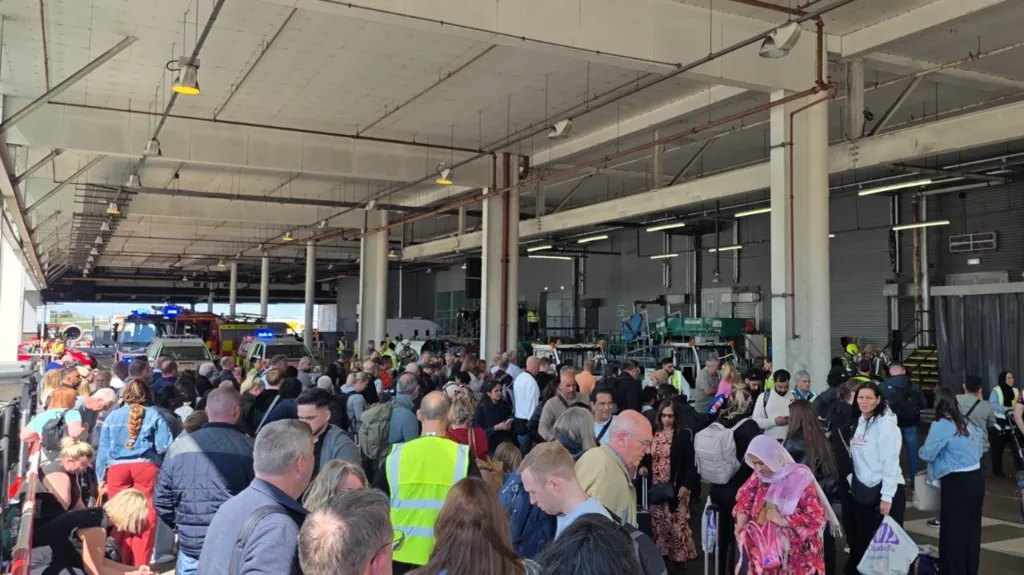

Birmingham Airport was partially evacuated on Tuesday afternoon after reports of smoke in the North Terminal triggered a fire alarm, leaving passengers stranded on planes, held inside restricted areas, and waiting outside in warm conditions as emergency services investigated.
The incident, which began shortly after midday on 7 April, centred on the baggage reclaim and immigration area, where travellers described “very smoky” conditions and a chemical-like smell before alarms sounded and staff ordered an evacuation.
West Midlands Fire Service said crews were dispatched following a domestic fire alarm activation, initially amid concerns of a possible fire. However, officials later confirmed there was no confirmed blaze and that firefighters were working with airport staff to identify the source of the smoke.
The airport said the situation was contained to the North Terminal, stressing that other parts of the airport remained operational. Even so, the disruption created a ripple effect across arrivals, with passengers from multiple inbound flights unable to disembark or move through immigration.
Travellers arriving from Amsterdam and Malta reported being held on aircraft after landing, with some saying they could see multiple fire engines through the windows. Others who had already entered the terminal described being redirected outdoors or into temporary waiting areas without clear timelines.
One passenger said they had been waiting more than 90 minutes after landing, while another described being stuck inside the terminal near passport control when alarms began sounding. Families and elderly passengers were later escorted into shaded indoor areas, with water distributed as temperatures rose.
The disruption was particularly acute in arrivals, where baggage was still being unloaded when the evacuation began. Passengers reported being moved between assembly points as emergency crews assessed the situation, with some still separated from their luggage.
Arrivals hit hardest as investigation continues
While departures initially appeared unaffected, the incident highlighted how quickly disruption in a single part of an airport can cascade through operations. With baggage reclaim and immigration restricted, arriving passengers faced delays exiting the airport, raising the risk of knock-on effects later in the day.
Airport officials emphasised that the evacuation was a precautionary measure, taken in coordination with emergency partners. The lack of visible flames and the absence of a confirmed fire shifted the focus from an active emergency to a safety-led investigation, but uncertainty over the source of the smoke continued to drive concern among travellers.
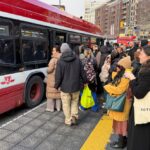
Images shared from the scene showed large groups of passengers gathered outside the terminal while fire crews operated inside. At the same time, others remained airside or confined to gates, unable to proceed through normal arrival channels.
The episode underlines the sensitivity of airport infrastructure, where even an unconfirmed incident in a critical zone such as baggage reclaim can halt passenger movement and create immediate operational pressure. For travellers, the disruption was less about the scale of the emergency and more about the lack of clarity as events unfolded.
As firefighters worked to identify the cause, attention turned to how quickly normal operations could resume and whether delays in arrivals processing would begin to affect departures. Updates were expected via the airport’s official website as the situation developed.
For those caught in the disruption, the experience was marked by long waits, limited information and the sudden shift from routine arrival to uncertainty — a reminder of how quickly conditions can change inside one of the UK’s busiest transport hubs.
You may like TTC Line 2 shutdown in Toronto after oil spill disrupts service.

Make Swikblog your go-to source on Google for reliable updates, smart insights, and daily trends.