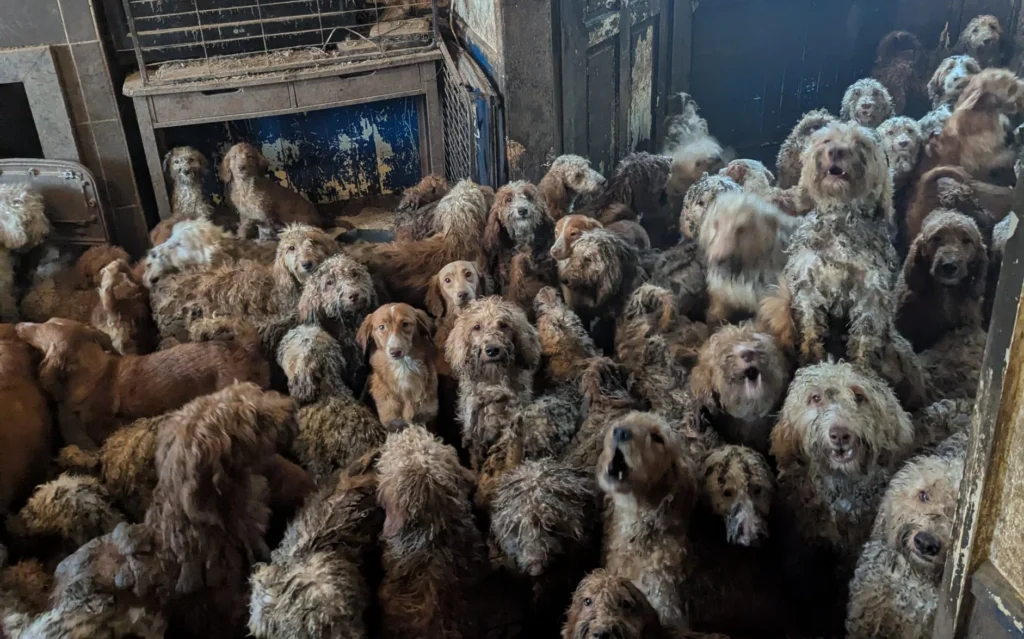

The RSPCA has rejected claims that a widely shared image showing dozens of dogs crammed into a living room was generated using artificial intelligence, insisting the photograph is real and reflects the scale of a rescue operation involving more than 250 animals in Nottingham earlier this year. The image, which went viral on social media, drew scepticism from some users who said the scene appeared too extreme to be genuine.
The charity said the dogs — mostly poodle-cross breeds — were discovered at a single property after neighbours raised concerns. Many of the animals were found living in cramped, unsanitary conditions, with some sleeping inside a fireplace and others hiding under furniture in a small living space. Several had matted coats, visible skin sores and signs of neglect.
In response to online speculation, the RSPCA said it had not used AI to create or alter the image. “As much as we wish this image wasn’t real, sadly it very much is,” the organisation said, adding that cases involving large numbers of animals are becoming increasingly common for its frontline teams.
Rescue effort reveals scale of neglect
Of the more than 250 dogs recovered from the property, 87 were taken to the RSPCA’s Radcliffe Animal Centre in Nottinghamshire, while the remaining animals were transferred to Dogs Trust for care and rehoming. The charity said the situation had escalated due to overbreeding and changing family circumstances, which led to conditions spiralling beyond control.
Rescuers described animals that were fearful of human contact and unfamiliar with the outside environment. Some dogs reportedly had to be carried outdoors for exercise, unable to walk on grass due to lack of exposure. The psychological impact of the conditions is expected to require long-term rehabilitation.
Among the rescued animals are Stevie, a deaf and blind cocker spaniel, and Sandy, a poodle who has formed a close bond with her. The pair are now being cared for together and are expected to be rehomed as a duo, highlighting both the trauma and resilience seen in large-scale neglect cases.
AI scepticism meets growing welfare crisis
The controversy surrounding the image underscores a broader issue: the growing tendency for real-world images to be dismissed as artificial in an era shaped by rapid advances in AI-generated content. What once would have been accepted as evidence of neglect is now subject to online doubt, particularly when scenes appear unusually severe.
For the RSPCA, the timing of the reaction is significant. The charity says it dealt with 4,200 incidents last year involving at least 10 animals at a single address across England and Wales, pointing to a rise in multi-animal households where care has broken down. It is also facing a six-year high in the number of animals in its care, with many facilities operating at or beyond capacity.
Officials say such cases often begin with well-meaning owners but escalate as breeding continues unchecked. Over time, limited resources, lack of veterinary care and overcrowding create an environment where animals suffer both physically and psychologically.
The organisation has reiterated its policy of transparency around AI use, stating it would clearly label any content generated or altered using such technology. In this case, it said no such tools were involved. The debate, however, reflects a shift in public perception — where the credibility of even documented suffering is increasingly questioned.
As rescue centres continue to absorb animals from cases like the Nottingham property, the charity has urged greater awareness of responsible breeding and ownership. More details about ongoing rescue efforts and adoption programmes can be found on the RSPCA website.
you may like: NCAA eligibility rule change 2026 explained as age-limit and redshirt debate grows
Make Swikblog your go-to source on Google for reliable updates, smart insights, and daily trends.