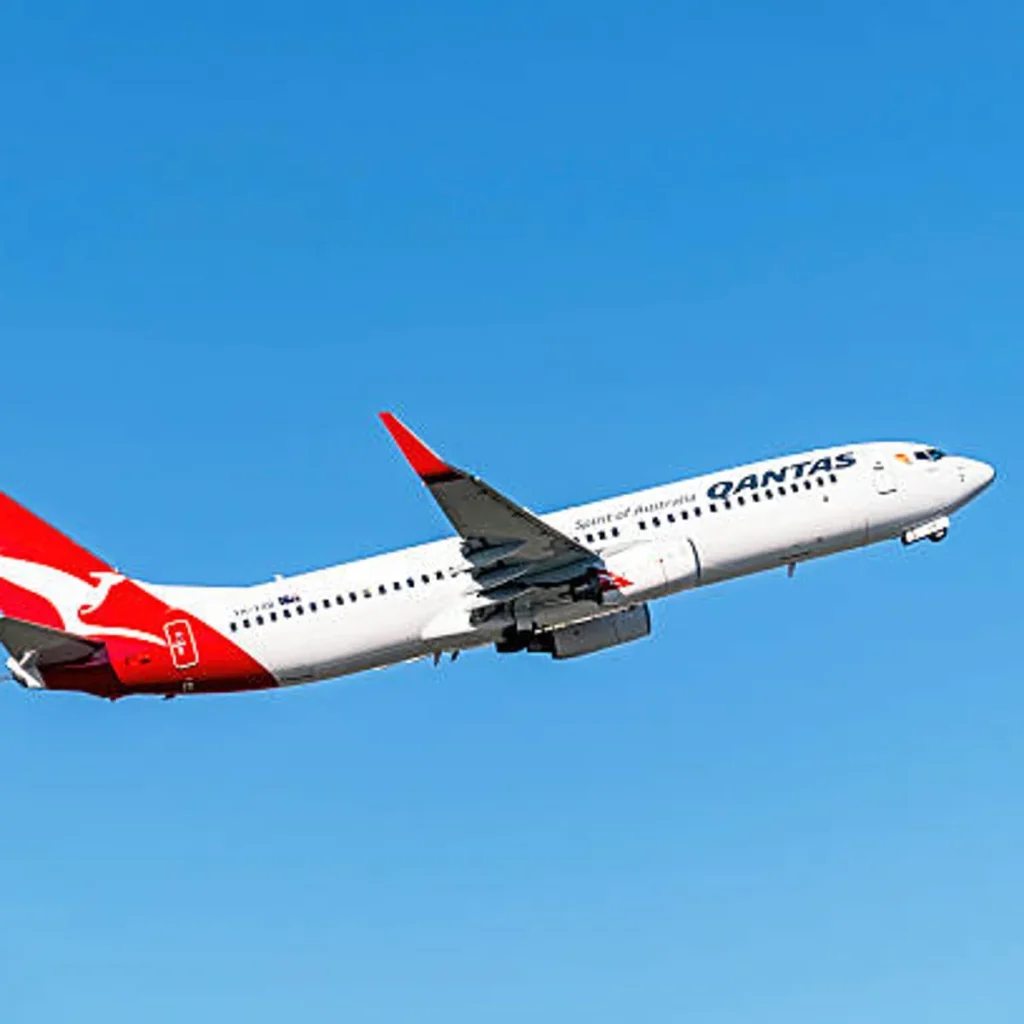

A late-night Qantas flight bound for Perth turned into an unexpected emergency situation after passengers and crew reported a strong smell inside the cabin, forcing the aircraft to divert mid-journey.
The flight, operating from Canberra to Perth, was redirected to Adelaide where it made a priority landing around 1am, even outside standard airport curfew hours. Emergency services, including paramedics, were placed on standby as the aircraft touched down safely.
Passengers described a tense but controlled situation onboard as the crew followed standard safety procedures. While no injuries were reported, the unusual smell prompted immediate action from the pilots, who chose to land at the nearest suitable airport rather than continue the journey.
After landing, the aircraft underwent inspection by engineering teams and was later cleared for service. Travellers were rebooked on alternate flights, with most reaching Perth later that morning.
Qantas acknowledged the disruption, apologising to passengers and confirming that safety remained the airline’s top priority throughout the incident.
Recent Qantas incidents highlight safety-first approach
This latest diversion is part of a series of recent in-flight disruptions involving Qantas, underscoring how quickly flight crews act when even minor risks are detected.
Just days earlier, a Sydney-to-Dallas Qantas flight was forced to turn back mid-air after a medical emergency occurred roughly four hours into the journey. The aircraft returned to Sydney, dumping fuel before landing to ensure safety, while emergency teams waited on the ground.
In another recent case, a domestic Qantas flight from Brisbane had to return shortly after takeoff when an unusual smell spread through the cabin, with crew members later taken to hospital as a precaution.
These incidents reflect a broader pattern in modern aviation, where even non-critical issues—such as unexplained smells or minor mechanical irregularities—are treated with the highest level of caution.
Why smells on aircraft trigger immediate diversions
Unidentified smells inside an aircraft cabin are taken seriously because they can signal a range of potential issues, from electrical faults to air conditioning system problems. While many cases turn out to be minor, aviation protocols require crews to assume the worst-case scenario until proven otherwise.
This is why diversions, though inconvenient, are often the safest course of action. Pilots are trained to prioritise immediate landing over schedule adherence, especially when there is any uncertainty about onboard conditions.
For passengers, the experience can be unsettling, but aviation experts consistently point out that such decisions are a sign of systems working exactly as intended. According to International Air Transport Association safety guidelines, precautionary landings are a standard part of global aviation risk management.
Despite the disruption, the Adelaide diversion ended without incident—another example of how modern aviation safety measures are designed to respond quickly and effectively, even in unexpected situations.
You may like: Flying Blue New Rewards: Earn Up to 30,000 Miles Before Ultimate Status

Make Swikblog your go-to source on Google for reliable updates, smart insights, and daily trends.